



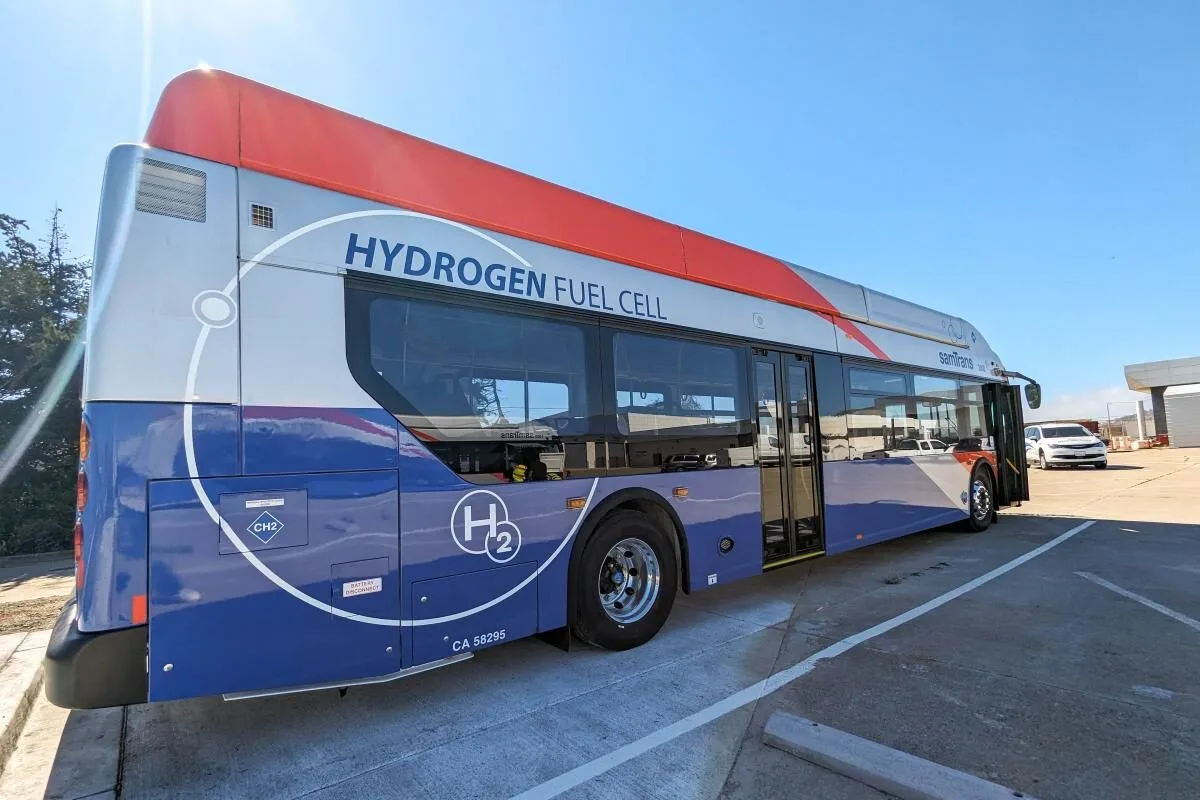
San Mateo County Transit District (SamTrans) has awarded a contract to Fastech and Bosch Rexroth to develop a large-scale hydrogen refuelling station in California capable of supporting up to 175 fuel cell electric buses.
The facility is expected to become the world’s largest hydrogen refuelling station dedicated to public transit bus operations and will serve as the primary hydrogen hub for the SamTrans network.
Supporting a Large Fuel Cell Bus Fleet
The hydrogen station is being designed to support a fleet of up to 175 fuel cell electric buses as SamTrans advances its zero-emission transportation strategy.
According to the project partners, the facility will include four hydrogen dispensers capable of refuelling multiple buses simultaneously.
The station will have the capacity to deliver up to 3.5 tonnes of hydrogen per day, providing sufficient fuel to support large-scale transit operations and future fleet growth.
SamTrans currently operates 74 fixed-route bus services as well as an on-demand transportation network throughout San Mateo County in California.
First Commercial Use of CryoPump Technology
A key feature of the project is the first commercial deployment of Bosch Rexroth’s CryoPump hydrogen refuelling technology.
The company said the system is designed to simplify hydrogen station infrastructure by eliminating the need for buffer gas storage and complex mechanical valve manifolds traditionally used in hydrogen refuelling systems.
Bosch Rexroth said the technology also helps reduce hydrogen losses caused by boil-off and venting during storage transfer and vehicle refuelling processes.
The company estimates the system can dispense up to 1,200 kilograms of hydrogen per hour, providing additional capacity for future fleet expansion.
Building Next-Generation Hydrogen Infrastructure
Fastech will be responsible for integrating the hydrogen refuelling equipment and delivering the overall station infrastructure.
The project is intended to demonstrate how hydrogen can be deployed at scale to support zero-emission public transportation systems while maintaining operational reliability.
Hydrogen fuel cell buses are increasingly being adopted by transit agencies seeking alternatives to diesel-powered fleets, particularly for routes requiring long operating ranges and rapid refuelling.
Setting a New Industry Benchmark
Dan McGill, president of Fastech, said the project highlights the growing role of hydrogen in public transportation decarbonisation.
“This project demonstrates how hydrogen can be deployed at scale to support reliable, zero-emission public transportation.”
“By combining Bosch Rexroth’s advanced hydrogen technologies with Fastech’s fueling infrastructure expertise, we are helping to establish a new benchmark for sustainable transit infrastructure worldwide.”
Once operational, the facility is expected to rank among the most advanced hydrogen transit refuelling stations globally and could serve as a model for future large-scale hydrogen transportation projects in North America and other international markets.


