



BMW Group has introduced a new hydrogen storage concept for its BMW iX5 Hydrogen, aiming to increase driving range and improve space efficiency as part of its broader push into hydrogen-powered mobility.
The new “Hydrogen Flat Storage” system allows the vehicle to achieve a range of up to 750 kilometres, while optimising packaging within the vehicle architecture. The design integrates hydrogen tanks in a way that preserves cabin space and remains compatible with BMW’s Gen6 high-voltage battery, enabling hydrogen variants to be built on the same production lines as battery-electric, hybrid and combustion models.
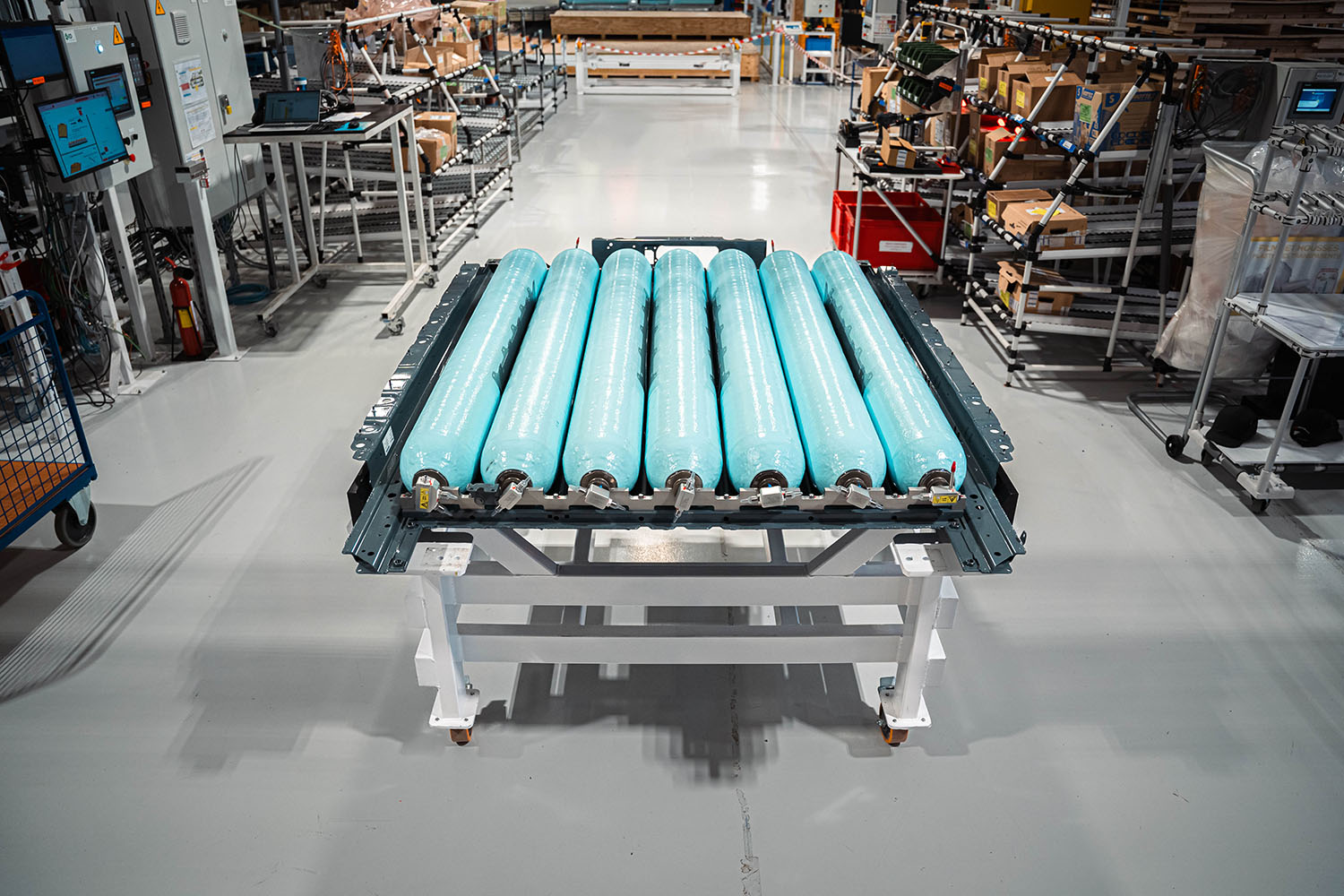
According to BMW, the system consists of seven high-pressure tanks made from carbon-fibre reinforced composite materials. These tanks are connected in parallel and arranged into a compact unit housed within a protective metal frame. The setup is designed to store at least seven kilograms of hydrogen and can be refuelled in under five minutes.
“Our new storage concept allows us to fit the hydrogen drive system into the new X5 precisely and in a way that saves space,” said Joachim Post, Member of the Board of Management of BMW AG responsible for Development. “Think of it as installation Tetris: every customer gets the drive system best suited to their needs and a true BMW X5 with no compromises. This is technology openness and the art of engineering just the way we developers love them!”
The hydrogen storage system forms part of a broader powertrain setup that combines fuel cell technology with a high-voltage battery. The iX5 Hydrogen also incorporates BMW’s latest drivetrain and chassis control software, known as “Heart of Joy,” along with Dynamic Performance Control. The model uses a next-generation Gen3 fuel cell system, which the company says offers improved efficiency and performance over previous versions.
BMW highlighted that the new X5 platform is designed to support multiple powertrain configurations, including battery-electric, plug-in hybrid, conventional combustion and hydrogen fuel cell variants. This flexible architecture is intended to reduce production complexity and enable scalable manufacturing across different drivetrain technologies.
The company plans to integrate the hydrogen-powered iX5 into its broader production network starting in 2028, as part of a technology-neutral strategy that combines multiple energy solutions.
BMW said hydrogen technology offers advantages such as long driving range, rapid refuelling and diversification of energy sources, complementing battery-electric vehicles in its future portfolio.


