

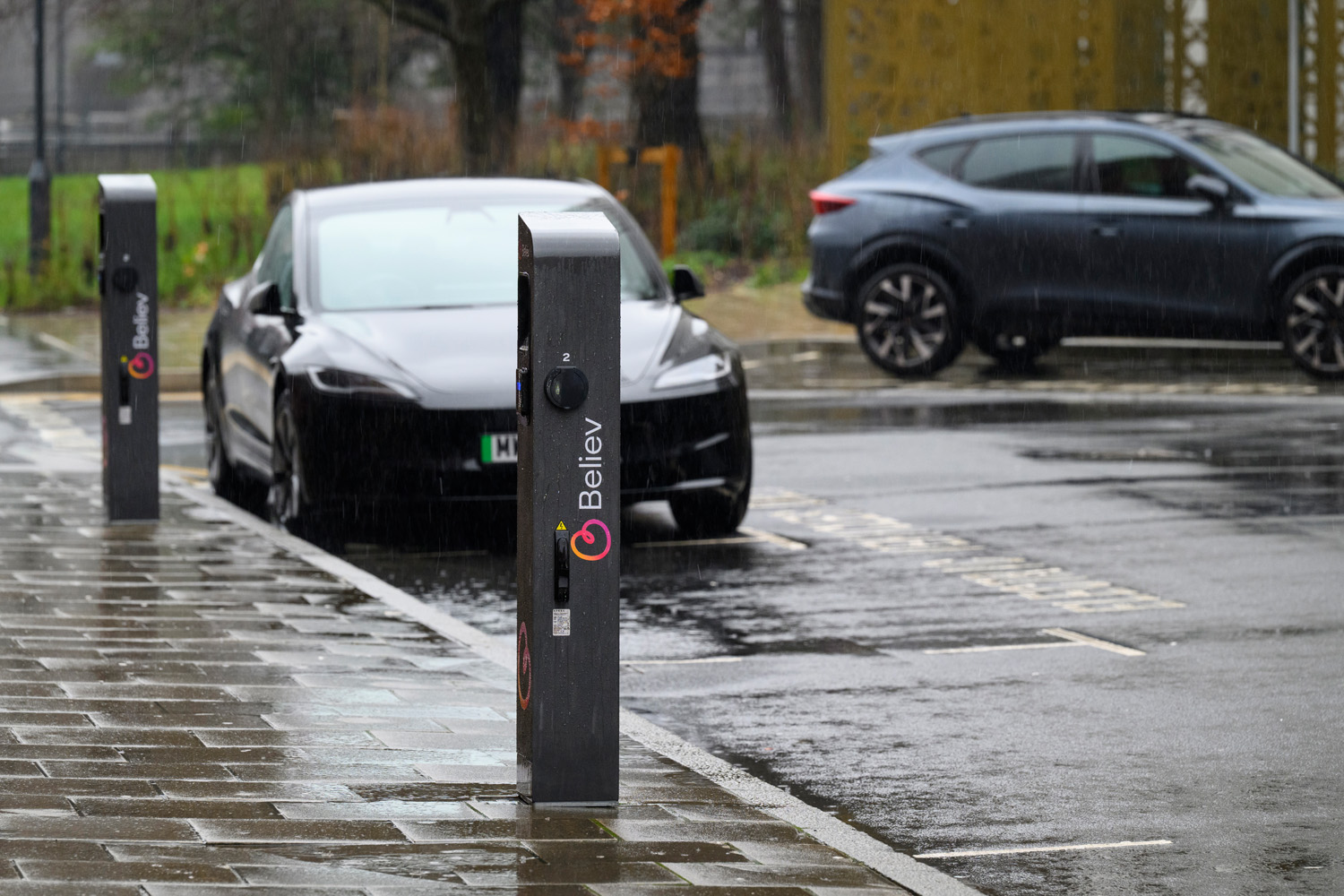
The first of 71 planned electric vehicle charging points from Believ is now operational in Leeds, marking the start of a broader deployment in partnership with Leeds City Council. The initial site, located at the Woodhouse Lane multi-storey car park in the city centre, offers rapid charging at up to 150 kW.
Pricing at the location has been set at 79 pence per kilowatt-hour, according to local reports. The charger is designed for quick top-ups, complementing a wider network that will include slower units for overnight and long-duration parking.
See also: UK’s Believ to Install Hundreds of EV Chargers in North Lincolnshire Under New Council Contract
Believ said the Leeds programme will deploy a mix of charging technologies across on-street and off-street locations, including residential areas, community facilities, sports centres, and central urban sites. While the company is known for hardware-agnostic installations—ranging from 7 kW to 22 kW AC chargers and high-power DC units—specific technical details for the remaining sites have not yet been released.
“Our fully funded model allows local authorities to deliver high-quality, future-ready charging networks without the use of public funds,” said Guy Bartlett, Chief Executive of Believ. He said the project aims to support cleaner air and sustainable transport across the city.
See also: Believ Secures Backing to Deploy 30,000 Public EV Chargers Across UK
Local officials highlighted the importance of expanding access for residents without private parking. Councillor Mohammed Rafique, the council’s executive member for climate, said the rollout would help make electric vehicles more practical for a broader population by providing reliable public charging options.
Believ was established in 2023 as a joint venture between Leeds City Council and regional electricity distributor Northern Powergrid. The company aims to install up to 1,000 public charge points across the city by 2027, with responsibility for funding, installation, operation, and maintenance handled entirely by Believ.
Further installations are expected to continue through early 2026 as the network expands across the metropolitan area.