



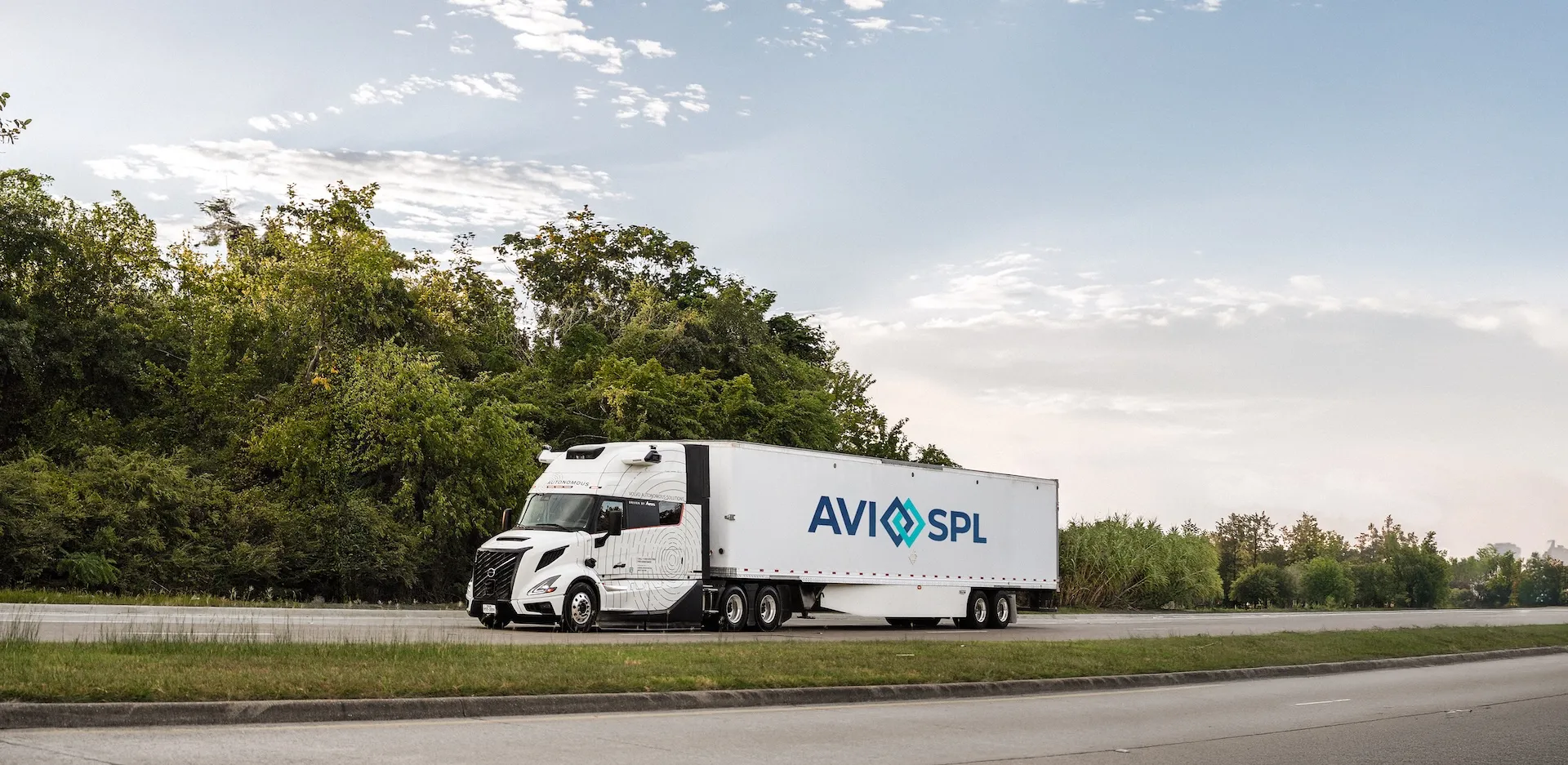
AVI-SPL and Volvo Autonomous Solutions (V.A.S.) have launched commercial autonomous freight operations between Dallas and Houston, marking another step in the deployment of self-driving trucks for real-world logistics applications.
The service utilizes the Volvo VNL Autonomous truck powered by the Aurora Driver autonomous driving system to transport audio-visual equipment for AVI-SPL, a global technology solutions provider.
Autonomous Freight Begins Commercial Service
The new operation is running along the Dallas-Houston corridor, one of the busiest freight routes in the United States.
According to Volvo Autonomous Solutions, the trucks are transporting both new audio-visual products and end-of-life equipment used by AVI-SPL.
The deployment represents a commercial application of autonomous trucking technology rather than a pilot or demonstration program.
Supporting Electronics Recycling Operations
In addition to transporting new inventory, the autonomous trucks are also moving retired equipment collected through AVI-SPL’s Electronic Recycling Program.
The program focuses on recovering valuable materials, including precious metals, from end-of-life audio-visual equipment.
By supporting both product distribution and equipment recovery, the autonomous freight route serves multiple functions within AVI-SPL’s supply chain network.
Built on Volvo’s Autonomous Truck Platform
The operation uses the Volvo VNL Autonomous, a purpose-built vehicle developed for autonomous freight transportation.
The truck integrates the Aurora Driver autonomous system with Volvo’s commercial vehicle platform.
Volvo Autonomous Solutions describes the offering as a complete transport system that combines autonomous vehicles, software, operational support, fleet management tools, and logistics services.
Addressing Freight Industry Challenges
The companies said autonomous trucking could help address ongoing challenges facing the logistics industry, including driver shortages, growing freight demand, and the need for improved operational efficiency.
Sasko Cuklev, Head of On-Road Solutions at Volvo Autonomous Solutions, said the technology could improve service for time-sensitive freight shipments.
“This collaboration shows how autonomous transport can help reduce transit times, improve service, and meet the demands of time-sensitive, high-value freight,” Cuklev said.
Exploring Future Logistics Models
AVI-SPL said the partnership provides an opportunity to evaluate how autonomous transportation can support future logistics operations.
Tim Riek, Chief Strategy Officer at AVI-SPL, said the company views autonomous transportation as a potential tool for enhancing supply chain resilience and scalability.
“Autonomous transportation has the potential to significantly reshape the future of logistics,” Riek said.
The companies noted that autonomous freight systems could contribute to higher vehicle utilization rates, increased operational uptime, and improved cargo security.
Growing Momentum for Autonomous Trucking
The Dallas-Houston route has become a focal point for autonomous trucking deployments in recent years, with multiple technology companies testing and launching commercial operations along the corridor.
The latest deployment highlights continued industry efforts to move autonomous trucking from development and pilot projects into regular freight operations as companies seek new ways to address transportation capacity constraints.
As autonomous vehicle technology continues to mature, freight transportation remains one of the sectors viewed as having significant potential for early commercial adoption.


