


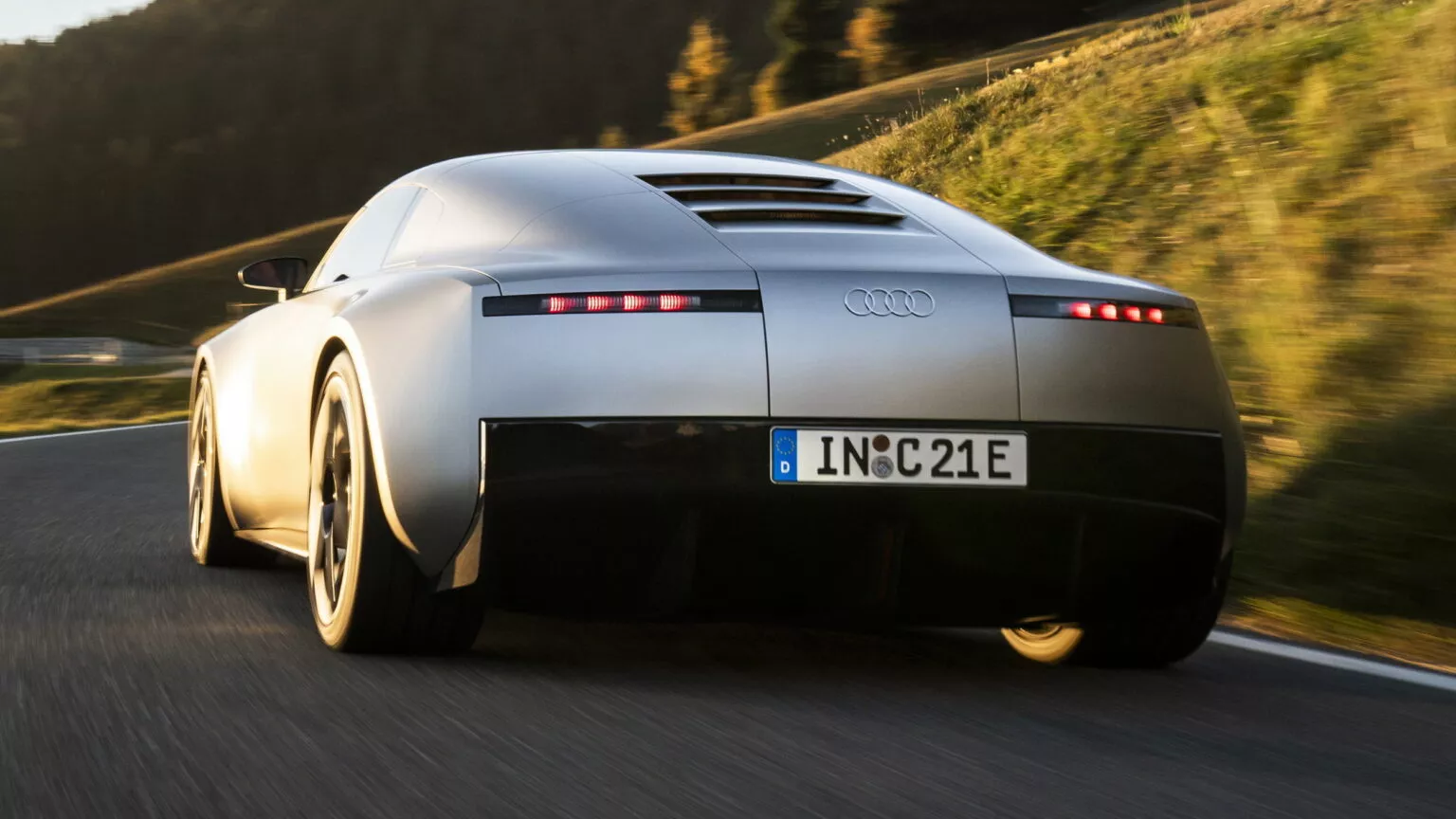
Audi plans to bring its Audi Concept C to production within two years, positioning the electric model as the successor to the discontinued Audi TT as the German automaker accelerates development timelines under a new strategy inspired by China’s automotive industry.
The concept, first unveiled in September, is expected to enter the market within a relatively short development cycle of about three years from initial design to production. The model will fill the gap left after Audi ended production of the TT and the Audi R8, leaving the brand without a two-door sports car in its lineup.
See also: Audi Announces Management Changes in China and North America
Gernot Döllner said the company intends to move concept vehicles quickly toward production as part of its evolving product strategy.
“Whenever we present a new concept, that will always be a serious product,” Döllner said in comments to GoAuto. “The first proof point to our strategy is the Concept C. We presented that last September, and within two years, we will have it in the market.”
The production version of the Concept C will be built on the Premium Platform Electric (PPE) architecture developed by the Volkswagen Group. The same platform is also expected to underpin future electric versions of the Porsche 718 Cayman and Porsche 718 Boxster.
See also: Audi Says Electric Concept C Production Model Remains on Schedule
Some industry reports have questioned the future of Porsche’s electric 718 models. However, according to CarSales, Döllner told Audi employees in an internal letter that delivery of the platform from Porsche remains on track.
“The delivery of the platform by Porsche is not in doubt,” he said, adding that development is progressing through collaboration between “Team Porsche and Team Audi.”
Audi has provided limited technical details about the Concept C, though the model will be fully electric. Reports indicate that the battery pack may be split between the passenger compartment and the rear axle, a configuration designed to replicate the handling balance of a traditional mid-engine sports car.
The rapid development timeline reflects Audi’s new “China speed” approach to vehicle development. The strategy replaces traditional multi-layer decision processes with “project houses” that bring together design, engineering, manufacturing, procurement and quality teams under a single leadership structure.
See also: Audi Updates A6 e-tron and Q6 e-tron With Software, Comfort Upgrades for 2027 Model Year
“We completely adapted that to our processes in Germany,” Döllner said. “Not so far in the future, we will prove that we are able to react as fast as we do in China – but in European programs.”
He added that streamlined decision-making structures and early collaboration between design and engineering teams are intended to accelerate product development.
“Project houses are absolutely necessary if we want to be this fast,” Döllner said.


