



Indian commercial vehicle manufacturer Ashok Leyland has embarked on the construction of a new plant dedicated primarily to the production of electric buses. The initial capacity of the facility, located in Lucknow, the capital of Uttar Pradesh, is expected to be 2,500 buses per year.
In a company statement, Ashok Leyland announced that the new plant, covering approximately 28 hectares, has recently had its foundation stone laid. While the focus will be on electric buses, the facility will also have the capability to produce vehicles with conventional or other alternative fuels.
See also: Ballard, Adani, and Ashok Leyland Partner on Hydrogen-Powered Mining Truck
Ashok Leyland plans to begin operations with an initial production capacity of 2,500 buses per year in Lucknow, with future expansion envisaged to reach 5,000 vehicles annually over the decade.
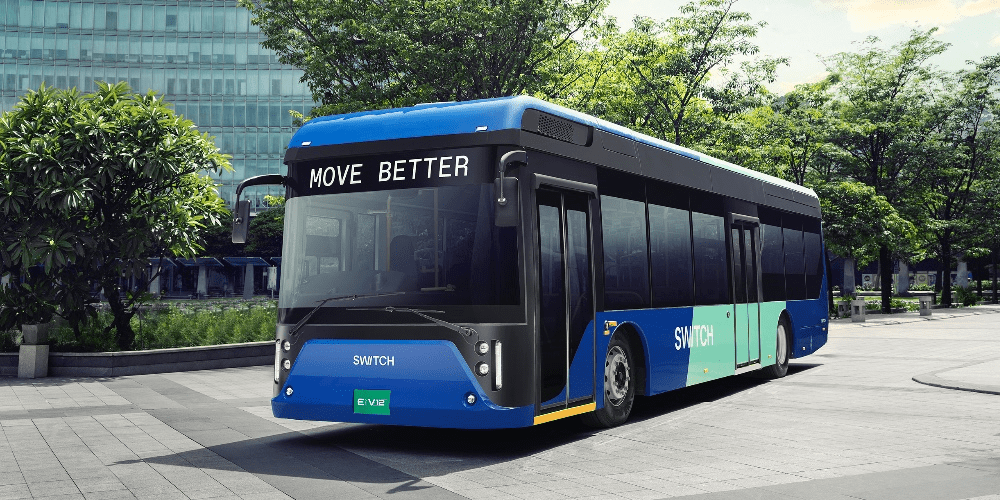
See also: Switch Mobility introduces new generation E1 electric bus, range up to 390 km
The market for electric buses in India shows significant promise. The Economic Times reported earlier this year, citing senior government sources, that India aims to replace more than a third of its diesel bus fleet with electric buses by 2030. This transition will encompass state transport companies, private operators, as well as buses for schoolchildren and employees.
Ashok Leyland’s subsidiary, Switch Mobility, has secured several electric bus orders in the past year. In 2022, the company collaborated with JSW to introduce electric buses for employee transportation in India. Additionally, Ashok Leyland unveiled the first all-electric double-decker bus for the Indian market in 2022 and received an order for 200 such buses for the city of Mumbai.


