
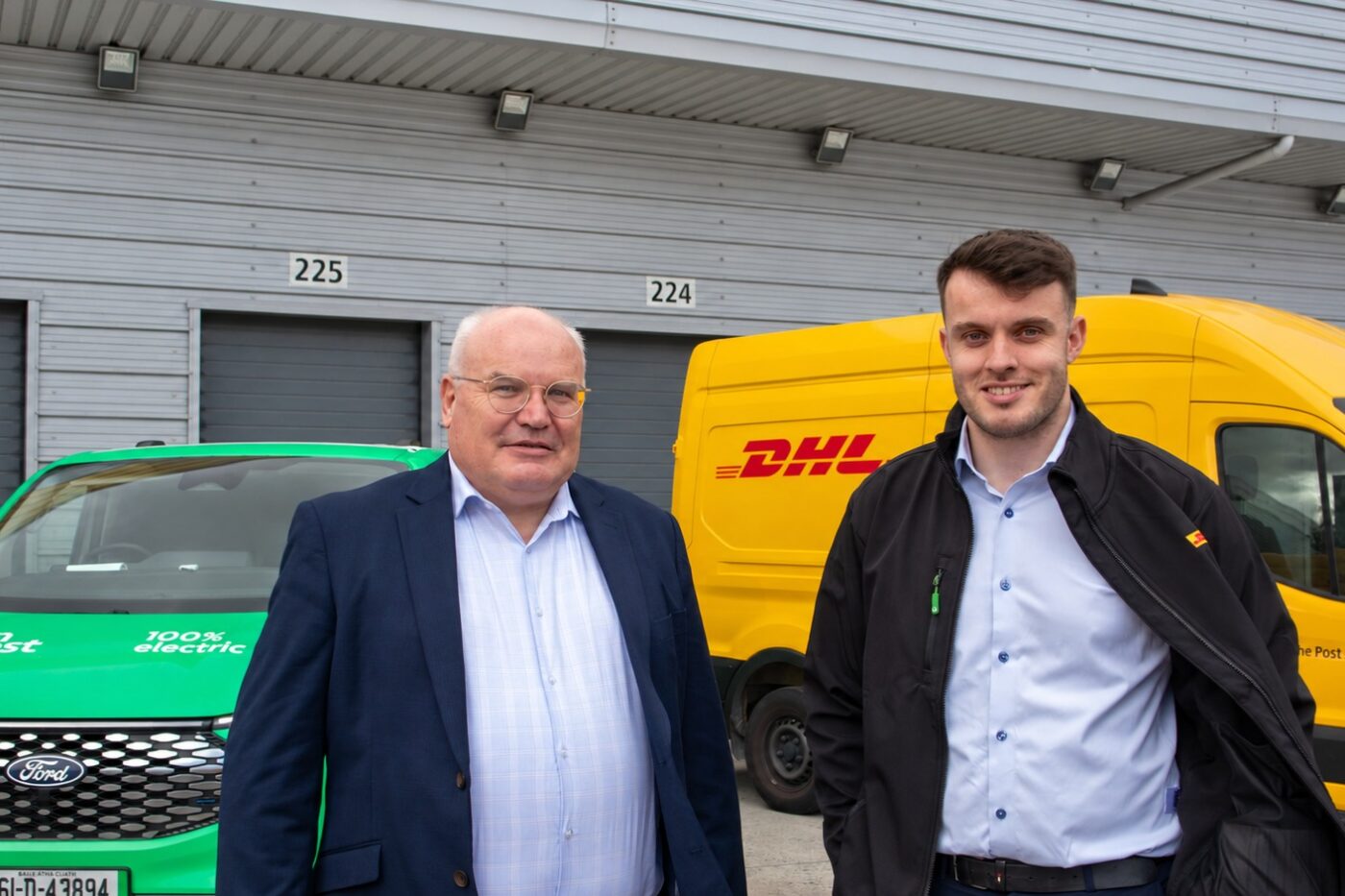
An Post and DHL Express Ireland are participating in a pilot project designed to connect electric vehicle fleet depots directly to Ireland’s electricity flexibility markets. The initiative will allow operators to adjust charging demand in response to grid conditions, potentially reducing energy costs and creating additional revenue opportunities.
The project covers three An Post sites in Cork and Galway and one DHL Express depot in Dublin. Together, the locations represent a fleet of 211 electric vehicles and 181 charging points, with up to 500 kW of flexible electricity demand.
The initiative brings together VIOTAS, Mitsui Ireland, ESB Smart Energy Services, eStation and The Mobility House Solutions. The latter two companies will supply and install charging and energy management systems, while VIOTAS will enable the participating depots to access EirGrid’s electricity flexibility markets.
Charging Demand Adjusted to Grid Conditions
The pilot is designed to make commercial EV charging demand more responsive to electricity supply and demand.
Charging output can be reduced during periods of high electricity demand and increased when renewable generation, particularly wind power, is more abundant. This approach allows fleet operators to shift electricity consumption to more favourable periods while providing flexibility services to the wider power system.
The charging management system will coordinate vehicle charging schedules around operational requirements and signals from the electricity grid. Vehicles must still have sufficient charge for their next scheduled journeys, meaning adjustments will be made without compromising fleet availability.
By making charging demand more flexible, the project aims to help integrate a greater share of renewable electricity into Ireland’s grid while giving participating operators opportunities to lower energy expenses and potentially generate additional income.
Commercial EV Fleets as Grid Flexibility Resources
The initiative highlights the potential role of large electric vehicle fleets in supporting electricity system balancing. Through smart charging and vehicle-to-grid (V2G) technologies, fleet operators can potentially use their vehicles as distributed energy resources.
Shane Mullarkey, business development representative at Mitsui Ireland, said the project demonstrates how commercial EV fleets can contribute additional value beyond their primary transport operations.
“For leading logistics fleet operators like An Post and DHL, the clear focus remains on fleet decarbonisation and daily operational efficiency. However, this pilot demonstrates the additional value large commercial electric vehicle fleets can offer in supporting grid flexibility.
Electric vehicle fleets in Ireland serve as a powerful distributed battery resource. Through smart charging and vehicle-to-grid technologies, these fleets can shift charging to periods of abundant renewable generation, reduce peak demand on the grid and provide essential flexibility and balancing services.”
The pilot will assess how logistics depots can participate in electricity flexibility markets while maintaining the charging availability required for daily operations. Its approach could provide a model for other commercial fleet operators seeking to combine transport electrification with participation in the energy system.