



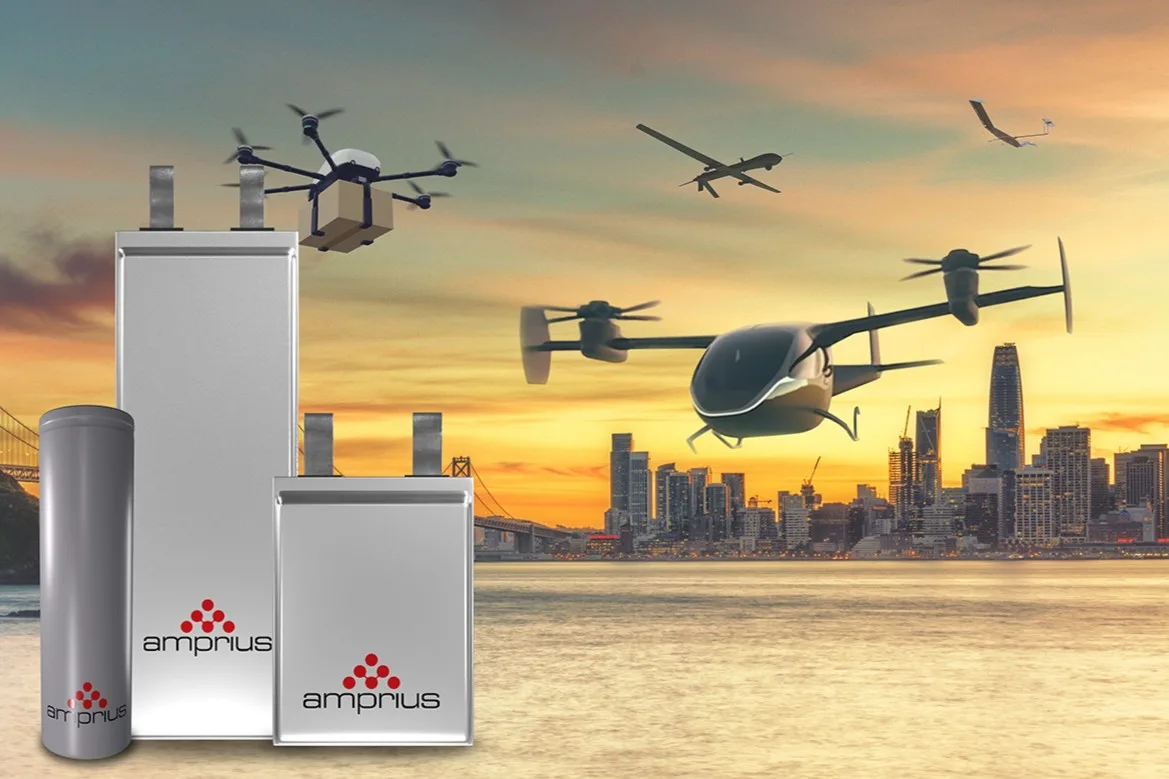
Amprius Technologies has delivered its next-generation high-performance SiCore battery cells to several customers in the drone and unmanned aerial vehicle (UAV) sector, including Airbus subsidiary AALTO, which is currently testing the cells in its Zephyr high-altitude reconnaissance platform.
The deliveries mark the first customer shipments of Amprius’ advanced cells from its pilot production line in Fremont, California. The company unveiled the latest version of the SiCore battery earlier this year, featuring an energy density of 450 Wh/kg—one of the highest reported in the industry. Based on a proprietary silicon anode system, the technology is designed to deliver up to 80% more energy than traditional lithium-ion cells that rely on graphite anodes.
The high energy density of the SiCore cells makes them particularly suitable for high-altitude, solar-powered aircraft such as AALTO’s Zephyr, which operates at altitudes above 20 kilometers in the stratosphere. These high-altitude platforms (HAPS) require reliable overnight energy storage since solar charging is only available during the day. According to Amprius, the silicon-anode cells provide at least 50% more energy density compared to conventional batteries, allowing for longer nighttime flight, increased payload capacity, and extended endurance under variable weather conditions.
AALTO’s Zephyr program is among the first to integrate Amprius’ SiCore cells into stratospheric operations. “Amprius’ SiCore cells represent a major advancement in energy performance, supporting the ultra-lightweight, long-endurance requirements of our high-altitude operations,” said Pierre-Antoine Aubourg, chief technology officer at AALTO. He added that the technology has already enabled Zephyr to operate overnight for extended periods, setting a new benchmark in persistent flight capability.
Amprius plans to expand its pilot production line in response to growing demand from drone and aerospace customers. CEO Dr. Kang Sun said the company is now positioned to deliver battery solutions for a wide spectrum of mission profiles, from ultra-high energy HAPS operations to balanced-performance UAV systems. The Fremont-based manufacturer expects continued interest in its cells as more unmanned platforms seek lightweight, long-duration energy storage solutions.