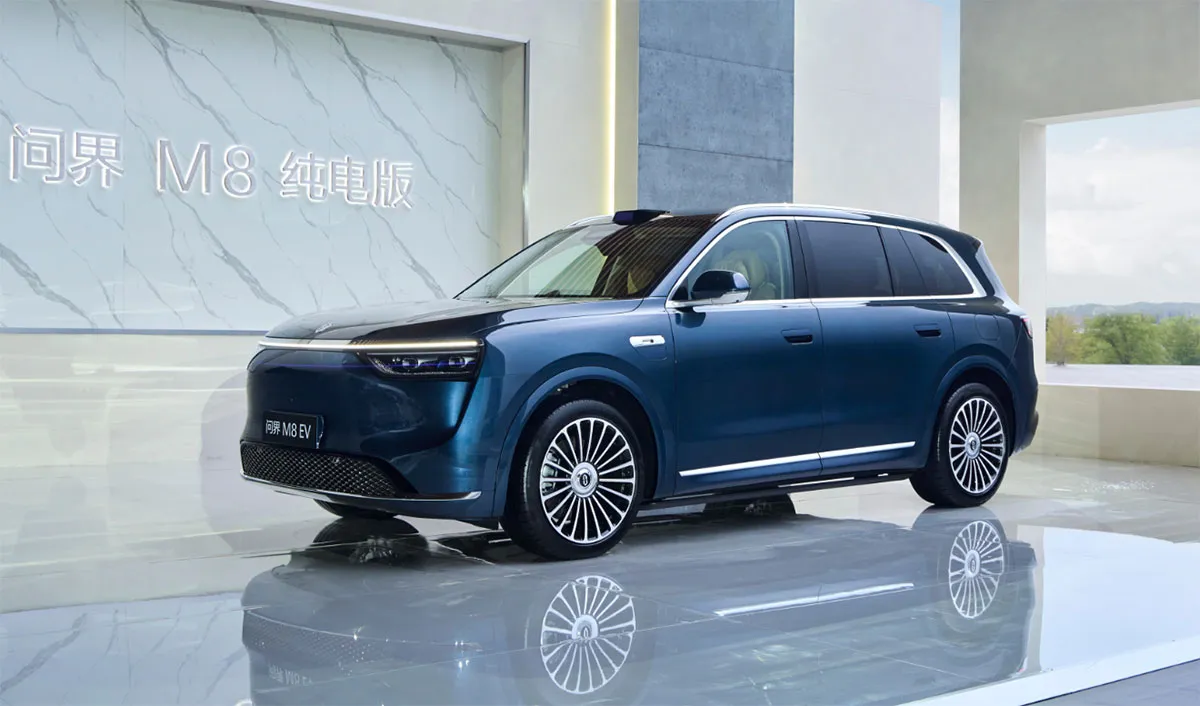
Huawei-backed Aito has officially launched the battery electric vehicle (BEV) version of its M8 SUV, adding a new entry in China’s mid-to-large electric SUV segment.
The Aito M8 BEV went on sale on Sunday with a starting price of 359,800 yuan ($50,280), about 4.8% lower than the previously announced pre-sale price of 378,000 yuan. Shortly after the launch, the company said the model had secured more than 7,000 firm orders within two hours.

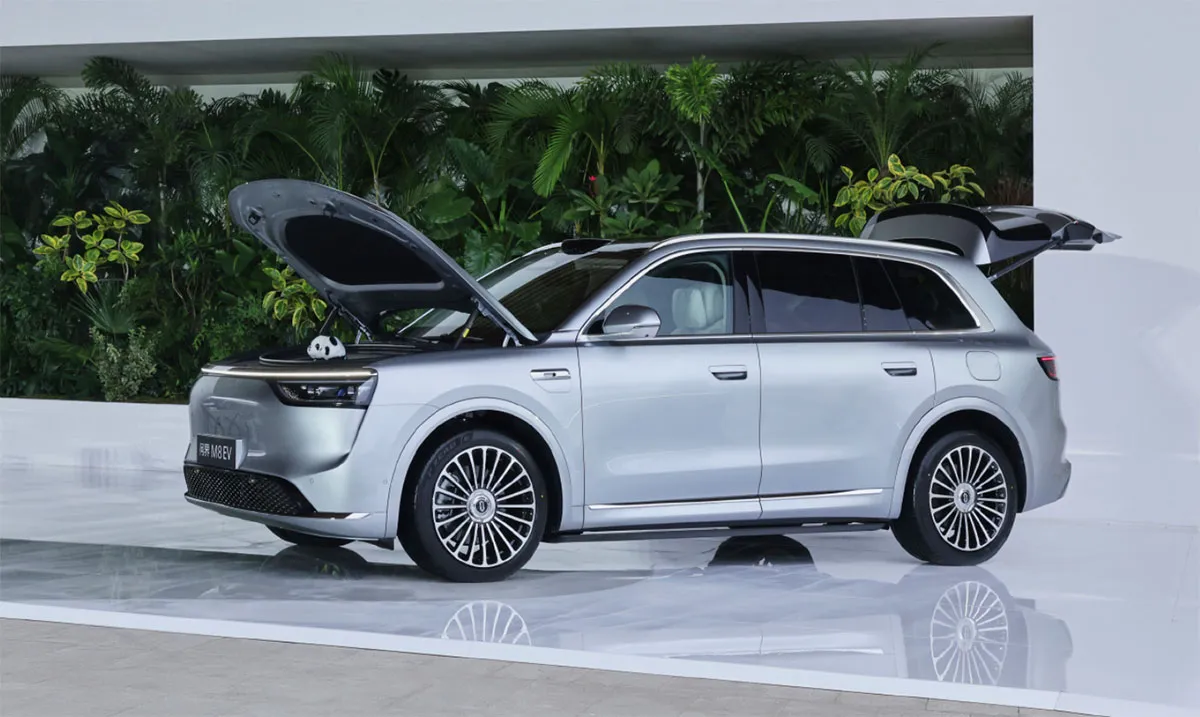
Aito is offering the BEV in three trims – Max+ Long Range Edition, Max+ All-Wheel Drive Edition, and Ultra All-Wheel Drive Edition – with each available in five-seat and six-seat configurations. Prices range from 359,800 yuan to 449,800 yuan depending on seating and drivetrain options. Deliveries are scheduled to begin in September.
Built on Huawei’s Giant Whale 800-volt high-voltage platform, the M8 BEV comes standard with a 100-kWh CATL battery pack and offers a CLTC range of up to 705 km. The rear-wheel-drive variant produces 227 kW (305 hp), while the all-wheel-drive editions add a secondary 160 kW motor for a total output of 387 kW.

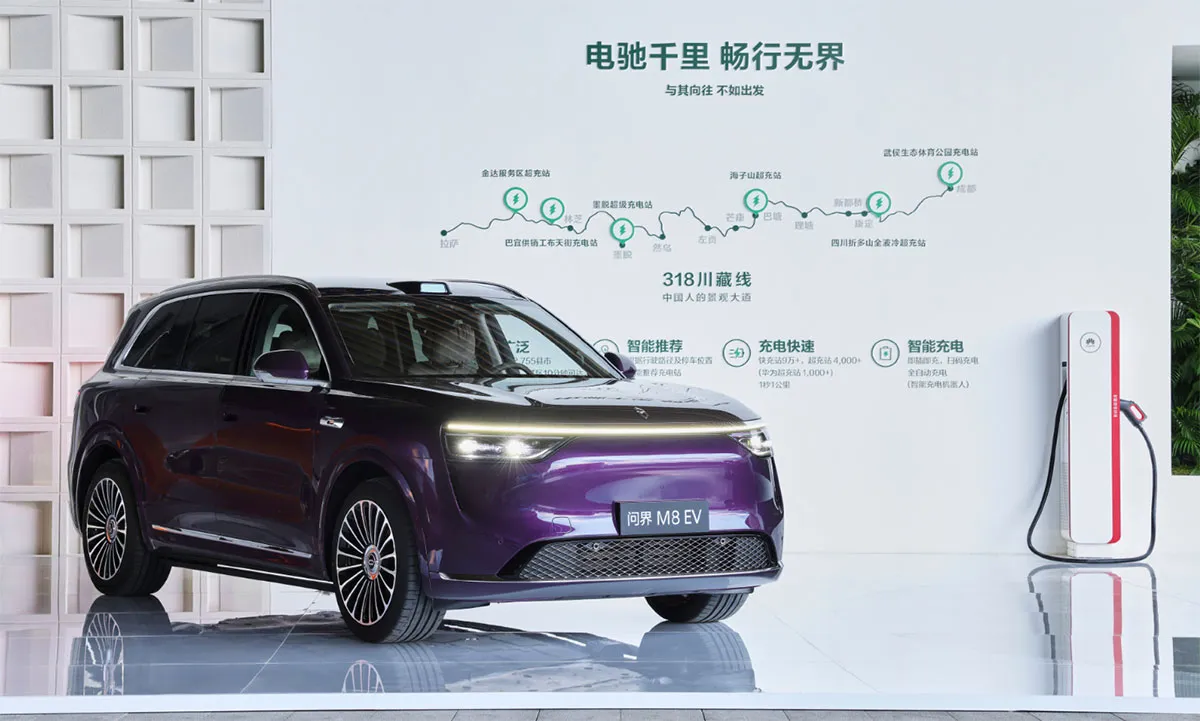
The model is also equipped with Huawei’s advanced driver-assistance technology, including a 192-channel LiDAR, one rear-facing solid-state LiDAR, and five 4D millimeter-wave radars to support active safety and intelligent parking features.
With dimensions identical to its extended-range electric vehicle (EREV) sibling – 5,190 mm long, 1,999 mm wide, and 1,795 mm tall with a 3,105 mm wheelbase – the BEV expands the M8 lineup to 12 variants in total. The EREV version was first launched in April with the same base price.

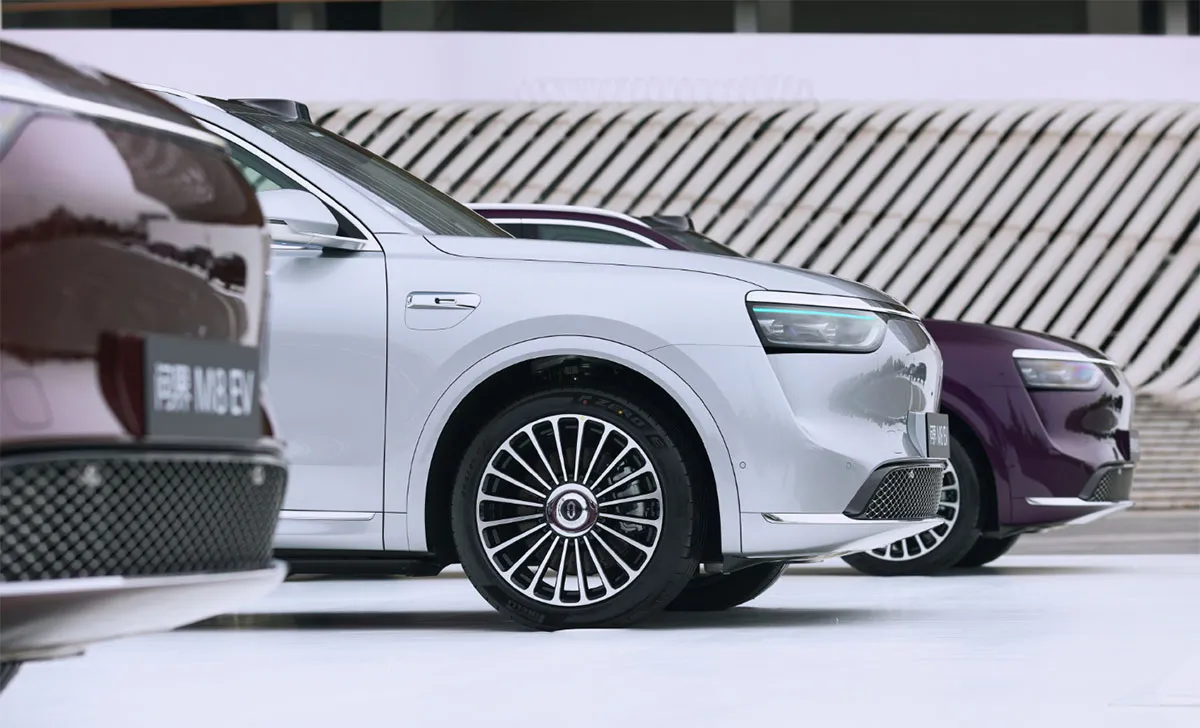
The M8 BEV is expected to compete with the Tesla Model Y L, Li Auto Li i8, Nio ES8, and Onvo L90 in China’s increasingly competitive electric SUV market.