




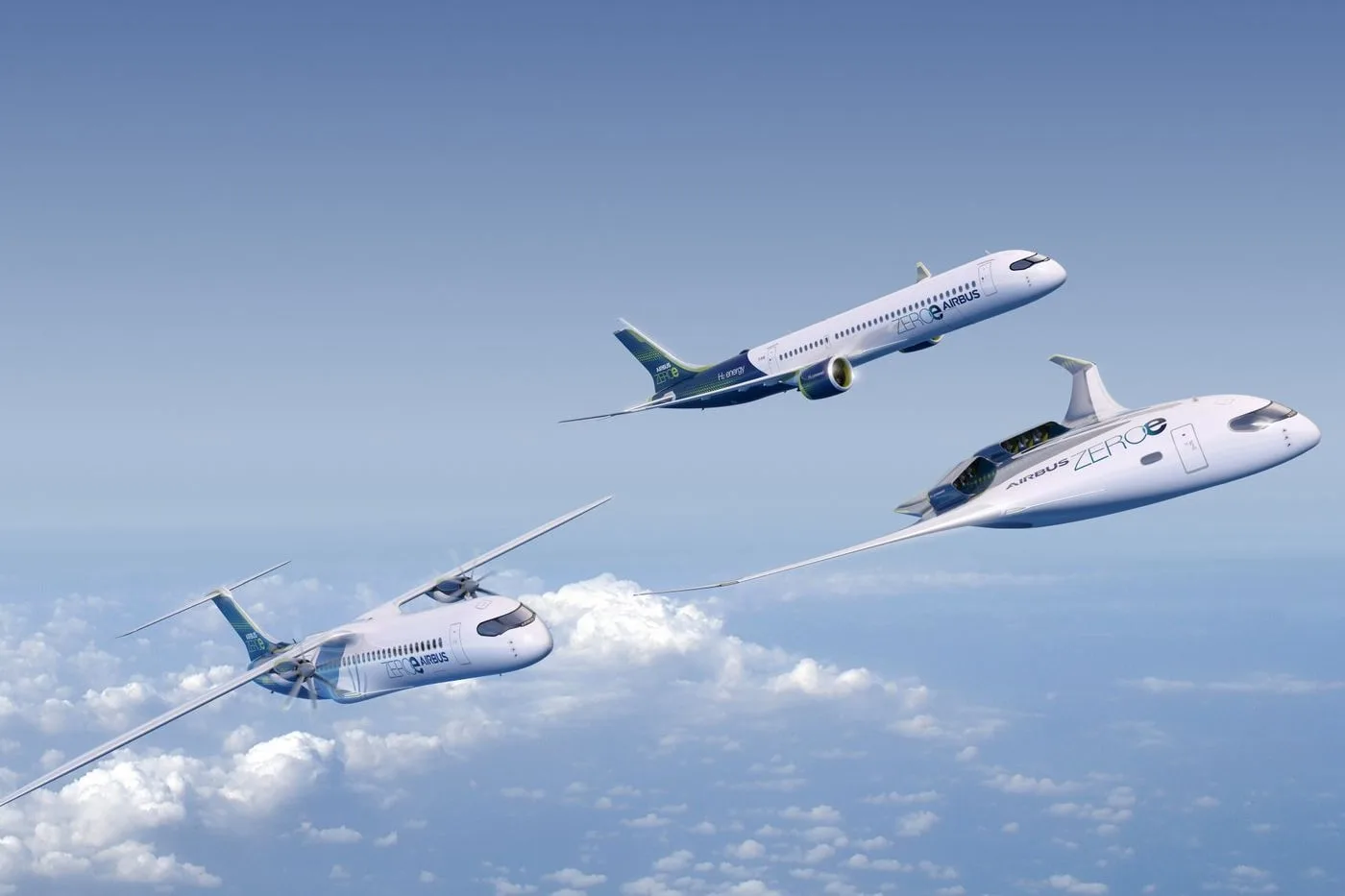
Airbus has postponed the development of its hydrogen-powered commercial aircraft, originally targeted for a 2035 launch, citing slower-than-anticipated technological advancements, the company said on Friday.
In 2020, Airbus introduced three hydrogen-based concepts under the ‘ZEROe’ program, aiming to pioneer zero-emission commercial aviation. Since then, the company has advanced research in fuel cell propulsion and partnered with Toshiba to explore superconducting engines. However, Airbus now acknowledges that the broader hydrogen ecosystem—including infrastructure, production, and regulatory frameworks—faces significant challenges that require extensive global collaboration and investment.
See also: Airbus Pauses Development of Electric Air Taxi Project Amid Technological Challenges
“Hydrogen has the potential to be a transformative energy source for aviation. However, we recognise that developing a hydrogen ecosystem … is a huge challenge requiring global collaboration and investment,” Airbus stated. While it reaffirmed its commitment to hydrogen-powered aviation, the company did not provide a revised timeline, saying only that the project will be realized “later than 2035.”
The French trade union Force Ouvriere said Airbus employees were informed last week that technological advancements in hydrogen propulsion are trailing by five to ten years, making the original 2035 goal unfeasible.
See also: Airbus and Toshiba Collaborate on Superconducting Technologies for Hydrogen-Powered Aircraft
The decision follows Airbus’ recent suspension of its battery-electric air taxi project, citing battery limitations that prevent the aircraft from achieving the targeted 100-kilometer range with four passengers on board.


