

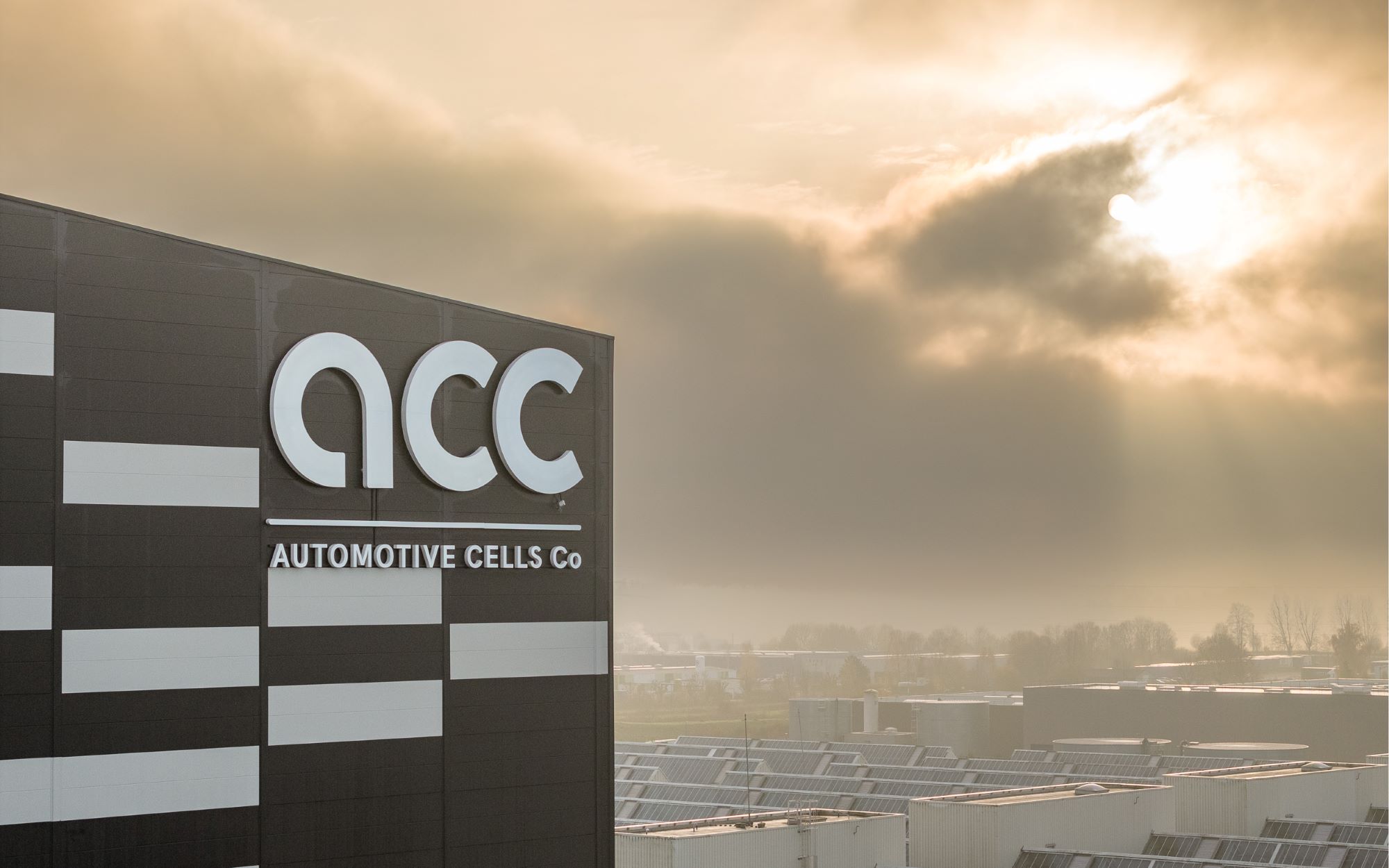
Automotive Cells Company (ACC), the battery joint venture backed by Stellantis, Mercedes-Benz and TotalEnergies, has abandoned plans to build battery cell factories in Germany and Italy, ending projects that had been on hold for nearly a year.
The decision affects proposed gigafactories in Kaiserslautern, Germany, and Termoli, Italy. Italy’s metalworkers’ union UILM said over the weekend that ACC management had informed employee representatives the two projects had been “definitively shelved.” ACC later confirmed that the conditions required to restart the projects, paused since May 2024, were unlikely to be met.
ACC had originally halted work on the two sites while it conducted a strategic review, including an assessment of whether to continue investing in nickel-based battery chemistries or shift toward lower-cost alternatives. At its only operational plant in Douvrin, France, which began producing cells in 2023, ACC manufactures nickel-manganese-cobalt (NMC) batteries.
Since then, Stellantis has moved to secure more affordable lithium iron phosphate (LFP) technology through a separate partnership with CATL, with plans to build an LFP battery factory in Spain close to Stellantis vehicle plants. TotalEnergies, meanwhile, had already publicly questioned the case for further ACC investments beyond the Douvrin facility.
The outlook for the Termoli project had deteriorated steadily. In September 2024, the Italian government withdrew its funding commitment after ACC failed to reconfirm the investment. By late 2024, reports indicated that management viewed the project as no longer viable due to technical, financial and strategic constraints.
ACC said it has begun discussions with works councils in Germany and trade unions in Italy on the implications of discontinuing the projects. In Italy, unions have called for clarity on future industrial plans and job security. The Termoli site currently operates as a Stellantis engine plant, but no detailed plans have been announced for its long-term use.
The cancellation comes as ACC faces operational challenges at Douvrin, including high scrap rates that have limited output. According to recent reports, the joint venture has struggled to meet even Stellantis’s internal demand, delivering cells for only about 1,000 vehicles per month, with delays stretching several months. ACC has brought in technical specialists from China to address production efficiency issues.
More broadly, the decision reflects softer-than-expected electric vehicle demand in Europe and mounting pressure on automakers to control costs. Stellantis, under new chief executive Antonio Filosa, is reviewing a range of projects launched by previous management as it reassesses its global electrification strategy.
Source: reuters.com, uilmnazionale.it