
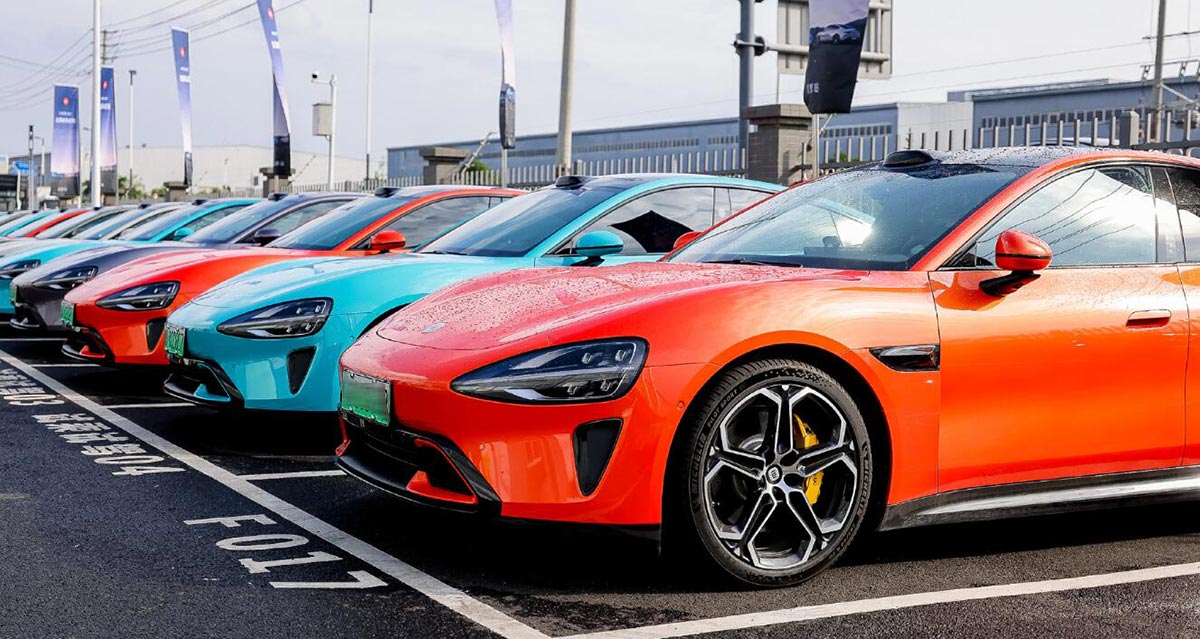
Goldman Sachs has raised its electric vehicle (EV) sales forecast for Xiaomi, citing a more favorable outlook for demand and manufacturing capacity. Analyst Timothy Zhao’s team upgraded the forecast for Xiaomi’s EV sales to 350,000 units in 2025, a 21% increase from the previous estimate of 290,000 units and 21% higher than the current consensus.
Additionally, the forecast for 2026 was revised upwards from 480,000 units to 655,000 units, reflecting a 48% increase over the current consensus. Xiaomi’s EV business is now valued at RMB 272 billion ($37 billion), with a 12-month forward price-to-sales ratio of 1.7x, higher than the average of 1.0x for competitors such as Li Auto (NASDAQ: LI), Xpeng (NYSE: XPEV), and Nio (NYSE: NIO). The research team attributes the optimism to Xiaomi’s “hero product” strategy, with the SU7 as the starting point, followed by expansion into potentially larger markets, positioning the company for long-term growth and profitability.
Goldman Sachs also forecasts a reduction in Xiaomi’s non-IFRS operating loss from its smart EV business, with the loss expected to decrease from RMB 6.8 billion in 2024 to under RMB 4 billion in 2025. The company could reach a profit inflection point by 2026. Xiaomi plans to allocate RMB 13 billion for research and development in 2025, an increase of RMB 3.3 billion from the previous year.
Xiaomi’s first EV model, the SU7, officially launched on March 28, 2024, with deliveries starting in April. The sedan comes in three versions—Standard, Pro, and Max—starting at RMB 215,900, RMB 245,900, and RMB 299,900, respectively. On October 29, Xiaomi also began pre-sales for the more powerful SU7 Ultra at RMB 814,900, with an official launch planned for March 2025.
Additionally, the company announced its second EV model, the YU7, with an SUV variant expected to launch in mid-2025. Xiaomi founder Lei Jun announced that the company delivered more than 135,000 vehicles in 2024, with a target of 300,000 deliveries in 2025. Xiaomi’s plant in Yizhuang, Beijing, is expected to reach an annual production capacity of 300,000 vehicles, with both phases slated to be completed in 2025.