
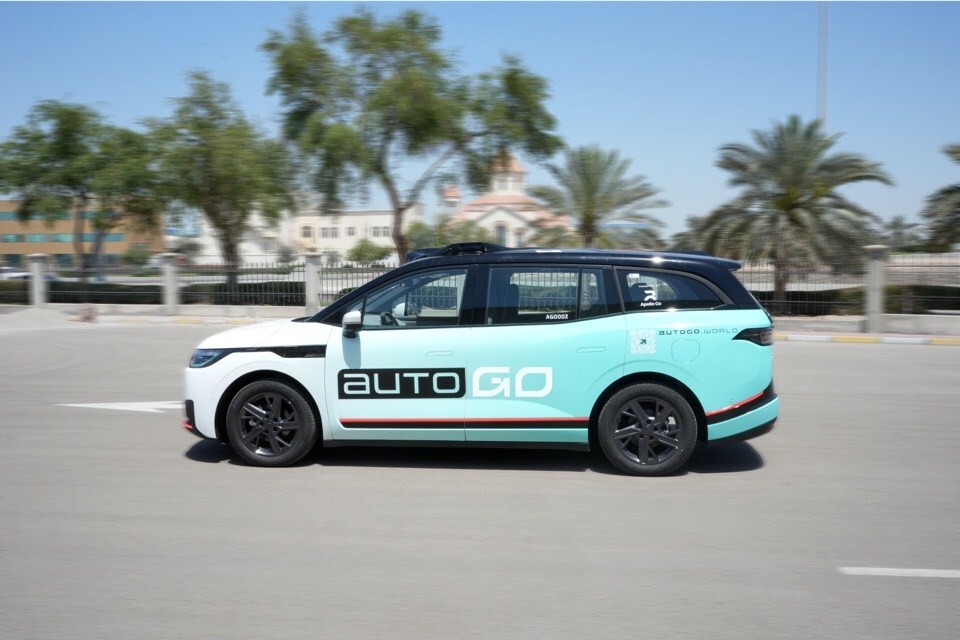
Baidu has introduced Apollo World, an artificial intelligence model designed to create interactive virtual traffic environments for training and validating autonomous driving systems. The Chinese technology company said the platform is already being used to support global testing and validation of its Apollo Go robotaxi service.
In a statement on November 4, Baidu said the virtual road-test mileage Apollo World can complete in a single day is equivalent to approximately three years of continuous driving by a real test vehicle equipped with a safety driver.
The system is intended to allow autonomous vehicles to complete simulated journeys in virtual cities, from accepting passenger bookings and making pickups to reaching destinations. Baidu aims to use these simulations to prepare driverless vehicles for new markets while reducing the costs and risks associated with real-world deployment.
AI Agents Create Interactive Traffic Scenarios
Unlike conventional simulations that rely on predetermined traffic scripts, Apollo World uses AI agents to represent vehicles, pedestrians and other road users. These agents can make decisions and respond to the actions of autonomous vehicles within the virtual environment.
Baidu Expands Apollo Go Robotaxi Service To Dubai With Fully Driverless Operations
For example, when a driverless vehicle slows down, changes lanes or yields, surrounding agents adjust their behaviour accordingly. This approach is designed to reproduce more dynamic traffic interactions and test how autonomous driving systems respond to changing conditions.
Apollo World also generates multimodal observation data in real time, including camera images and LiDAR point clouds. The autonomous driving system processes these inputs to make decisions, after which the model updates the surrounding traffic environment and produces new observations.
This creates a continuous feedback loop involving perception, decision-making, vehicle actions and environmental responses.
Baidu Outlines Framework for Evaluating World Models
Wang Liang, chief architect of Baidu’s Intelligent Driving Group (IDG), discussed the technology during the Apollo session at Baidu AI Day in Shenzhen on Tuesday.
Wang said world models should prioritise reproducing physical laws and behavioural causality rather than focusing solely on generating realistic images.
Baidu has proposed a “2+3” framework to evaluate world models. Causality and interactivity form its two fundamental requirements, while physical accuracy, persistence and real-time performance serve as three measures of model capability.
The framework is intended to assess whether a virtual environment can reproduce the underlying relationships between events and maintain consistent interactions over time.
Virtual Testing Supports Apollo Go Expansion
Baidu said Apollo World uses data collected from real-world operations to identify complex traffic conditions and potential risk scenarios. These situations are then converted into repeatable virtual tests, with the results used to improve the autonomous driving systems installed in vehicles.
Baidu’s Apollo Go Expands to Central Asia Through Kazakhstan Partnership
The approach could help Baidu evaluate driving strategies across a broader range of scenarios before deploying vehicles in additional markets.
However, the company did not disclose how much Apollo World could reduce testing costs or provide quantified evidence of improvements in road safety. Autonomous driving systems refined through virtual testing will still require validation on real roads before deployment.