
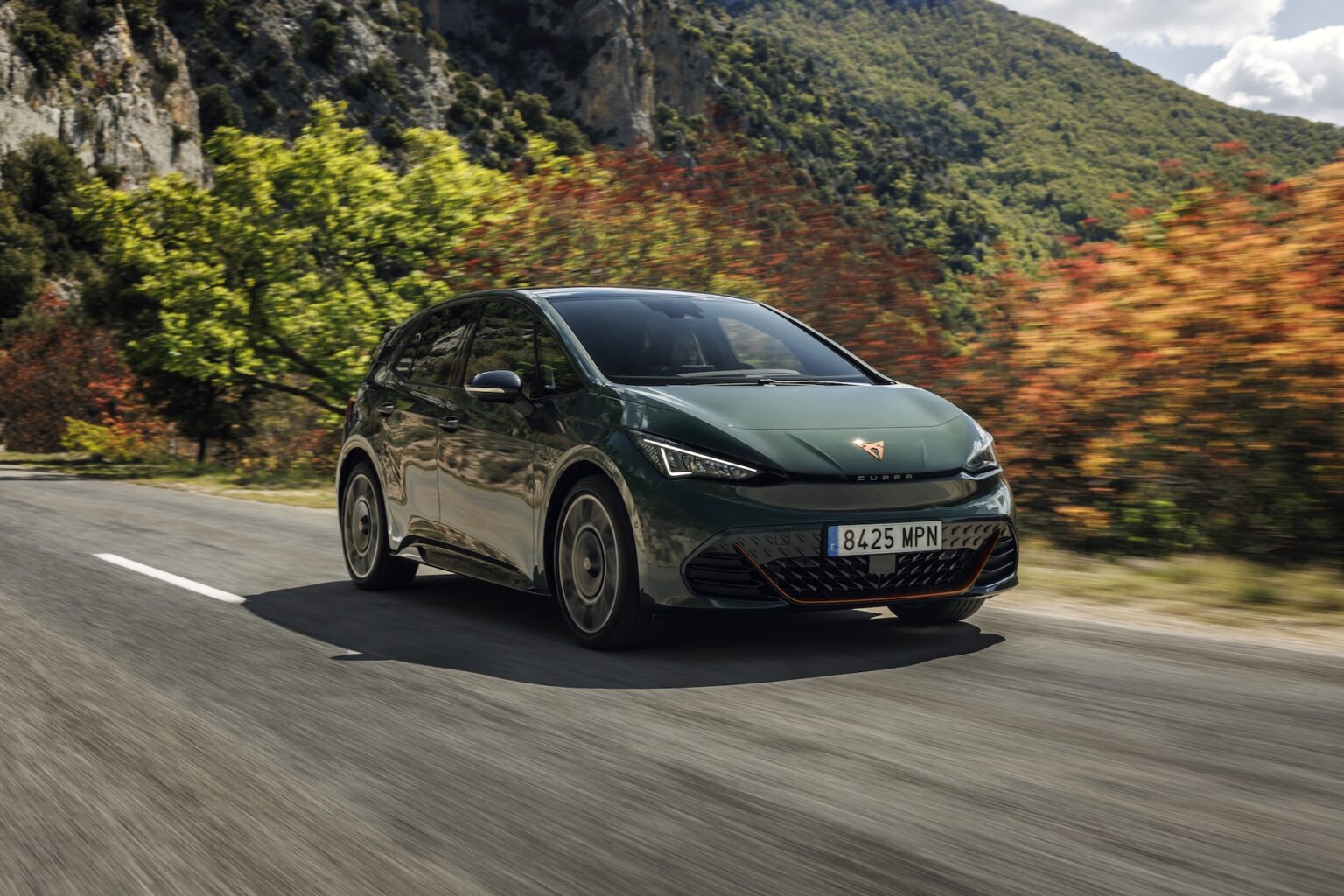
A German court has identified the EU Product Safety Regulation as a potential legal basis for electric vehicle buyers seeking to return cars affected by battery defects. The Offenburg Regional Court has indicated that the rules could support a refund claim in a case involving a recalled Cupra Born, although it has not yet issued a final judgment.
The proceedings, registered under Case No. 2 O 356/25, concern a Cupra Born affected by Volkswagen Group’s battery recall campaign 93S4. The recall addresses potentially defective battery modules that may cause reduced driving range, trigger warning lights and create a fire risk.
Cupra Opens Orders for More Affordable Raval Plus Electric Hatchback
The vehicle owner is seeking to rescind the purchase agreement and has brought claims against both the dealership that sold the car and Seat, Cupra’s parent company, in its capacity as manufacturer.
EU Product Safety Regulation Could Support Refund Claims
A notable aspect of the court’s preliminary assessment is its reference to Article 37 of EU Regulation 2023/988, known as the General Product Safety Regulation.
The provision establishes requirements for companies to provide remedies when products are subject to a recall. Affected consumers must generally be offered an effective, free-of-charge and timely solution.
The available remedies include repair, replacement with an equivalent safe product or a refund of the purchase price. At least two of these options must generally be made available.
Under certain conditions, consumers may be entitled to a refund if repair or replacement cannot be completed within a reasonable period and without significant inconvenience.
The regulation could therefore become relevant to electric vehicle owners whose battery-related safety problems remain unresolved following a manufacturer recall.
Cupra Confirms Tindaya Flagship SUV for Production, Powertrain Still Undecided
However, the extent to which Article 37 applies to the specific circumstances of the Cupra Born case remains uncertain. The regulation has applied since 13 December 2024, raising questions about its application to vehicles purchased before that date and recalls involving products already in circulation.
Volkswagen Group Recall Covers Nearly 100,000 Vehicles
The legal dispute is connected to a recall announced in March 2026 involving several electric vehicle models from the Volkswagen Group.
According to the recall figures, 74,579 vehicles from the ID.3, ID.4, ID.5, ID. Buzz and ID. Buzz Cargo ranges are affected worldwide. A further 19,452 Cupra Born vehicles are included, bringing the combined total to approximately 94,000 vehicles.
The affected battery modules may experience reduced performance and trigger dashboard warnings. The potential fire risk makes the issue particularly significant for vehicle safety.
For owners, the central question is whether the manufacturer can provide a lasting remedy that addresses the underlying battery problem within a reasonable timeframe.
Court Has Not Yet Ruled on Vehicle Returns
The Offenburg Regional Court’s assessment is preliminary and does not establish an automatic right for the plaintiff to return the vehicle.
The defendants have until 6 November 2026 to submit their responses. The court has also indicated that potential claims could arise under German sales law against the dealership and under national product safety legislation.
Volkswagen Begins Production of ID. Polo and Cupra Raval Affordable BEVs in Spain
The proceedings will therefore examine several possible legal routes, including the application of EU product safety requirements to the recalled vehicle.
Consumer law firm Dr. Stoll & Sauer, which represents the plaintiff, views the court’s assessment as potentially significant for other EV owners facing battery-related defects.
The firm has also pointed to two first-instance rulings in favour of car buyers involving battery problems in Mercedes-Benz EQA and EQB models. Those cases concerned recalls linked to battery defects.
Separately, a Mercedes-Benz EQB caught fire while charging in Hamburg, according to the information cited in the case report. NDR reported that firefighters used a specialised extinguishing lance to penetrate the burning battery from outside and apply extinguishing measures internally.
Refund Rights Will Depend on Individual Circumstances
The preliminary assessment does not mean that every electric vehicle affected by a battery recall can automatically be returned for a full refund.
The outcome will depend on the circumstances of each case, including the nature and severity of the safety risk, whether the EU regulation applies, and the effectiveness of the remedies offered by the manufacturer.
A purchase reversal may become relevant particularly when a manufacturer cannot repair the defect or provide a suitable replacement within a reasonable period and without significant inconvenience to the consumer.
The Offenburg proceedings could provide further clarity on how EU product safety rules interact with existing consumer protection and vehicle warranty rights. For now, however, the court has not established a final legal precedent or granted the plaintiff’s request to rescind the purchase.