
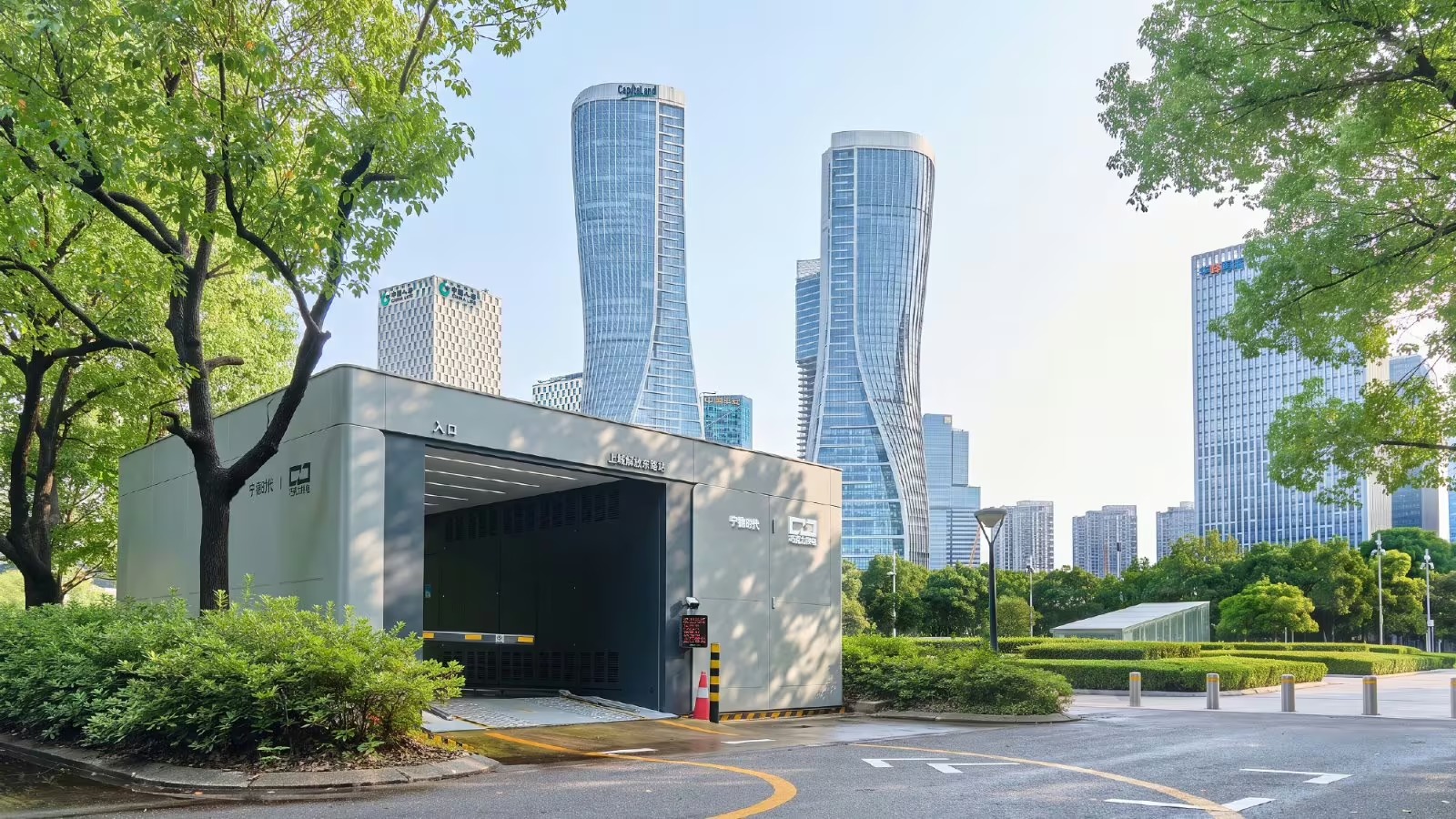
Newcool, the Huawei-backed intelligent automotive technology company, has signed a strategic cooperation framework agreement with CATL and Contemporary Amperex Energy Service Technology (CAES) to develop an integrated battery swapping ecosystem in China.
Announced by CATL on Monday, the agreement focuses on connecting vehicles equipped with Huawei Qiankun intelligent automotive solutions to CATL’s Choco battery swapping network. CAES operates CATL’s battery swapping business.
The three companies plan to coordinate vehicle systems, battery swap stations and cloud services to improve the integration of assisted driving and battery replenishment. Specific vehicle models, initial service locations and a commercial launch date have not been announced.
Automated Battery Swapping Linked to Vehicle Systems
The proposed system will use vehicle data, battery status information and travel patterns to anticipate when a vehicle may need a battery swap.
Under the planned process, a compatible vehicle would identify its energy requirements, navigate to a participating station, position itself for battery replacement and leave after the swap is completed.
CATL says its Choco system can perform a battery swap in 99 seconds. The companies aim to integrate this process with vehicle assistance technologies to reduce the need for drivers to handle charging or battery replacement manually.
The announcement does not specify whether all stages, including station entry and vehicle positioning, will be automated across every participating vehicle and station.
CATL Expands Choco Network Partnerships
The agreement gives CATL another potential route to expand the range of vehicles compatible with its battery swapping infrastructure. The Choco network is being developed for use across urban areas and major highways.
According to CATL, the company had built 2,520 battery swap stations across 200 Chinese cities as of September 29. Its long-term target is to expand the network to 30,000 stations.
Previously announced plans also include the construction of 1,000 highway battery swap stations during 2026 and 2027. CATL intends to establish coverage across 11 north-south and nine east-west highway corridors.
The proposed cooperation with Newcool could connect additional vehicle platforms to this infrastructure, although the companies have not disclosed expected additions to the network or vehicle compatibility targets under the agreement.
Assisted Driving and Battery Swapping
The partnership seeks to link navigation and assisted driving functions with energy replenishment services. CATL and Newcool aim to make it possible for compatible vehicles to identify a suitable station and complete the battery replacement process with limited driver intervention.
A similar function is already available in parts of Nio’s battery swapping network, where supported vehicles can navigate into certain stations and undergo battery replacement using the company’s assisted driving technology.
The extent to which Newcool and CATL will offer comparable functionality will depend on vehicle integration, station compatibility and the operating capabilities of their respective systems.
CATL Chairman and CEO Robin Zeng, Huawei Senior Vice President and Newcool CEO Jin Yuzhi, and CATL Marketing System Co-President Yang Jun attended the signing.
Newcool’s Ownership and Automotive Partnerships
Newcool developed from Huawei’s intelligent automotive solution business, commonly known as the car business unit. It was established as a separate company in January 2024 and was initially wholly owned by Huawei.
Huawei currently holds an 80% stake in Newcool, while Seres and Avatr, the electric vehicle unit of Changan Automobile, each hold 10%.
In April 2026, Anhui Jianghuai Automobile Group (JAC) announced plans to invest in Newcool. The proposed investment amount was not disclosed, and completion has not been announced.
The CATL agreement adds another collaboration to Newcool’s automotive activities, with a focus on linking vehicle intelligence and battery swapping. The companies have yet to provide a timetable for deployment or identify the first production vehicles expected to use the integrated service.