
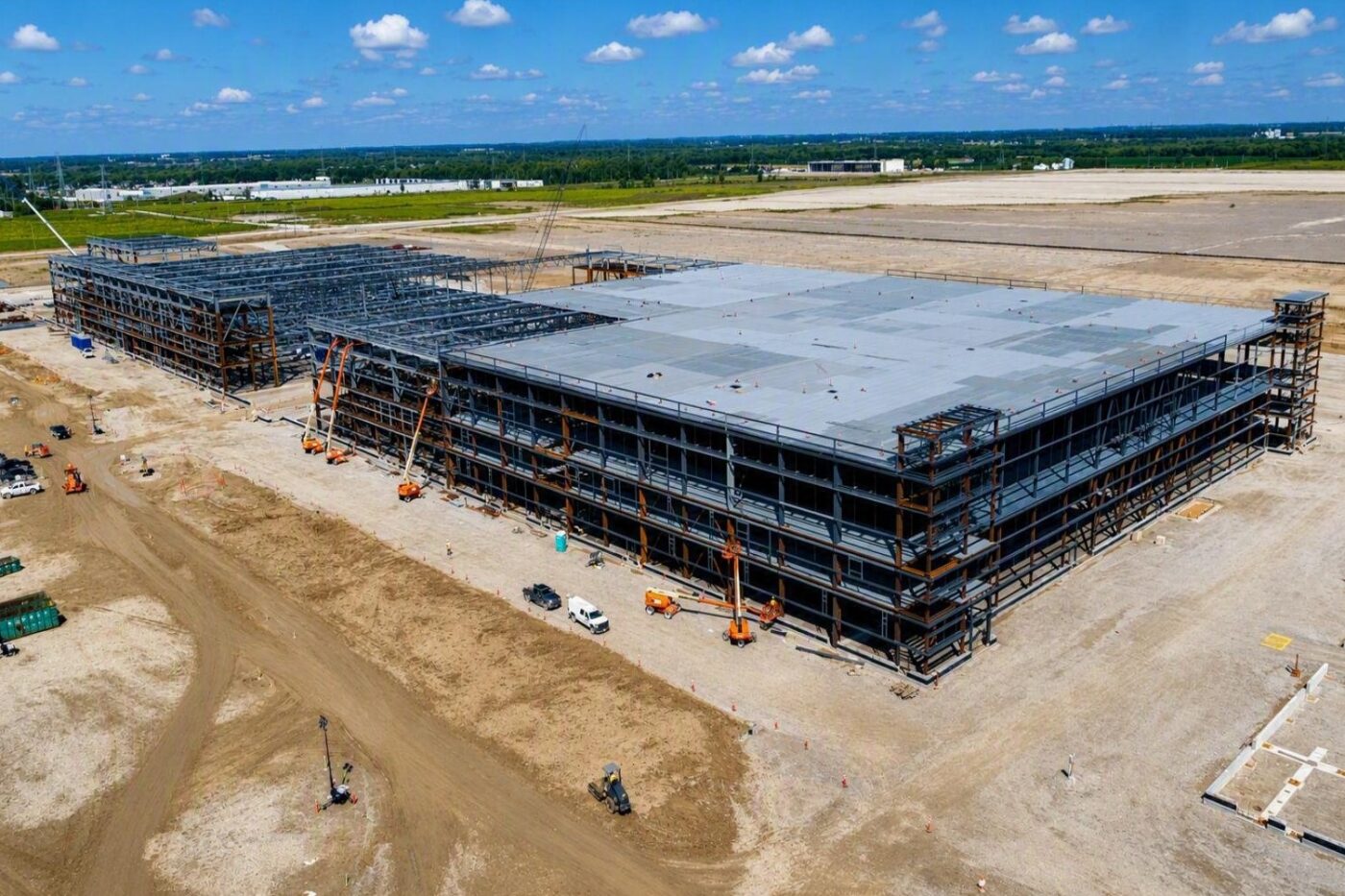
Volkswagen Group battery subsidiary PowerCo has delayed the planned start of battery cell production at its gigafactory in St. Thomas, Ontario, Canada, by about two years. Production is now expected to begin in 2029 rather than the previously planned 2027 start.
The updated timeline was disclosed alongside the appointment of EllisDon as general contractor for the construction project. PowerCo said the change reflects shifting market demand, technological developments and Volkswagen Group’s long-term strategy.
Production Timeline Pushed Back
The St. Thomas facility was announced in 2023 with plans for annual production capacity of up to 90 GWh. Operations were originally scheduled to begin in 2027, a timeline PowerCo reaffirmed last year as construction of three major buildings got underway.
The battery cells are intended primarily for Volkswagen Group electric vehicles manufactured in North America, including vehicles from the revived Scout brand.
Scout plans to begin customer deliveries in 2028, meaning its initial vehicles will not use battery cells produced at the St. Thomas facility.
PowerCo said the revised timeline is intended to accommodate next-generation battery technology while maintaining flexibility to scale production in response to changing market conditions.
EllisDon Appointed General Contractor
PowerCo has appointed EllisDon as general contractor for the St. Thomas project. The Canadian construction company will support the next stages of development as construction moves into core infrastructure and structural phases.
Around 60 EllisDon employees are currently working at the site, with the workforce expected to increase to approximately 1,300 during the peak construction phase. Additional personnel will also support concurrent project activities.
Max Mantha, President, Construction, at EllisDon, said:
“The PowerCo facility represents a transformative investment in Canada’s industrial future, and EllisDon is proud to play a role in its delivery. As a Canadian-headquartered, employee-owned company, we are committed to building the infrastructure that will help support Canada’s growing electric vehicle and battery manufacturing sector. This project will create opportunities for skilled tradespeople, local businesses, and communities across southwestern Ontario, and we look forward to working with PowerCo and our partners on this landmark development.”
The appointment allows construction to continue following progress made since the project’s groundbreaking in 2025.
PowerCo Aligns Project With Market Conditions
PowerCo said it is aligning the project’s timeline and product strategy with evolving market demand, technological developments and Volkswagen Group’s long-term strategy.
St. Thomas is now expected to begin operations in 2029, allowing PowerCo to incorporate next-generation battery technology while retaining the ability to scale the facility over time.
Joel Karlsberg, Chief Procurement Officer of PowerCo Canada, said:
“The St. Thomas gigafactory remains a cornerstone of our North American strategy. We are continuing to build now while determining how and when the facility scales over time. This is about getting the pacing right—not stepping back—to protect our long-term investment, support regional jobs, and position Canada, Ontario, and St. Thomas to benefit in a dynamic and evolving market.”
Volkswagen Seeks Flexibility For Battery Operations
The revised timeline comes as Volkswagen continues to develop its broader PowerCo battery strategy.
The company has been seeking potential partners or investors for PowerCo. There have also been reports of potential cooperation involving Chinese battery manufacturer Gotion and PowerCo’s planned cell factory in Sagunt, Spain.
PowerCo has not identified a specific partner for the St. Thomas facility in its latest announcement.
The St. Thomas plant remains part of Volkswagen Group’s planned North American battery manufacturing footprint despite the change to its production schedule. The revised timeline is intended to give the company additional flexibility as battery technology and market demand develop.