
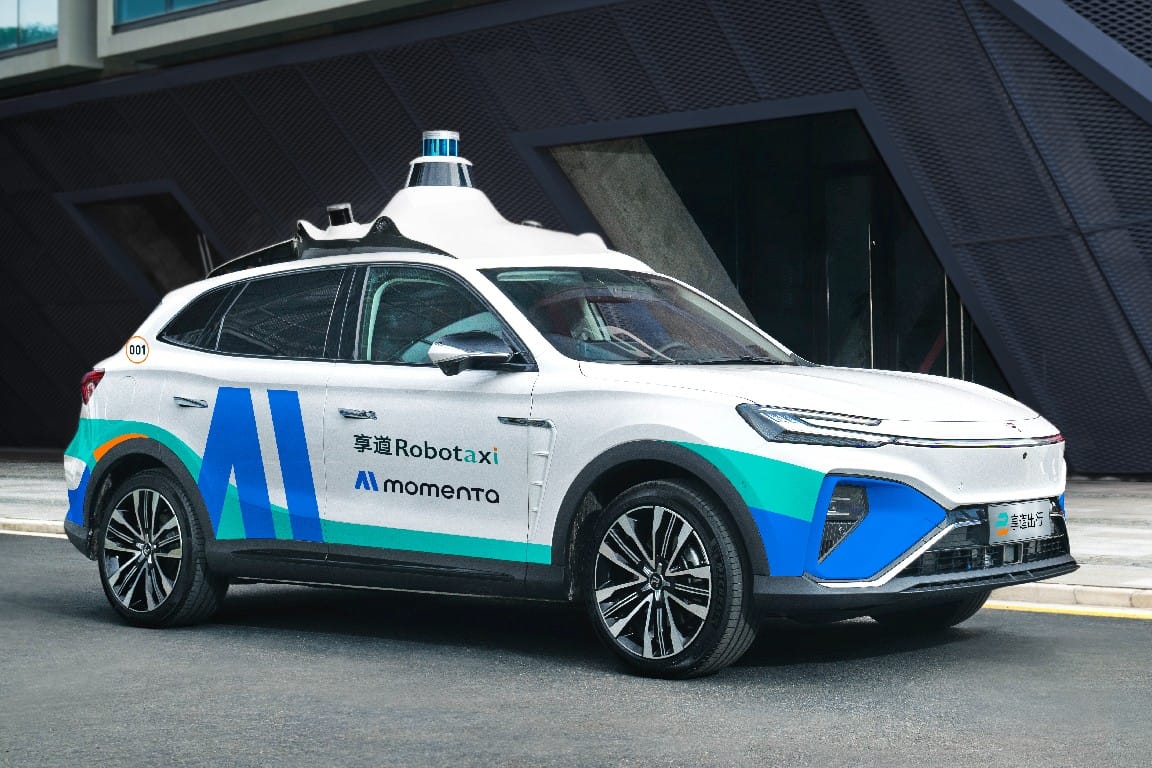
Chinese autonomous driving technology company Momenta has entered the autonomous cargo van market, with self-driving delivery vehicles reportedly operating for several months in Suzhou, according to a report by local media outlet 21jingji, citing people familiar with the matter.
The move marks Momenta’s expansion beyond passenger vehicle driver-assistance systems and robotaxi development as the company seeks to broaden the commercial applications of its autonomous driving technology.
Momenta Shares Gain in Hong Kong Trading Debut After HK$6.8 Billion IPO
Company Broadens Autonomous Driving Portfolio
Founded in 2016, Momenta has become one of China’s largest independent providers of intelligent driving systems.
The company says its technology has been deployed in more than one million mass-produced vehicles across over 100 vehicle models, while it has secured production nominations for more than 210 models.
Momenta was listed on the Hong Kong Stock Exchange on July 8, raising approximately HK$6.8 billion through its initial public offering.
The company previously said about 60% of the IPO proceeds would be allocated to research and development, while roughly 20% would support commercialization of its robotaxi business.
Momenta Secures Autonomous Vehicle Testing Permit in Wuxi to Expand Robotaxi Operations
According to 21jingji, expanding into autonomous freight allows Momenta to apply its autonomous driving platform across additional commercial scenarios, helping distribute the substantial research and development costs associated with advanced autonomous driving technology.
Robovans Seen as Major Commercial Opportunity
Momenta introduced the first production application of its R7 world model in April and has said its long-term objective is to build a physical artificial intelligence platform capable of supporting passenger vehicles, robotaxis, robotrucks, autonomous cargo vans and potentially robotics applications.
Autonomous cargo vans, commonly referred to as robovans, are widely viewed as one of the most promising commercial applications for Level 4 autonomous driving.
According to the China Federation of Logistics & Purchasing, more than 33,000 autonomous delivery vehicles were operating in China by the end of 2025.
The organization projects annual production and sales of autonomous delivery vehicles could reach 860,000 units by 2030, with the country’s total fleet exceeding two million vehicles.
Competitive Market Faces Regulatory Challenges
China’s robovan market remains concentrated among a small number of companies.
Industry data cited by 21jingji show that Zelos operated more than 25,000 autonomous delivery vehicles during the first quarter of 2026, representing a market share of 52.3%.
Momenta Receives Strategic Funding From Grab to Target Southeast Asian Markets
Neolix managed approximately 17,000 vehicles, accounting for 36.2% of the market. Together with Rino, the three companies controlled more than 95% of China’s autonomous delivery vehicle sector.
The report also noted that falling hardware costs have helped accelerate industry development. LiDAR sensor prices have declined from around 100,000 yuan during the technology’s early commercial stages to roughly the 1,000-yuan range, while the bill-of-materials cost for autonomous delivery vehicles has generally fallen below 100,000 yuan.
Despite improving economics, broader deployment continues to depend on regulatory approvals.
China currently does not have a unified national approval and certification framework for autonomous delivery vehicles. Instead, local governments establish their own operating requirements, requiring companies to obtain separate permits for each city where they plan to deploy vehicles.
Momenta joins a growing list of companies expanding into autonomous freight. WeRide, another Chinese autonomous driving developer, introduced its mass-produced W5 autonomous cargo van in 2025 as competition intensifies in the emerging robovan market.