
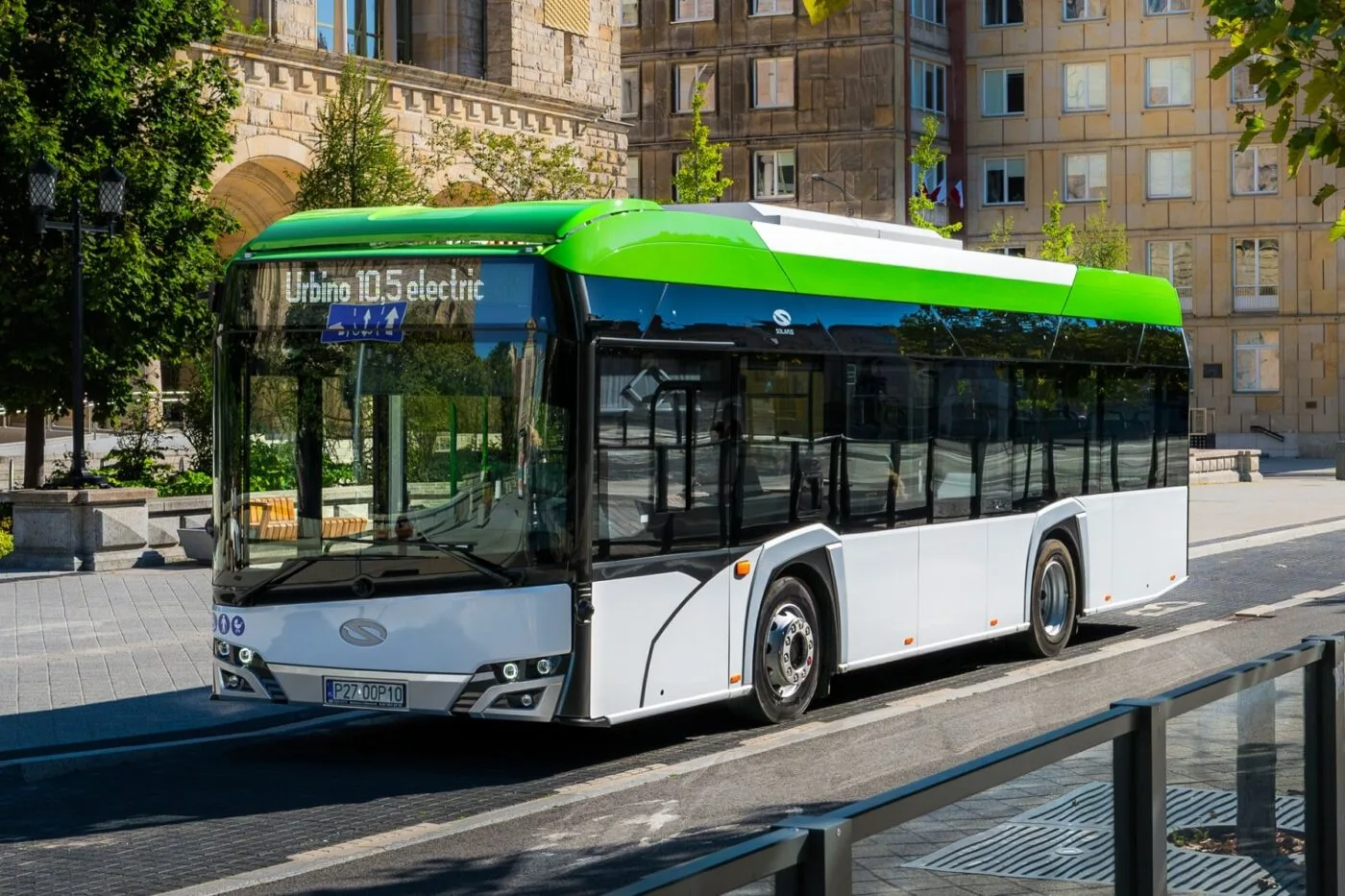
European bus manufacturers have called on European Union institutions to introduce targeted “Made in Europe” requirements for public bus procurement, arguing that stronger measures are needed to protect the continent’s industrial base and ensure fair competition.
In an open letter dated June 8, 2026, manufacturers Beulas, HESS, Solaris Bus & Coach, and VDL Bus Group urged European Commission leaders, EU member states, and EFTA countries to adopt policies that prioritize European-made vehicles and strengthen local manufacturing capabilities.
The appeal comes as European institutions continue negotiations on the proposed Industrial Accelerator Act and broader reforms to the EU’s public procurement framework.
Manufacturers Seek Stronger European Preference
The signatories argue that Europe’s independent bus manufacturing sector plays a critical role in supporting industrial competitiveness, employment, innovation, and strategic autonomy.
According to the letter, public procurement funded by European taxpayers should increasingly favor vehicles developed and produced within Europe.
The manufacturers are calling for local-content requirements covering the entire vehicle value chain, including research and development activities conducted within Europe.
They argue that final assembly alone should not be sufficient to qualify vehicles as European products.
Concerns Over Rising Chinese Competition
A major focus of the letter is the growing presence of non-European manufacturers, particularly Chinese companies, in the European bus market.
The manufacturers claim that foreign competitors have rapidly expanded their market share in the zero-emission bus segment, exceeding 30% in some areas.
They also warn that similar trends are emerging in the intercity, long-distance, and touring coach markets as stricter emissions regulations accelerate demand for low- and zero-emission vehicles.
According to the signatories, some foreign manufacturers benefit from state-backed export support in their home markets, enabling them to offer lower prices in European tenders.
“There has been ongoing concern that European taxpayers’ money is transferred outside Europe and is lost to the European economic ecosystem,” the manufacturers stated in their letter.
“At the same time, these companies benefit from state export subsidy in their home country, allowing them to undercut European manufacturers’ prices and creating a severely tilted playing field.”
Calls for Changes to Procurement Rules
The manufacturers are urging EU policymakers to revise public procurement criteria so that European value creation receives greater weight during tender evaluations.
The proposed changes would apply not only to direct vehicle purchases by transport authorities but also to public service contracts and concessions that eventually result in vehicle procurement.
The industry group also wants bus manufacturing to be formally recognized as a strategic industry under future European industrial policy initiatives.
Such a designation could make the sector eligible for stronger European preference measures under upcoming legislation.
Alignment With Industrial Accelerator Act
The manufacturers’ request comes as the European Commission advances discussions on the Industrial Accelerator Act, which identifies automotive and heavy-duty vehicle manufacturing as strategic sectors for Europe’s industrial future.
Under current proposals, publicly funded vehicle procurements could become subject to minimum local-content and carbon-intensity requirements beginning in 2029.
The bus industry is seeking assurances that these rules will support domestic manufacturers while maintaining competitiveness.
Review of CO2 and Euro 7 Regulations
Beyond procurement policy, the manufacturers are also asking EU institutions to review upcoming regulatory requirements affecting buses and coaches.
The letter specifically calls for a reassessment of future CO2 standards and Euro 7 regulations, arguing that independent European bus builders need sufficient time to develop competitive low- and zero-emission products.
The companies are also requesting earlier consultation with independent manufacturers when drafting new technical regulations.
“European independent bus manufacturers are ready to invest but need sufficient time to develop products that can be competitive,” the signatories said.
Debate Over European Preference Intensifies
The manufacturers’ intervention follows the recent publication of a position paper by the International Association of Public Transport (UITP), which also supports the principle of European preference but advocates a more gradual and flexible approach.
While UITP backs measures aimed at strengthening European industry, it has warned against procurement rules that could increase costs, reduce competition, or slow the deployment of zero-emission public transport fleets.
As negotiations continue in Brussels, the debate highlights the growing challenge of balancing industrial policy objectives with decarbonisation goals and the rapid transformation of Europe’s public transport sector.