
Ford Motor and SK On are restructuring part of their North American battery partnership as Ford pivots toward energy storage and away from some planned electric vehicle battery production.
SK Innovation said this week that SK On has completed the restructuring of BlueOval SK, the companies’ battery joint venture.
Under the new structure, the Tennessee battery facility will now operate independently under the name SK On Tennessee, ending the original joint venture arrangement for that site.
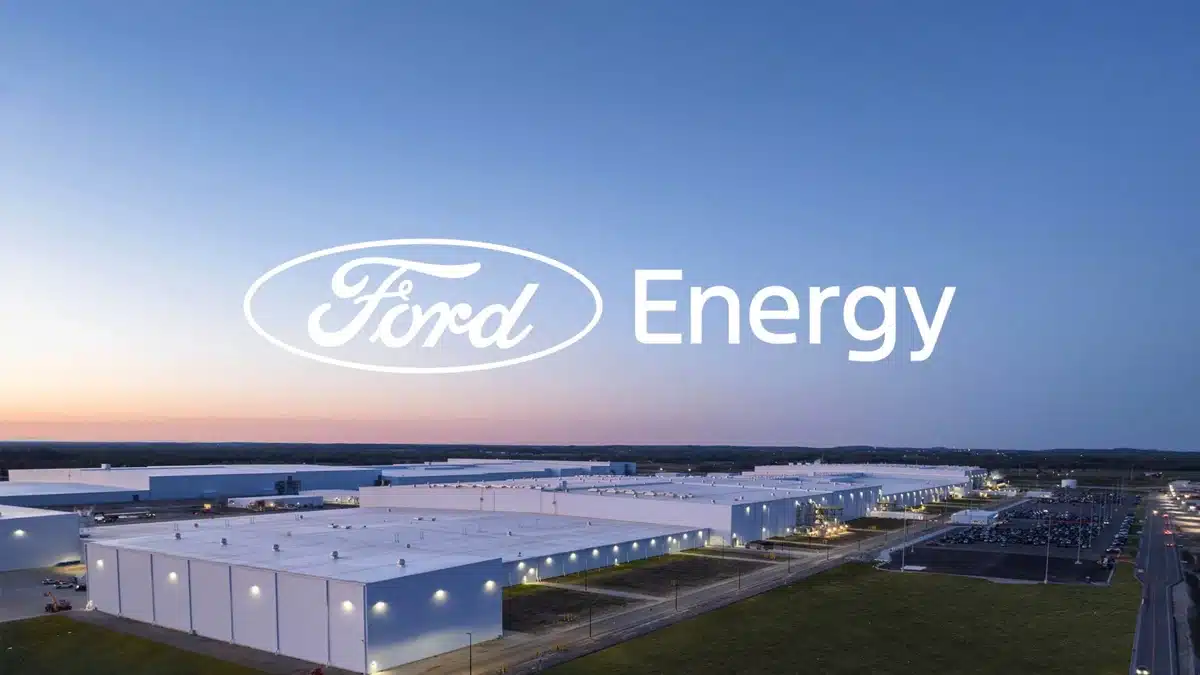
While SK On takes direct control of the Tennessee operation, Ford confirmed that its former BlueOval SK facility in Glendale, Kentucky, will transition into a battery energy storage manufacturing operation under the automaker’s new Ford Energy division.
The renamed facility, Ford Energy Systems, is expected to begin production in late 2027.
According to Ford, the Kentucky site will produce lithium iron phosphate prismatic battery cells as well as large-scale battery energy storage systems aimed at utilities, industrial customers and data centers.
The company said the facility will manufacture battery energy storage modules and 20-foot direct-current container systems.
Ford’s move comes as demand for grid-scale energy storage accelerates, driven by artificial intelligence-related data center expansion, renewable energy growth and increasing utility demand for battery storage systems.
The transition positions Ford to compete in the rapidly growing energy storage market, where companies such as Tesla have expanded through products including the Megapack battery system.
Ford and SK On originally established BlueOval SK to build multiple EV battery plants across the United States, including facilities in Kentucky and Tennessee.
However, slowing growth in electric vehicle demand and changing market conditions prompted the companies to reassess parts of the partnership.
The restructuring process reportedly began late last year when portions of the joint venture arrangement were dissolved.
Ford’s strategic shift also carries economic implications for Kentucky. Reports indicate that hundreds of workers were laid off during the transition away from EV battery production, although Ford said the new investment plans are expected to support more than 2,100 jobs across the facilities over time.