
CATL has started assembling battery modules at its newly built facility in Debrecen, Hungary, marking another step forward in the company’s European expansion strategy as it prepares to begin test production of battery cells at the site.
The Chinese battery manufacturer announced plans for the Debrecen factory in 2022, with the project intended to supply battery cells and modules to European automotive manufacturers. CATL said at the time that the investment would total 7.34 billion euros across several development phases.
Mercedes-Benz was identified as the first major customer for the plant, while media reports have also linked BMW to the project due to the automaker’s nearby factory in Debrecen, where it plans to produce the all-electric BMW iX3.
The facility represents CATL’s second battery cell production site in Europe after its plant in Arnstadt, Germany.
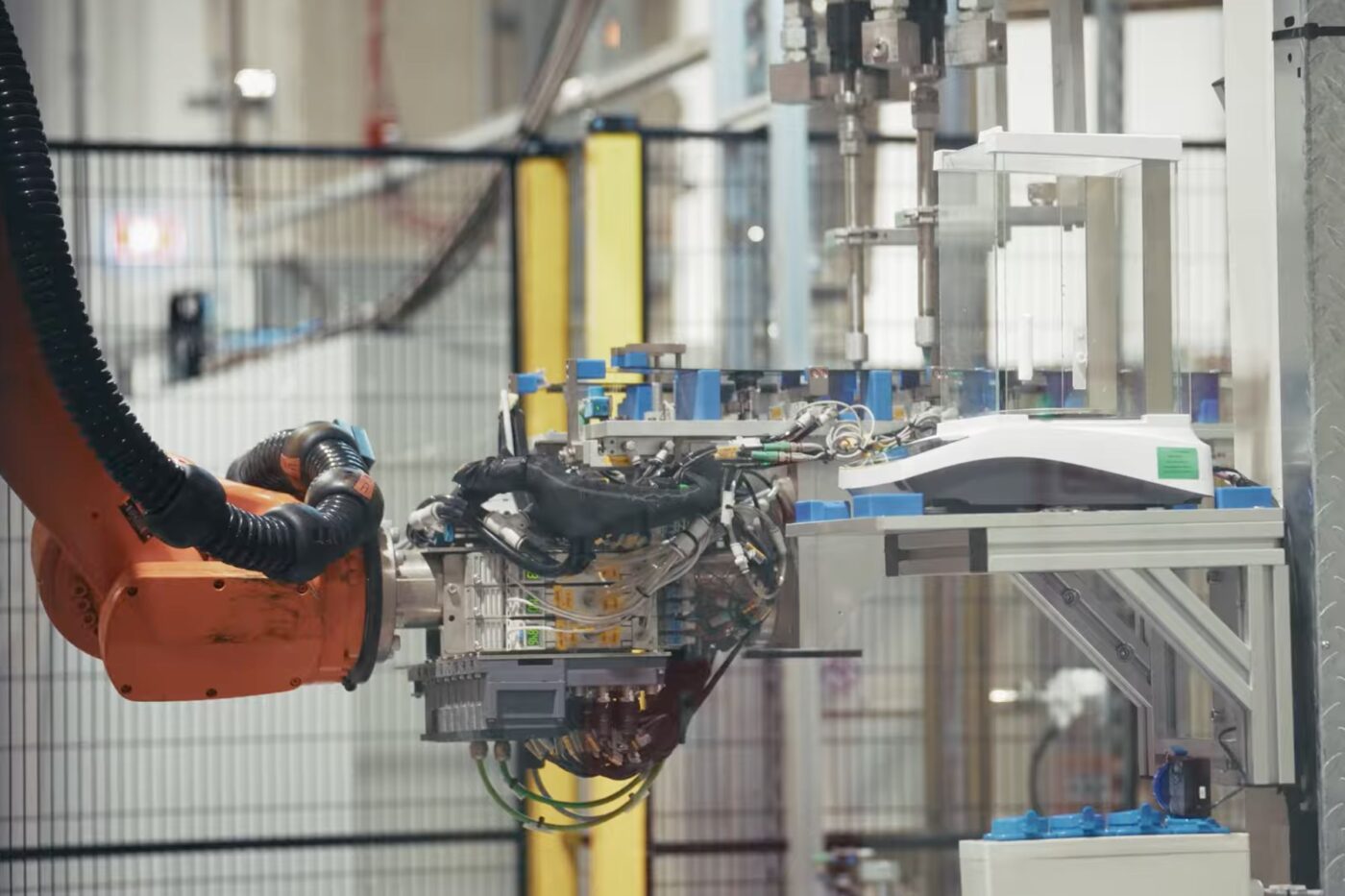
CATL said a newly completed production hall at the Hungarian factory has now begun manufacturing battery modules with an annual production capacity of 5 GWh. The company said this volume would be sufficient to supply batteries for approximately 50,000 electric vehicles equipped with 100-kWh battery packs or about 125,000 smaller electric vehicles using 40-kWh batteries.
For the time being, the battery cells used in the modules are being supplied from other CATL factories because cell production at the Debrecen site has not yet started.
According to the company, construction of the battery cell factory has been completed and production equipment has already been installed. CATL said it plans to begin test production immediately after receiving the remaining regulatory approvals.
The company had previously targeted March or April for the start of series production at the site, indicating the project is now running behind its earlier schedule. The initial phase of the factory is planned to have an annual battery cell production capacity of 40 GWh, with future expansion expected to increase output to 100 GWh.
Before moving module assembly into the newly completed facility, CATL had already been producing battery modules in Debrecen since autumn 2024 using rented production space. The company said approximately 240,000 modules have been manufactured there so far, enough to power around 60,000 electric vehicles.
The Debrecen project forms part of CATL’s broader strategy to strengthen its presence in Europe as demand for electric vehicle batteries continues to grow among regional automakers.