
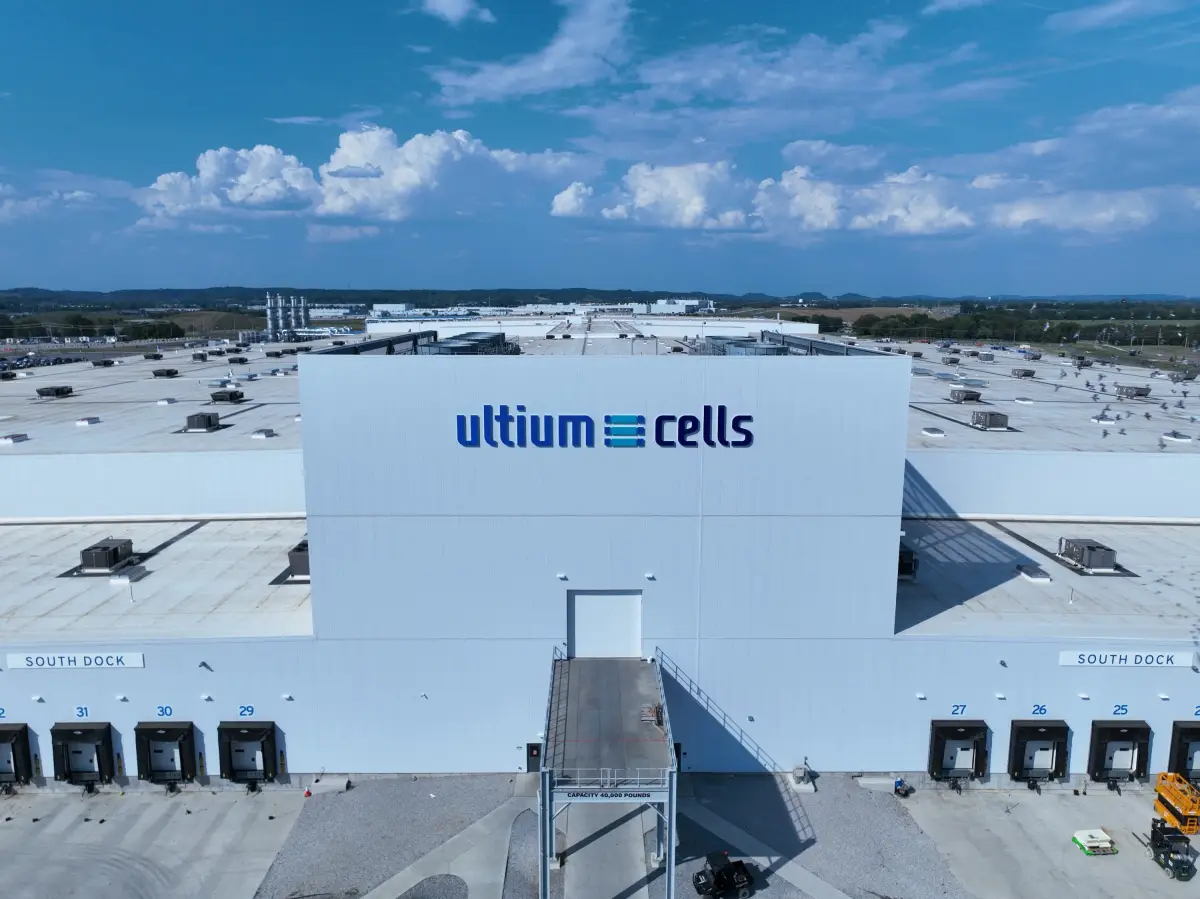
The battery joint venture between General Motors and LG Energy Solution is shifting part of its production toward stationary energy storage, with Ultium Cells announcing a $70 million investment to retrofit its Spring Hill, Tennessee plant.
The facility, which had been focused on producing nickel-rich battery cells for electric vehicles, will be upgraded to manufacture lithium iron phosphate (LFP) cells for energy storage systems (ESS). The move reflects changing market dynamics as demand for electric vehicles weakens in the United States following the expiration of federal purchase incentives.
“This announcement marks Ultium Cells’ first major retooling of the Spring Hill process equipment and reflects the company’s continued evolution as a diversified battery cell manufacturer,” said Injae Pahk. “By evolving production to meet changing market demands, Ultium Cells is reinforcing its long-term position as a key employer and technology leader in the U.S. battery cell sector.”
The shift had been anticipated since mid-2025, when General Motors said the plant would transition from NMCA battery chemistry to lower-cost LFP technology. However, the strategy has gained urgency as the automaker reassesses its electric vehicle business, including a reported $6 billion write-down tied to weaker-than-expected EV demand.
Ultium Cells said the Spring Hill site will now serve both electric vehicle and stationary storage applications, effectively diversifying its production output.
Bob Lee said the pivot reflects growing demand for grid-scale storage. “Spring Hill is becoming a key hub in our North American ESS manufacturing footprint which has helped offset slower than expected EV demand,” he said. “The explosive growth in energy storage diversifies our customer base and product portfolio and provides tangible benefits to American competitiveness in this decade and beyond.”
Battery cells produced at the plant will be supplied to LG Energy Solution’s U.S. energy storage division, LG Energy Solution Vertech, which offers integrated systems including software and lifecycle services.
LG Energy Solution aims to expand its global energy storage production capacity to more than 60 GWh, with over 80% located in North America. The Spring Hill plant will complement existing facilities in Michigan and Ontario, as well as joint ventures such as LH Battery Company with Honda.
The broader North American battery ecosystem is also evolving, with facilities increasingly serving both vehicle and stationary storage markets. The Lansing, Michigan plant—formerly part of the Ultium Cells network—has secured a supply agreement with Tesla for Megapack systems, highlighting the growing importance of large-scale battery storage.