
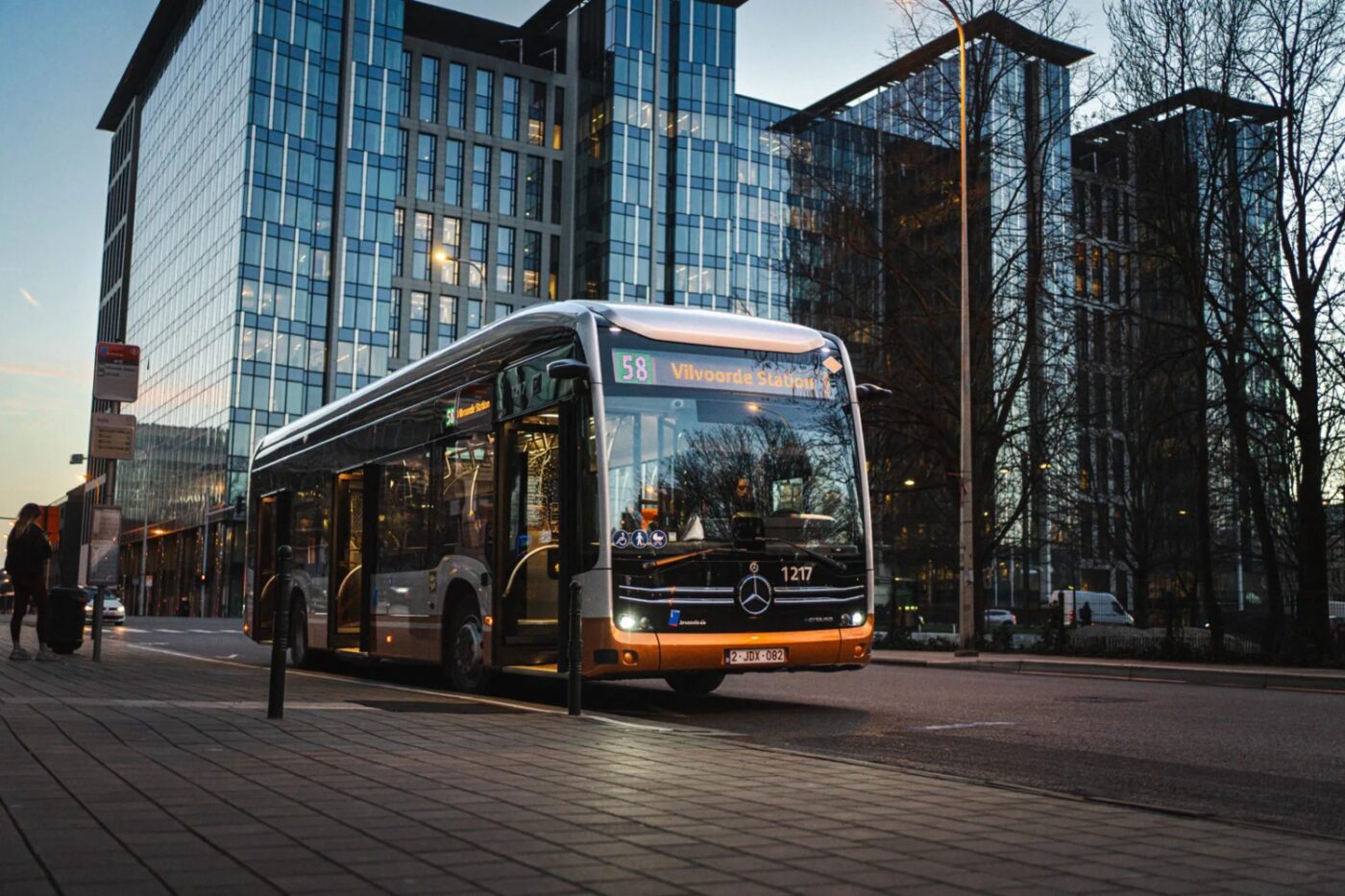
Brussels public transport operator MIVB/STIB has begun operating the first units from a new batch of electric buses supplied by Mercedes-Benz, marking another step in the city’s transition to zero-emission public transport.
A total of 50 battery-electric Mercedes-Benz eCitaro buses are scheduled to enter service in Brussels this year, including 36 standard single-unit buses and 14 articulated buses. The first vehicles began carrying passengers at the end of January, with the remaining solo buses expected to be deployed across the network by the end of March.
The initial buses will operate on routes 47, 56, 58 and 83, charging exclusively at the depot. The articulated buses, due to arrive later this year, will eventually serve routes 46, 53, 87 and 89 and will use charging infrastructure located at the Pannenhuis and Westland-Moortebeek depots, according to the transport operator.
With the addition of the new vehicles, the number of zero-emission buses in the MIVB/STIB fleet will increase to around 140 units. Before the latest delivery, the operator ran 93 battery-electric buses, 400 hybrid buses, and 357 diesel buses.
Earlier electric bus models from Bluebus and Solaris Bus & Coach are mainly used on routes 13, 37 and 64, according to the company.
Since the start of the fleet electrification program, the operator said its electric buses have collectively travelled more than 8 million kilometres, reducing carbon dioxide emissions by over 9,000 tonnes, based on Belgium’s electricity emission factors.
The new buses are part of a larger order placed in 2023 for 100 Mercedes-Benz eCitaro vehicles, including 70 articulated units and 36 standard buses. Fifty-six articulated buses from that order have already entered service, with the remaining vehicles scheduled for delivery during 2026.
Looking ahead, MIVB/STIB plans to purchase around 300 additional electric buses in the coming years to replace most of the diesel vehicles still operating in the fleet. The operator aims to run a fully electric bus fleet by 2035.
“With these new electric buses, we are taking the next step towards modernising our public transport,” said Elke Van den Brandt. “We are consciously investing in liveable neighbourhoods: these buses are quieter and emit no harmful exhaust fumes. They offer greater comfort, not only for passengers but also for residents along the routes.”
Brieuc de Meeûs said the transition requires significant operational changes beyond vehicle purchases.
“It’s not just about purchasing new vehicles, but also about training staff to handle the new technology and making significant investments in infrastructure,” he said, citing the development of new charging stations and a planned depot with advanced charging infrastructure in Neder-Over-Heembeek.