
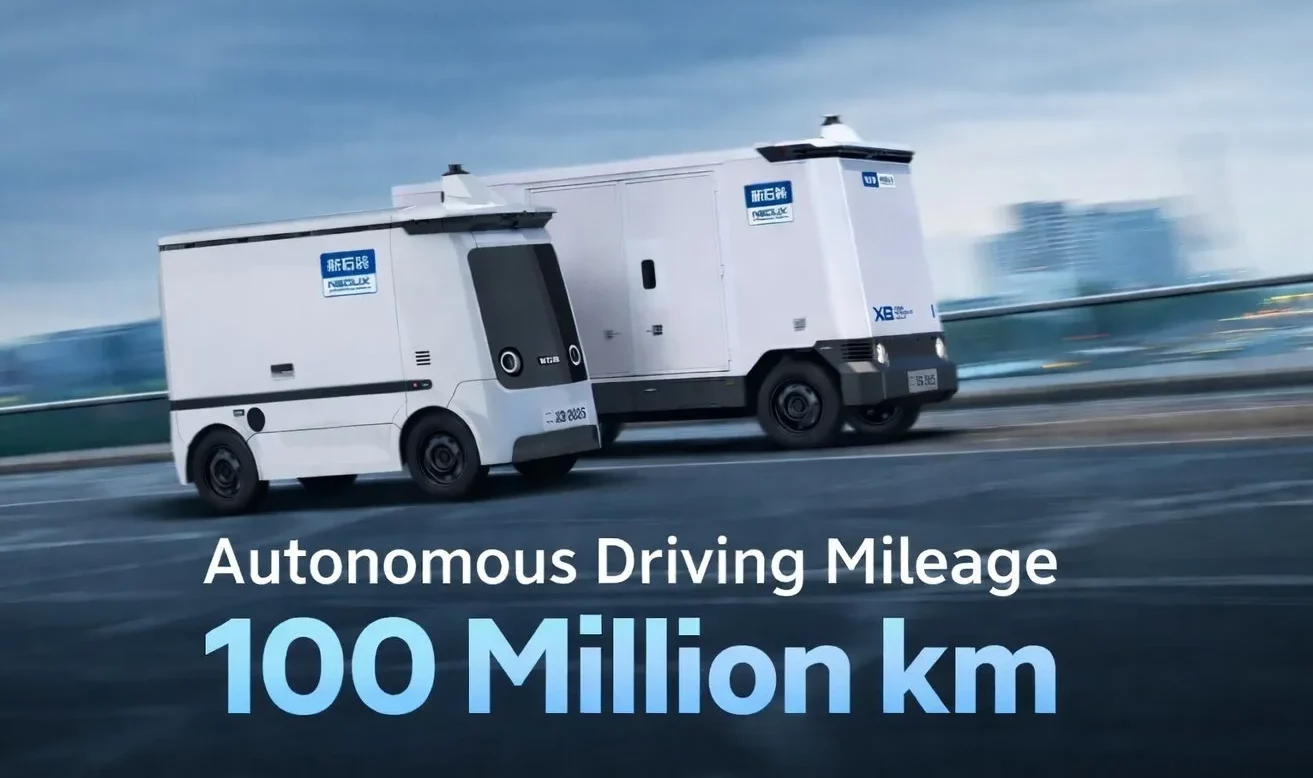
Autonomous logistics company Neolix said its Level 4 RoboVan fleet has surpassed 100 million kilometres of real-world driving, becoming the first company globally to reach that milestone in autonomous delivery vehicle operations.
The company announced on Feb. 19 that more than 16,000 of its driverless vehicles are now deployed across 15 countries, marking a shift from pilot projects toward large-scale commercial use of autonomous logistics systems.
“Reaching 100 million kilometers is more than a technical metric; it is a validation of our business model across diverse, complex, and unpredictable environments,” said founder and chief executive Enyuan Yu. “True autonomous capability cannot be simulated. It must be forged through large-scale, sustained operations.”
China remains Neolix’s largest market. The company holds operating permits in more than 300 cities and regions, including Beijing, Shanghai and Shenzhen, enabling deployments across sectors such as parcel delivery, retail distribution, pharmaceuticals and industrial logistics. In Qingdao alone, Neolix operates over 1,200 vehicles through a RoboVan-as-a-Service model that allows businesses to access autonomous delivery on demand.
The firm has also demonstrated performance in challenging environments, including the launch of an autonomous delivery route in Tibet in 2025, where vehicles operate under high-altitude and harsh weather conditions.
Commercial partnerships have helped accelerate adoption. Neolix supplies autonomous vehicles to major Chinese logistics providers including SF Express, JD Logistics, China Post, ZTO Express and YTO Express, capturing a large share of public tenders in the country’s autonomous delivery sector.
Internationally, the company has secured regulatory approvals in the Middle East, including what it described as the region’s first license for autonomous delivery operations. About 300 RoboVans have been delivered to the United Arab Emirates, while testing and partnership development are underway in several European markets.
Neolix attributes its rapid expansion to a “mapless” autonomous driving system that does not rely on high-definition maps, reducing deployment costs and enabling faster rollout across new locations.
Looking ahead, the company plans to deploy more than 10,000 vehicles outside China and enter at least three additional countries by 2026, positioning autonomous logistics as a growing component of urban transport infrastructure.