
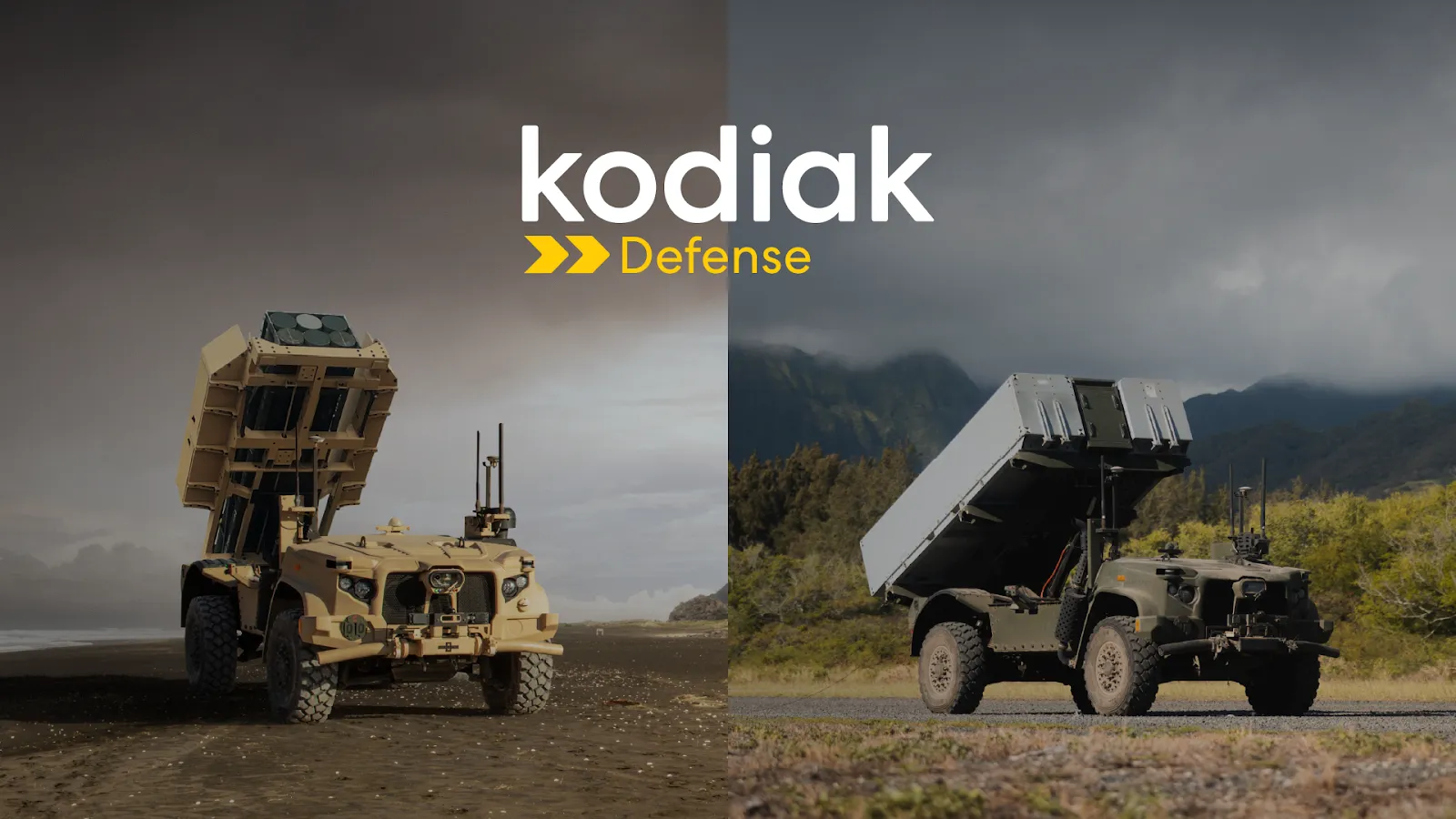
Kodiak AI Wins U.S. Marine Corps Contract For Autonomous ROGUE-Fires Vehicle Integration
Project Expands Company’s Defense Work Into Expeditionary Operations In Indo-Pacific Region
WASHINGTON, Feb 13 — Autonomous driving firm Kodiak AI has secured a contract from the U.S. Marine Corps to integrate its self-driving technology into an unmanned military ground vehicle designed for expeditionary missions.
See also: Kodiak AI Partners With Bosch to Scale Manufacturing of Autonomous Truck Platform
The Mountain View, California-based company will deploy its Kodiak Driver system into the Marines’ Remotely Operated Ground Unit for Expeditionary Fires (ROGUE-Fires), a platform intended to support distributed maritime operations and force projection across contested environments, particularly in the Indo-Pacific region.
The integration is aimed at evaluating how autonomous capabilities could extend operational reach, increase mission tempo and reduce risk to personnel during high-intensity deployments. Kodiak said it will adapt its existing commercial software and hardware interfaces rather than developing a bespoke military-only system.
Founder and Chief Executive Don Burnette described the technology as a dual-use capability applicable to both commercial and defense settings. He said the company has already tested its system extensively through earlier military engagements and sees the Marine Corps program as an opportunity to demonstrate performance in complex, unstructured terrain.
ROGUE-Fires vehicles are designed to support sea denial operations and mobile strike capabilities as part of the Marine Corps’ evolving expeditionary doctrine, which emphasizes dispersed units operating across wide geographic areas.
See also: Kodiak Robotics, Roush Deliver First Production-Line Autonomous Truck to Atlas Energy
The new contract builds on Kodiak’s prior work with the U.S. Army. In 2022, the company was selected for a roughly $30 million, three-year program to deliver an autonomous solution for the Robotic Combat Vehicle initiative. Testing under that program included operations in mountainous terrain in California, desert environments in Texas and winter conditions in Michigan.
Kodiak said the Marine Corps project will further demonstrate the maturity and flexibility of its autonomous system in environments where traditional navigation infrastructure may be limited or absent.