
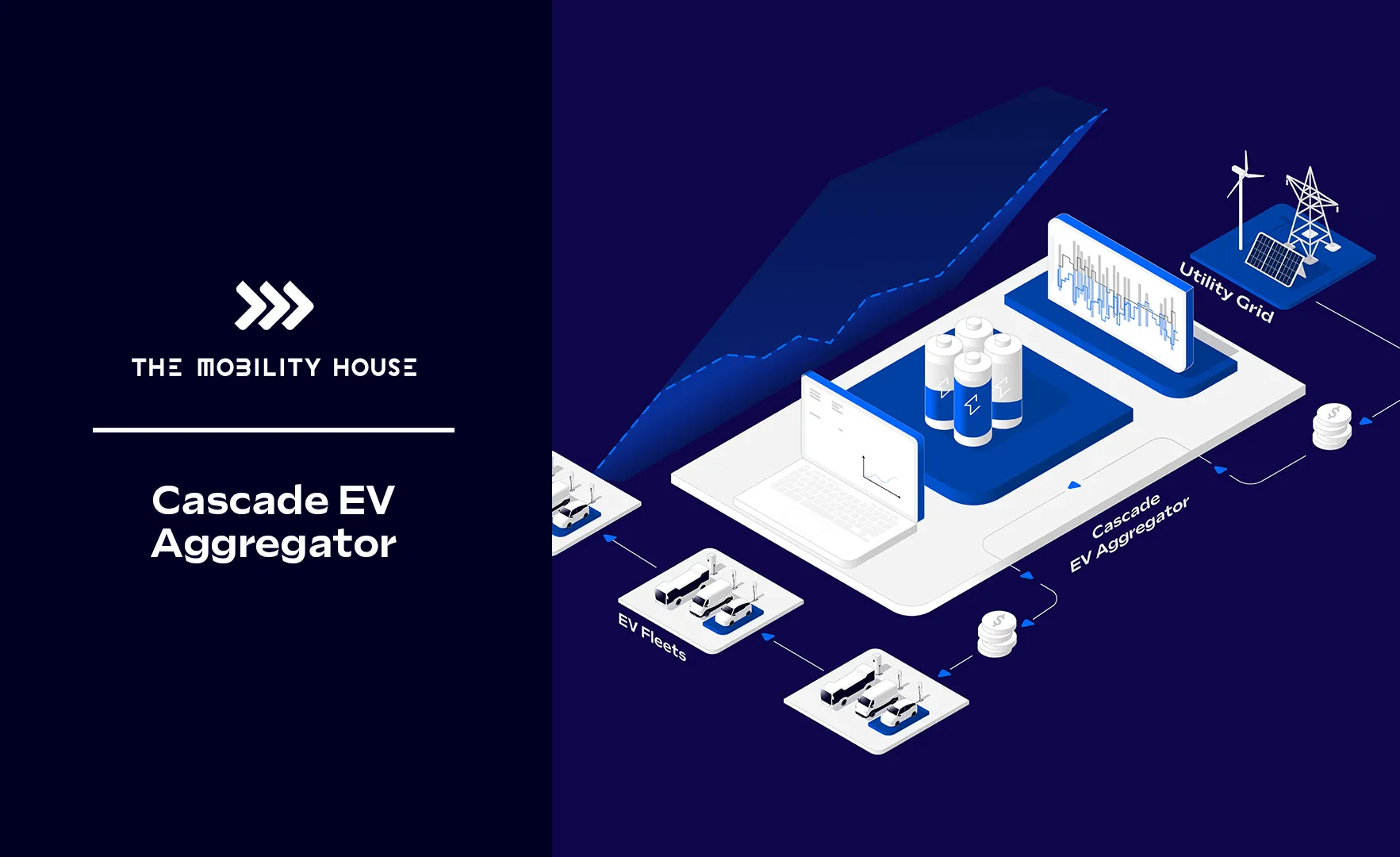
The Mobility House North America has launched Cascade EV Aggregator, a vehicle-grid integration platform designed to help electric utilities across the United States and Canada manage and optimize electric vehicle charging at scale, as EV adoption places growing demands on power networks.
The Belmont, California-based company said Cascade allows utilities to aggregate EV charging loads across a wide range of asset classes, from residential chargers to commercial fleets and electric school buses. The platform supports both unidirectional smart charging (V1G) and bidirectional vehicle-to-grid (V2G) operations, enabling EVs to participate in grid services and virtual power plants.
See also: WEX Unveils Unified Fleet Card Covering Fuel and EV Charging Payments
The launch comes as utilities prepare for rapid growth in EV-related electricity demand. According to Bloomberg New Energy Finance, battery capacity from electric vehicles on U.S. roads could reach about 4 terawatt-hours within the next decade. If aggregated and coordinated, that capacity could represent one of the largest distributed energy resources available to the grid.
“Electric vehicle batteries can play a substantial role in meeting the tremendous challenge of load growth on the electrical grid,” said Greg Hintler, chief executive of The Mobility House North America. “The Mobility House is committed to developing the technology that harmonizes EV charging with reliable grid operations.”
See also: EV Roadway Opens 480 kW Fast-Charging Hub at Novato Retail Center
Cascade operates as an aggregation layer between utilities and existing charge management systems, including the company’s ChargePilot platform deployed at thousands of charging sites. The system creates individualized charging plans based on utility signals and vehicle usage needs, while pooling the resulting flexibility to deliver services such as load reduction, demand response, dynamic rate optimization and, where enabled, energy export back to the grid.
“Cascade provides a critical aggregation layer and optimization that coordinates charging activities to enable EVs to participate in virtual power plants,” said Russell Vare, vice president of vehicle-grid integration at The Mobility House North America. “This is a powerful tool that enables vehicles to deliver flexibility to the grid at scale.”
See also: EVgo Accelerates NACS Connector Rollout Across U.S. Fast-Charging Network
Early deployments are already under way. Fremont Unified School District in California is using Cascade to aggregate charging from its electric school bus fleet, allowing the vehicles to support grid stability while parked and generate additional revenue for the district.
“The electric school buses in our fleet work hard every day to get students to school safely,” said Ernest Epley, transportation director at Fremont Unified School District. “And now as a part of The Mobility House’s Cascade Aggregator they can earn revenue for the district supporting the energy grid while they are parked at the depot.”
The Mobility House said Cascade is intended to help utilities turn EV growth from a grid challenge into a flexible energy resource, as vehicle electrification and other electricity-intensive sectors continue to expand.