
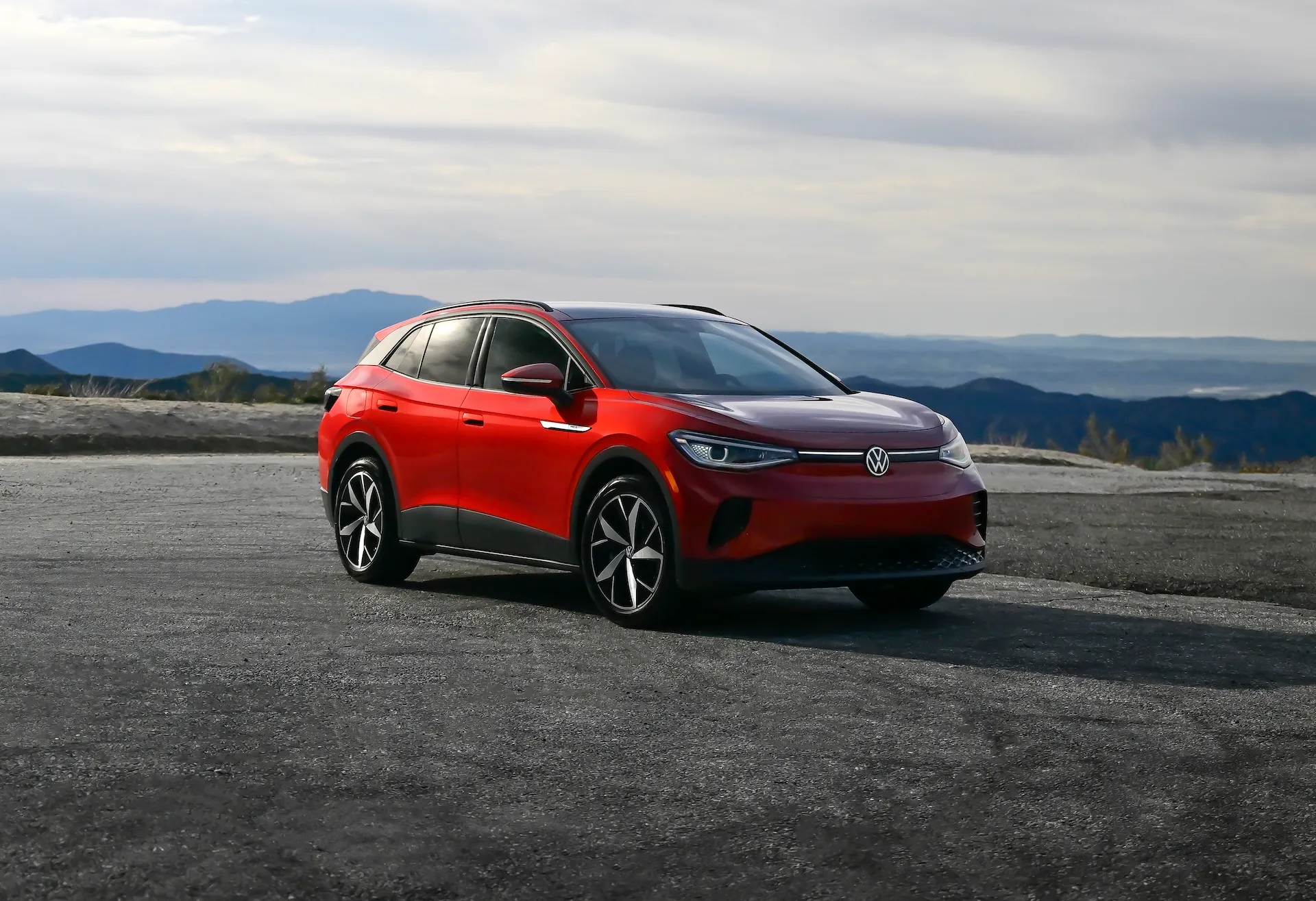
Volkswagen has launched two separate recall campaigns in the United States covering a total of 44,551 ID.4 electric SUVs due to a potential fire risk linked to defects in high-voltage battery modules, according to filings published by the National Highway Traffic Safety Administration (NHTSA).
The larger recall affects 43,881 vehicles from the 2023 to 2025 model years. NHTSA said the traction battery in the affected vehicles could overheat, increasing the risk of a fire. Volkswagen dealers will update battery management software and, if necessary, replace the battery at no cost to customers. The automaker estimates that about 1% of the nearly 44,000 vehicles may contain the defect. The affected vehicles were manufactured between September 2, 2022, and April 10, 2025.
See also: Volkswagen to Rename ID.4 as ID. Tiguan, Union Confirms
Separately, Volkswagen is recalling an additional 670 ID.4 vehicles from the 2023 and 2024 model years. While listed as a distinct campaign by NHTSA, the recall is directly linked to the broader action. Volkswagen assumes that all 670 vehicles are affected. These vehicles were built between November 3, 2022, and September 22, 2024. The figure was initially reported as 311 units in December 2025 but was later revised upward as the scope of the issue became clearer.
According to regulatory documents, the root cause in both recalls is misaligned electrodes in certain battery modules. Battery cell supplier SK Battery America acknowledged a quality deviation during a defined production period in which electrodes were not correctly aligned. The 670 vehicles in the smaller recall definitively contain battery cells from that specific production window.
See also: Volkswagen to Centralise Management of Core Brands, Targets €1 Billion Production Savings
SK Battery America also identified a second hardware issue in its production process between mid-December 2025 and mid-January 2026 that could result in similar electrode misalignment. While no fires have been reported in connection with this later issue, vehicle software designed to detect abnormal self-discharge issued warnings in at least three known cases after batteries reached elevated temperatures, NHTSA said.
The earlier battery defect has already been linked to several vehicle fires. Volkswagen and its supplier initially identified the high-voltage battery as the general source of the incidents but were unable to determine the precise failure mechanism. Following extended discussions and tear-down analysis, SK identified electrode misalignment as the underlying cause, which was subsequently confirmed through CT scans of damaged battery packs. This allowed the companies to trace the issue to specific battery modules and initiate the recalls.
See also: Volkswagen Group EV Deliveries Jump Nearly One-Third in 2025, Driven by Europe
The recalls apply only to ID.4 vehicles produced at Volkswagen’s factory in Chattanooga, which use battery cells manufactured at SK Battery America’s facility in Georgia. ID.4 models built in Europe, including those produced in Zwickau and Emden, use different battery cells and are not affected.
The latest actions add to a series of recalls issued by Volkswagen Group of America over the past year. In December 2025, the company recalled a limited number of 2023–2024 ID.4 vehicles due to a high-voltage battery manufacturing defect affecting 311 units at the time. In March 2025, Volkswagen recalled nearly 14,000 electric vehicles over a defect in the 12-volt battery charger that could lead to a loss of motive power, and separately recalled 60,490 electric vehicles due to a software issue that could cause the gear display to show an incorrect position.