
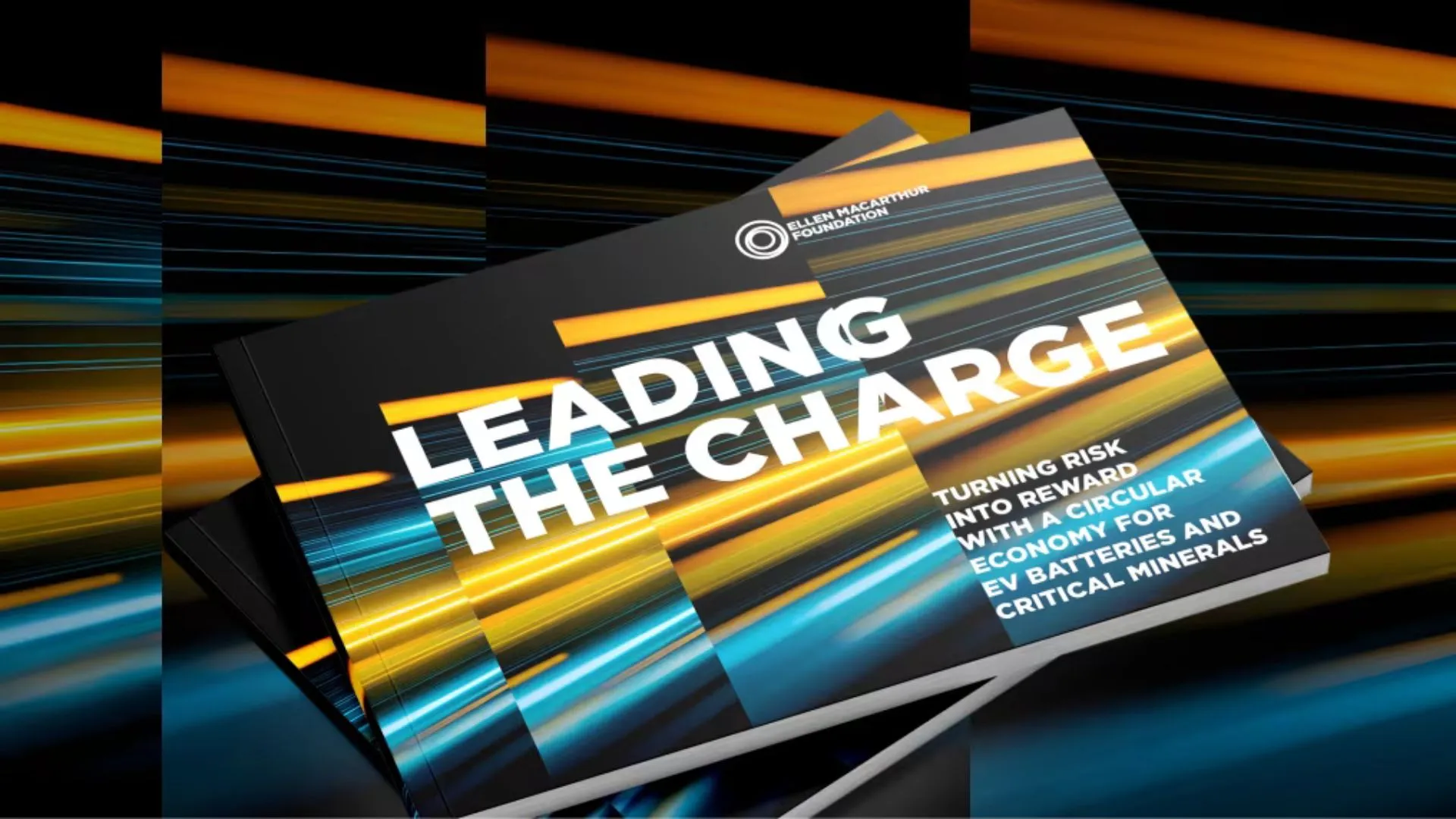
A circular economy approach to electric vehicle batteries could help avert looming shortages of critical minerals and curb sharp price increases for consumers, according to a new report published by the Ellen MacArthur Foundation.
The report, titled “Leading the Charge – Turning risk into reward with a circular economy for EV batteries and critical minerals,” was launched at the World Economic Forum in Davos and outlines five priorities aimed at reshaping how batteries are designed, used and recovered across their lifecycle.
The Foundation warned that supply shortfalls in key battery materials are likely to emerge by the mid-2030s, potentially driving consumer electric vehicle prices up by 40% to 50% if disruptions persist. Typical EVs contain more than 200 kilograms of critical minerals—around six times more than conventional vehicles—with most of that value concentrated in the battery.
Drawing on input from more than 30 companies across the battery value chain, the report said a circular approach could reduce costs for automakers, lower exposure to supply shocks for investors and cut import dependence for governments as EV adoption accelerates. EVs are expected to account for between 65% and 75% of global car sales by 2050, intensifying pressure on mineral supply, the Foundation said.
To address these risks, the report identified five leadership priorities: designing batteries for longevity and reuse, optimising energy and mobility systems to avoid unnecessary battery oversizing, scaling circular business models that treat minerals as long-term assets, building regional circular infrastructure, and establishing shared operating systems to keep materials in circulation.
“Critical minerals should be treated as assets that deliver value over multiple life cycles, not consumed and discarded,” the Foundation said, adding that strategies such as refurbishment, second-life use and high-quality recycling could retain strategic value and reduce volatility.
Industry players have signalled support for the approach. Jiang Li, vice president and board secretary at CATL, said the company plans to work with the Foundation and partners to advance circular principles across the battery value chain.
Electrification must also go hand in hand with circularity, said Vanessa Butani, head of global sustainability at Volvo Cars. “To reduce risk, safeguard resources and accelerate the transition to climate-neutral mobility, we need to embed circular thinking into how batteries are designed and managed,” she said.
The Foundation said the report marks the first phase of a multi-year initiative focused on accelerating circularity for critical minerals used in EV batteries, as policymakers and industry grapple with the twin challenges of electrification and resource security.