
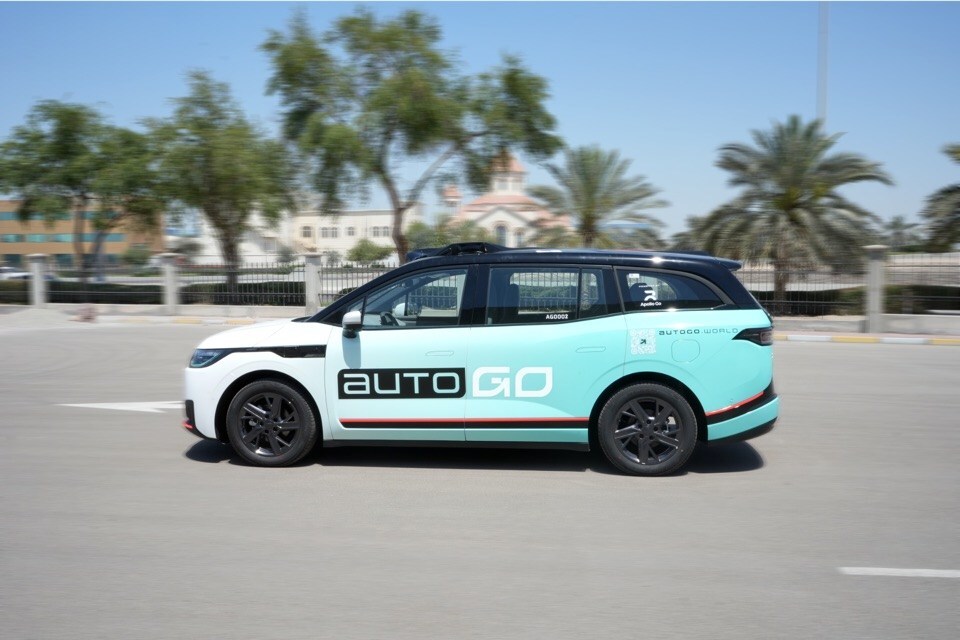
Baidu’s autonomous ride-hailing service Apollo Go has expanded its robotaxi operations to about 20 cities across China, as the company accelerates testing and deployment in major urban regions, according to a report by Chinese media outlet Lanjinger.
Since late November last year, Apollo Go has launched new testing programmes in cities including Jiangmen and Dongguan in Guangdong province, the report said. The projects involve registered investments of about 50 million yuan ($7.2 million) in Jiangmen and 70 million yuan in Dongguan. Under the plans, Apollo Go aims to deploy at least 90 robotaxis in Jiangmen and around 1,000 vehicles in Dongguan.
See also: Dubai Issues First Fully Driverless Trial Permit to Baidu’s Apollo Go
The company also plans to establish a South China operational headquarters in Foshan, Guangdong, with a projected total investment of about 18 million yuan, according to Lanjinger.
The expansion places Apollo Go among a growing number of autonomous mobility providers active in the Guangdong-Hong Kong-Macao Greater Bay Area, a region that already hosts robotaxi operators such as WeRide, Pony.ai, and Ruqi Mobility, the report said.
See also: Baidu’s Apollo Go Launches First Autonomous Driving Trials in Dubai
Baidu has repeatedly stated in earnings disclosures that it intends to accelerate Apollo Go’s expansion, including internationally. The company has positioned robotaxis as a core commercial application of its autonomous driving technology.
Operational data suggest rapid growth. In the third quarter of 2025, Apollo Go delivered about 3.1 million fully autonomous ride-hailing service orders, representing a year-on-year increase of 212%, up from 148% growth in the previous quarter. By October 2025, the service was averaging more than 250,000 fully driverless ride-hailing orders per week, Baidu has said.