
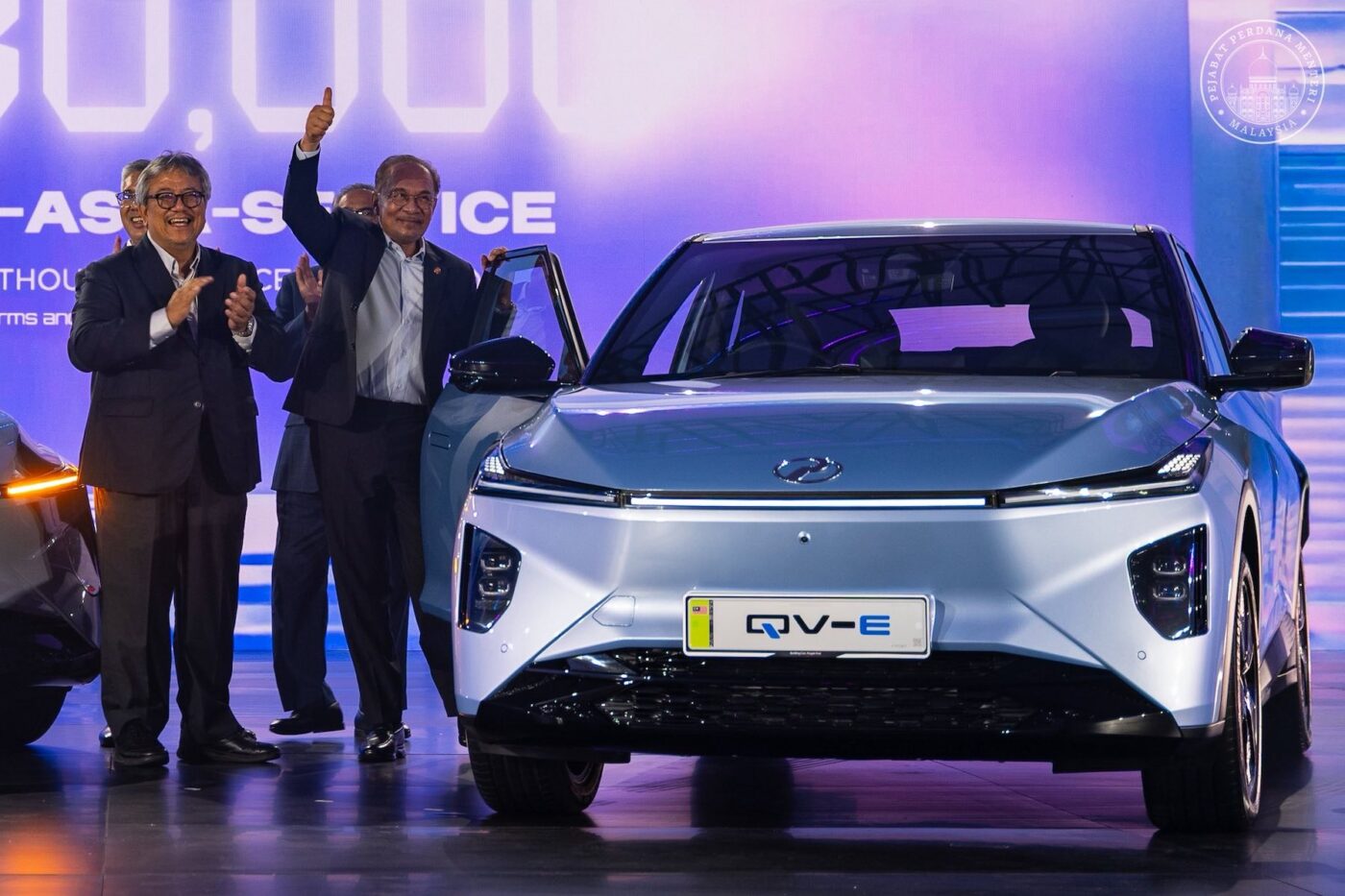
Malaysian national automaker Perodua has launched the country’s first fully homegrown electric vehicle (EV), the QV-E, following a development investment of 800 million ringgit ($170 million).
The QV-E is the direct result of the Malaysian government’s ‘New Industrial Master Plan 2030’ (NIMP 2030), under which Perodua was appointed to spearhead the development of the nation’s domestic EV ecosystem and deliver a locally developed electric car by 2025.
See also: Malaysia to Open First Highway-Integrated EV Charging Hub by 2027
Unlike its traditional models which utilize Daihatsu platforms, the QV-E is built on a new, modular platform co-developed with Magna Steyr, an architecture scalable for future A- and B-segment models, including hybrid and range-extended electric applications.
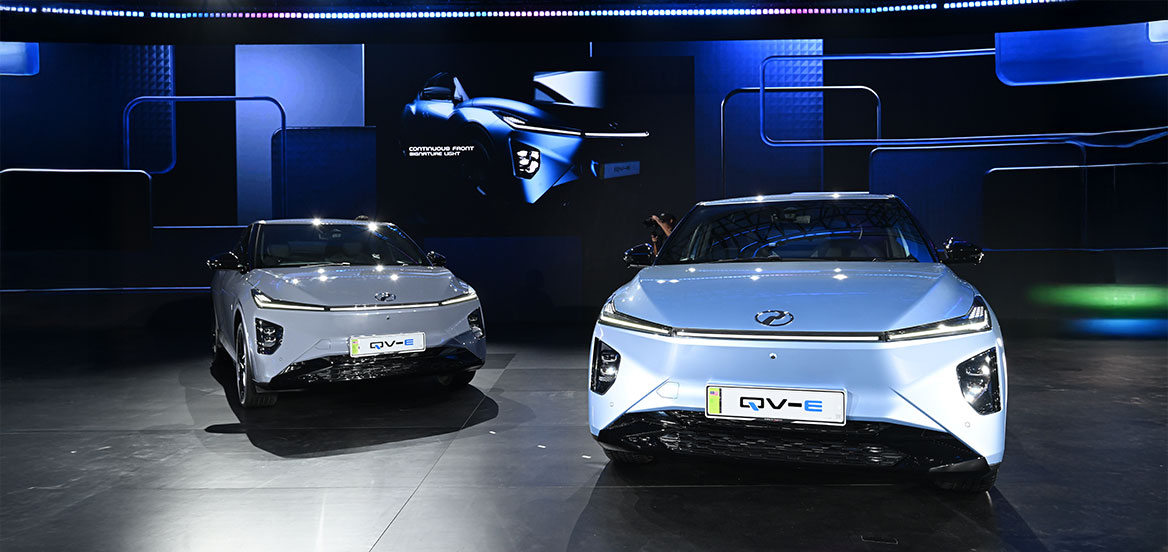
The QV-E is a B-segment, coupé-styled SUV, featuring a single front-wheel-drive configuration. Its powertrain consists of a permanent magnet synchronous motor that delivers 150 kW and 285 Nm of torque, enabling an acceleration time of 7.5 seconds from 0 to 100 kph.
See also: Xpeng Launches Updated X9 MPV in Malaysia with Up to 590 km Range
Power is drawn from a CATL-supplied 52.5 kWh Lithium Iron Phosphate (LFP) battery, providing an estimated range of up to 370 kilometers (WLTP). Charging capacity is limited to a peak of 6.6 kW on AC and 60 kW on DC, allowing a 30 to 80 per cent state-of-charge replenishment in approximately 30 minutes. The vehicle also supports vehicle-to-load (V2L) functionality.
Perodua is offering the QV-E exclusively under a Battery-as-a-Service (BaaS) program. The car, priced at 80,000 ringgit (excluding insurance), requires a separate monthly battery rental fee of 297 ringgit.
The EV includes a comprehensive suite of advanced driver assistance systems (ADAS), such as Autonomous Emergency Brake, Adaptive Cruise Control, and Highway Assist, along with a six-airbag system and Child Presence Detection.
See also: FedEx Expands Electric Delivery Fleet in Malaysia with 41 New Vans
The QV-E is being manufactured at Perodua’s plant in Sungai Choh, northwest of Kuala Lumpur. The company aims to achieve 50 per cent localization of components by 2026 and raise this figure to around 70 per cent by 2030, in collaboration with its current base of 52 local suppliers.