
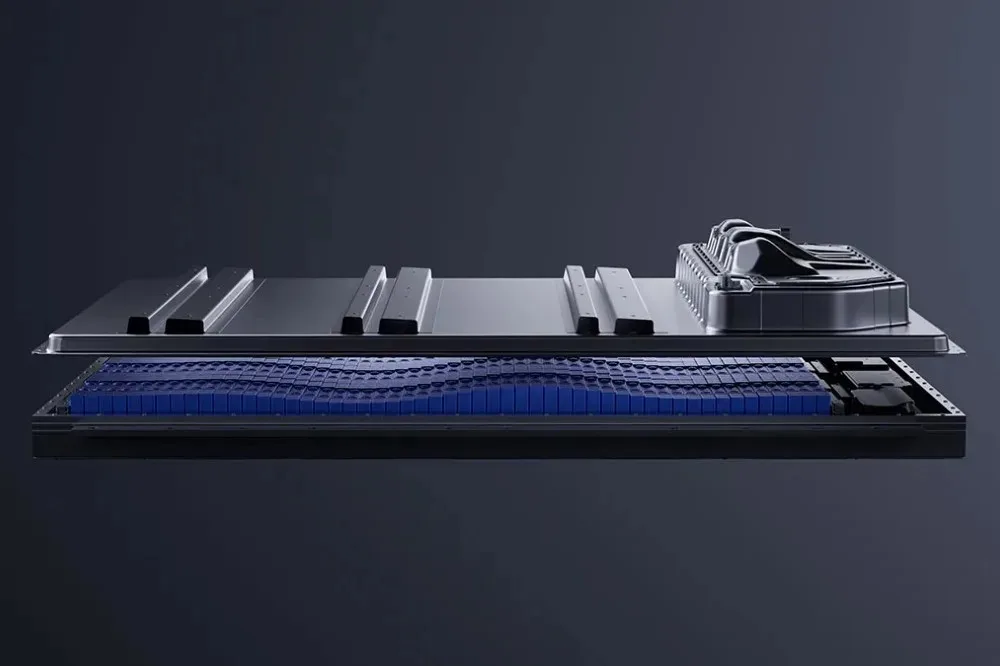
China’s CATL expects to begin serial production at its battery manufacturing plant in Debrecen, Hungary, in March or April next year, subject to the receipt of final regulatory permits, the company’s European operations chief said.
Matt Shen, CATL’s managing director for Europe, told Hungarian media that module assembly at the Debrecen site began in 2024 and that the factory has so far produced about 30,000 battery modules for electric vehicles. However, the battery cells used in those modules are still being supplied from other CATL plants, as local cell manufacturing has yet to come online. Shen said in-house cell production in Hungary is now “in the home stretch.”
See also: CATL Targets Open-Sea Electric Vessels Within Three Years
CATL is continuing to install production lines to accelerate the transition to full serial output, Shen said. To support the ramp-up, the current workforce of about 1,000 employees is set to increase to roughly 1,500 during the first quarter of next year. The Debrecen plant is designed to supply batteries tailored for the European market, with Shen saying the cells are expected to enable driving ranges of more than 750 kilometres.
While CATL has not publicly confirmed customers for the Hungarian-produced cells, Mercedes-Benz was named as a key client when the project was announced in 2022. Mercedes is building several next-generation electric models in the region, including the CLA in Germany and future electric variants on its MMA platform, some of which are expected to be produced in Hungary.
See also: CATL Begins Mass Shipments of Next-Generation Energy Storage Battery Cells
One of the final hurdles remains environmental approval. CATL submitted a revised permit application this year, its third version to date, according to Balázs Szilágyi, head of public affairs at CATL Hungary. “Compared to the previous version, the total amount of emissions has been cut by 43 per cent, drinking-water and energy use in production have each been reduced by a third,” Szilágyi said.
The Debrecen facility is not yet connected to the local water supply network, though completion is expected in the spring. Until then, the plant is using a mix of rainwater and water from the Tisza river system. This is expected to be replaced later by a combination of surface water and treated wastewater.