
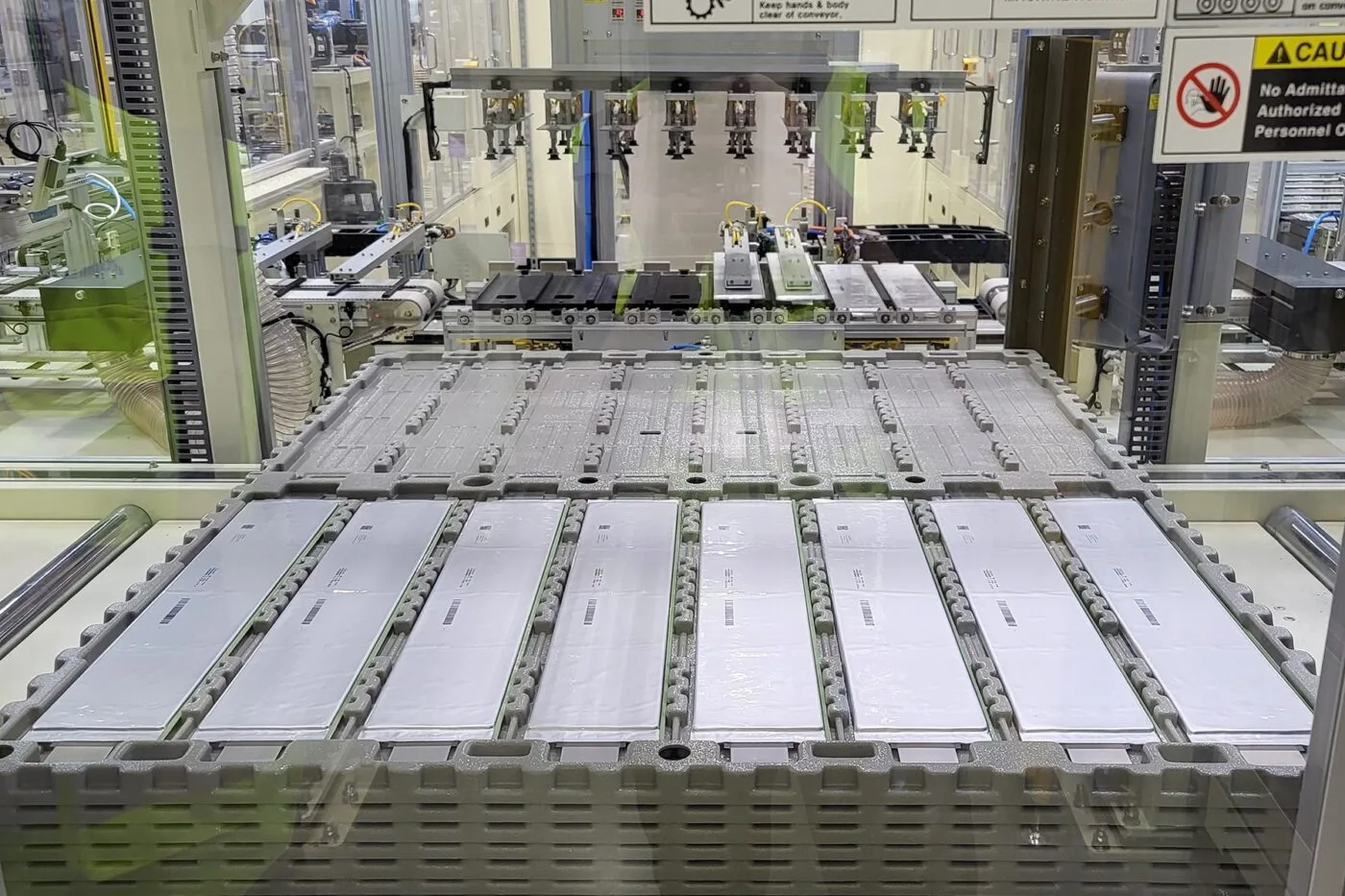
North American automakers are confronting a potential oversupply of electric vehicle (EV) batteries as demand growth slows, according to a new report, prompting some companies to reduce production plans and delay expansions.
AlixPartners estimates that global EV battery production could be three times higher than demand by 2030, with North American capacity expected to quadruple over the same period. “Many manufacturers are already scaling back their ambitious battery production plans,” Nikkei Asia reported, citing several major automakers.
Ford Motor, for example, has cut its planned battery output by 35% at its $5.8 billion Kentucky plant in partnership with SK On and temporarily halted production of the F-150 Lightning due to weakening North American demand.
General Motors will lay off 1,550 workers at battery plants in Ohio and Tennessee operated with LG Energy Solution, citing “slower near-term EV adoption and an evolving regulatory environment.” Panasonic also opened a battery factory in Kansas in July, but the company has not announced when full-scale production will begin.
The slowdown comes amid shifting U.S. policy. The Trump administration eliminated the $7,500 federal EV tax credit and removed penalties for missing emissions targets, creating a more favorable environment for traditional internal combustion vehicles. As a result, some projects, including T1 Energy’s planned battery plant in Georgia, have been canceled entirely.