
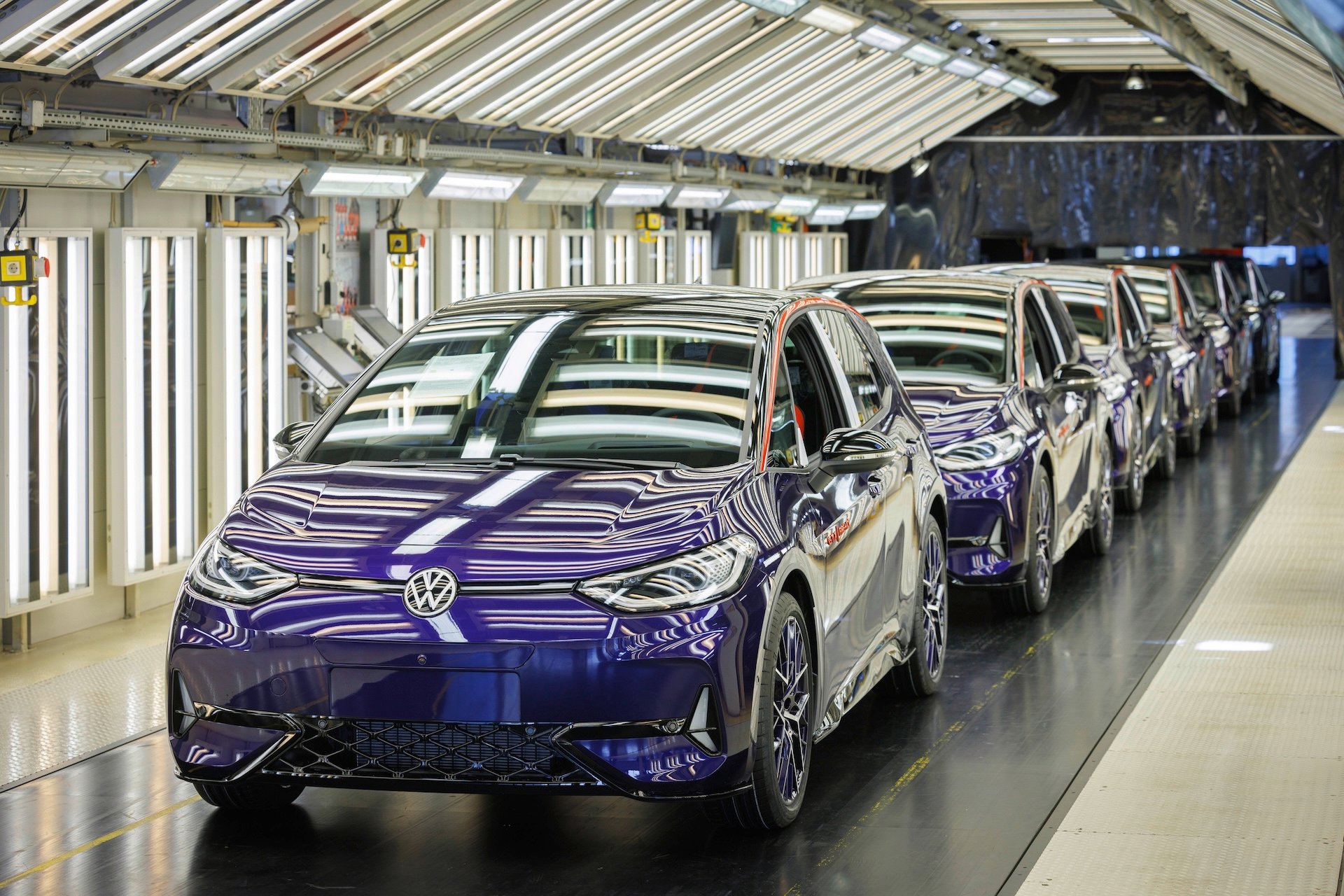
Volkswagen has suspended production at two of its German electric vehicle (EV) factories as demand for battery-powered cars weakens, underscoring mounting challenges for Europe’s largest automaker as Chinese rivals such as BYD continue to expand aggressively across the region.
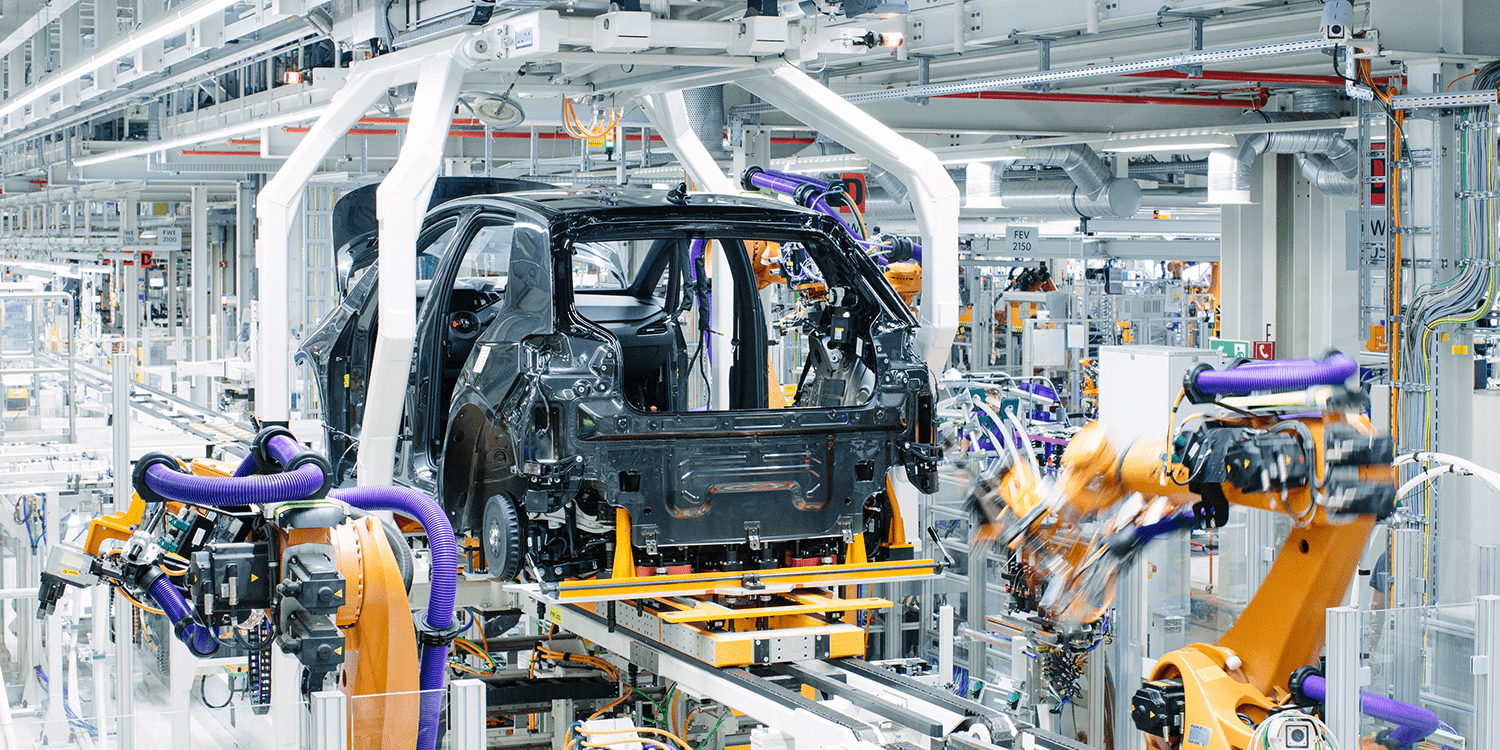
The automaker paused production at its Transparent Factory in Dresden and the Zwickau plant in Saxony from October 6, citing “a slowdown in electric car sales.” The Zwickau facility, which manufactures models based on Volkswagen’s Modular Electric Drive Matrix (MEB) platform, has also halted production of the Audi Q4 e-tron. The temporary shutdowns come amid broader output reductions across Volkswagen’s EV operations.
See also: Volkswagen Ends Gas-Powered Touareg Run, Teases Potential Electric Return

At the Emden plant, where the ID.4 and ID.7 models are built, employee working hours have been reduced, and talks are ongoing regarding multi-day production pauses. The Osnabrück site has implemented at least one closure day per week until the end of 2025.
In contrast, Volkswagen’s internal combustion engine business remains strong. At its Wolfsburg headquarters, where models such as the Golf, Tiguan and Tayron are produced, the company has scheduled additional weekend shifts through the end of the year to meet continued high demand.
See also: Volkswagen Expands Polish Plant for Next-Generation Electric Crafter Production
Industry analysts note that the company’s EV business faces mounting pressure from both Chinese and global competitors. Chinese automakers such as BYD — whose European sales have risen nearly 250% in the first eight months of 2025 — and MG are expanding their presence with competitively priced models often €10,000 to €15,000 cheaper than Volkswagen’s offerings. Meanwhile, companies like Tesla and Hyundai are winning customers with faster-charging technology, advanced software, and modern design.
Volkswagen’s first generation of ID electric cars, built on the MEB platform, has faced criticism over slow charging speeds and software reliability issues linked to its CARIAD unit. Analysts argue that the automaker’s slow decision-making structure has further hampered its ability to respond to market shifts.
See also: Volkswagen to Cut Dealer Margins on Electric Vehicles from 2026 in Germany
Chief Executive Officer Oliver Blume has described the past year as one of “setting the course,” emphasizing Volkswagen’s “Accelerate” strategy to increase efficiency and competitiveness. The plan includes launching a new SSP platform to improve performance, developing entry-level EVs priced around €25,000 to regain market share, and expanding in-house battery production through its PowerCo subsidiary to reduce costs and supplier dependence.
The latest production halts are seen by market observers as a warning that Volkswagen must move faster to reform its cost structure and product strategy if it is to maintain its position in a global EV market increasingly dominated by faster-moving competitors.
Source: Reuters