
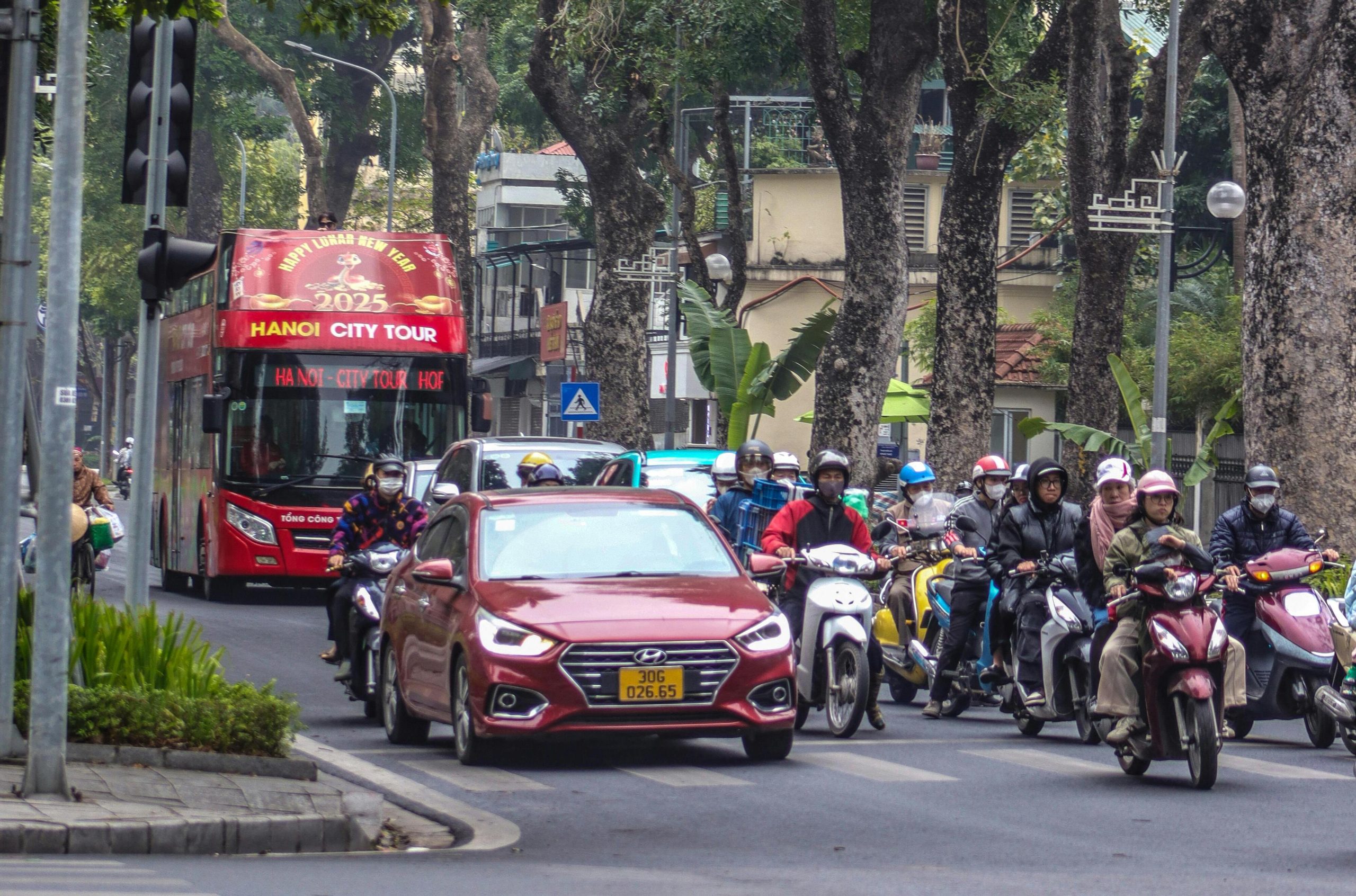
Vietnam’s plan to prohibit petrol-powered motorbikes in Hanoi by mid-2026 has prompted warnings from Japanese authorities and major manufacturers that the move could disrupt the country’s $4.6 billion two-wheeler market and affect employment across the supply chain, according to documents reviewed by Reuters and sources familiar with the matter.
The ban, part of Vietnam’s broader effort to reduce urban air pollution, will initially apply to the capital’s center, with wider restrictions expected by 2028 and in other cities. The Japanese embassy in Hanoi reportedly sent a letter urging Vietnamese authorities to adopt a phased approach, highlighting that a sudden ban could “affect employment in supporting industries” such as dealerships and parts suppliers. The embassy also recommended a staged implementation with a preparation period for the electrification of motorcycles.
See also: Honda Faces Growing Pressure in Vietnam as EV Policies Boost Local Rival VinFast
Japanese manufacturers, led by Honda and including Yamaha and Suzuki, echoed concerns in a separate letter, warning of “production interruptions and the risk of bankruptcy” for companies in the supply chain. The letter cited potential disruptions for nearly 2,000 dealers and about 200 component suppliers, urging a transitional period of at least two to three years to allow adaptation of production lines and the development of charging infrastructure and safety standards.
Honda dominates Vietnam’s motorbike market, controlling roughly 80% of sales with 2.6 million vehicles sold last year. The company has four factories in the country and has voiced concerns that the policy could force it to scale back production, though it said it has no current plans to close facilities. Sales of Honda motorcycles in Vietnam fell sharply in August following the announcement of the ban, before partially recovering in September.
See also: Hanoi to Ban Fossil Fuel Motorbikes in City Center by 2026, Expand Restrictions Citywide by 2030
The policy shift has created a potential growth opportunity for electric vehicle makers such as VinFast, whose sales of electric motorbikes and e-bikes rose 55% to nearly 70,000 units in the second quarter of 2025 from the previous quarter. Market analysts expect further growth in electric two-wheeler sales as Hanoi implements the new regulations.
Vietnam’s government has maintained that the ban is necessary to address high air pollution levels, with authorities in Ho Chi Minh City also considering restrictions on petrol-powered vehicles. The Prime Minister has emphasized the importance of a “suitable roadmap” for emission reductions while working with international partners.
See also: VinFast Plans 150,000 Battery-Swapping Stations For Electric Two-Wheelers In Vietnam
The proposed measures have also affected the broader automotive market. Petrol car sales fell 18% in September compared with a year earlier, and some customers have reportedly postponed purchases amid uncertainty over the motorbike regulations. Japanese carmaker Toyota remains the market leader in Vietnam, accounting for more than a quarter of September’s car sales.
Vietnam’s Kim Long Motor to Build Battery Pack Facility with LG Energy Solution Cells