
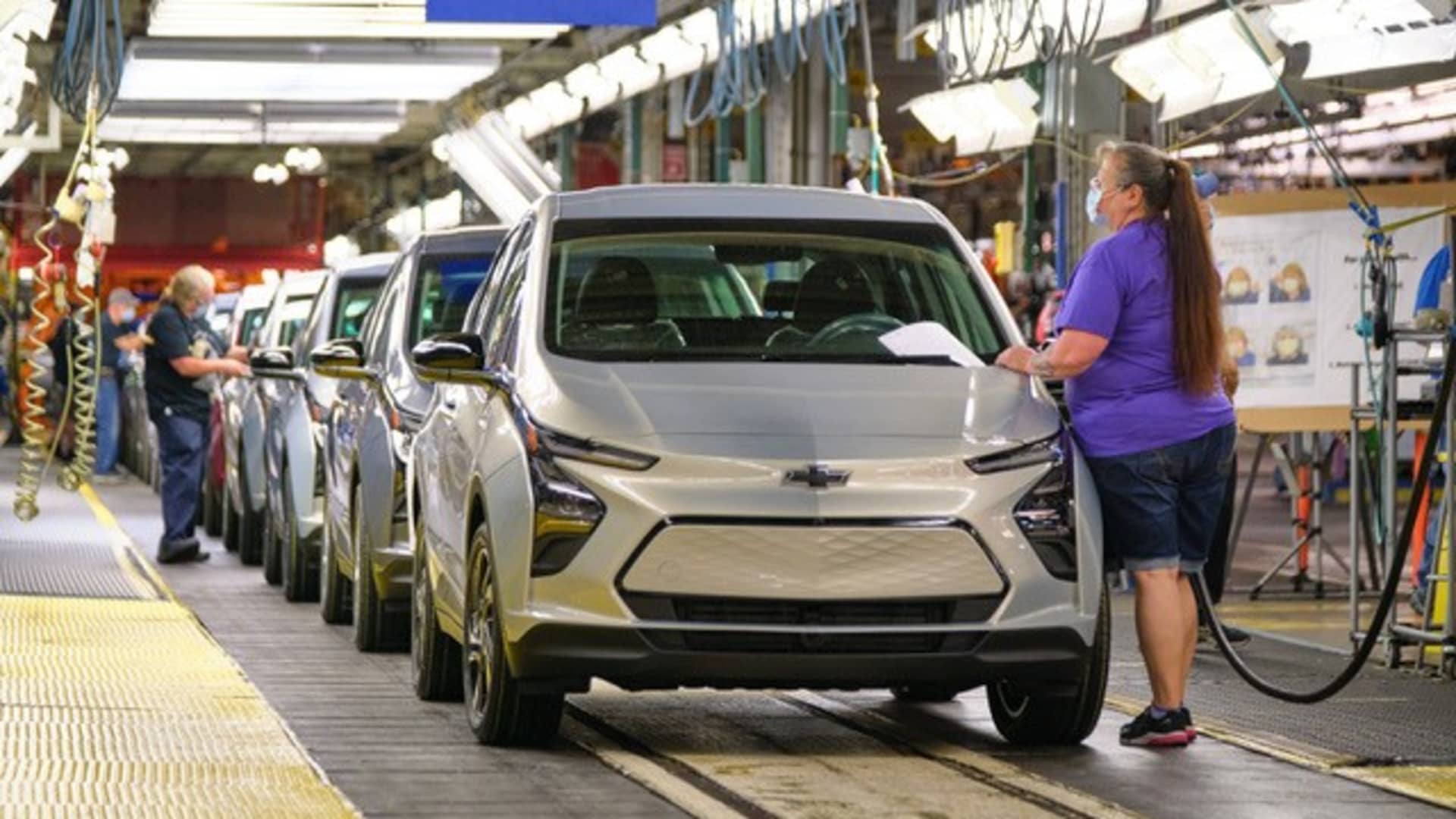
U.S. President Donald Trump is considering significant tariff relief measures for domestic auto production that could reduce much of the costs currently borne by major automakers, Republican Senator Bernie Moreno and industry officials told Reuters on Friday.
The proposed plan would extend and expand tariff offsets for U.S.-assembled vehicles, potentially offering a 3.75% import adjustment credit for up to five years, according to people familiar with the matter. The offset, which currently runs through April 2026, could also be broadened to cover U.S. engine production, the sources said.
See also: U.S. Automakers Brace for Sharp EV Sales Decline as $7,500 Tax Credit Expires
Moreno, who serves on the Senate Commerce Committee, said automakers with substantial final assembly operations in the United States, including Ford Motor, General Motors, Tesla, Toyota, and Honda, could benefit from the proposed changes. He said the initiative aligns with the administration’s push to encourage automakers to increase domestic production and employment.
Shares of major carmakers rose following the report. Ford closed up 3.7%, Stellantis gained 3.2%, and General Motors rose 1.3%. The White House said Trump and his administration remain committed to a “multi-faceted approach” to strengthening domestic auto and parts manufacturing, adding that discussions remain ongoing.
See also: U.S. Moves To Update Safety Standards For Autonomous Vehicles
In May, Trump imposed 25% tariffs on roughly $460 billion in annual vehicle and parts imports, later reducing rates for countries such as Japan, the United Kingdom, and the European Union. The Commerce Department also raised tariffs in August on over 400 steel and aluminum products, totaling $240 billion in imports, including automotive components such as exhaust systems and electrical steel.
Automakers have warned that existing tariffs are driving up costs. General Motors said earlier this year that it expects up to $5 billion in tariff-related expenses in 2025, while Ford cited a $3 billion hit. The Trump administration is also reviewing whether to delay new tariffs on heavy-duty trucks that were set to take effect this week.
DOE Flags Certain Climate and Energy Terms for Caution in Communications