
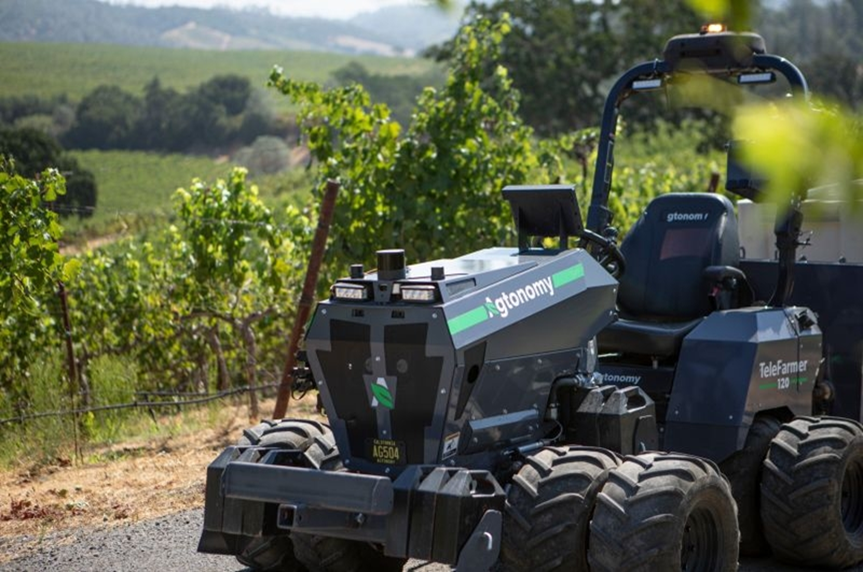
Hesai Technology said it is supplying its JT series 3D lidar sensors to California-based Agtonomy and Austria’s Alpha Werke for use in autonomous farming robots, aiming to improve precision and efficiency in agricultural operations.
The partnerships are part of Hesai’s push into the agriculture sector, which is facing labor shortages, rising costs, and climate-related challenges. The JT series lidar is designed to deliver wide-area 3D perception, compact integration, and durability in harsh environments, the company said.
The sensors, 70% smaller than similar products, offer an ultra-wide field of view covering the equivalent of two football fields and have no minimum detection range. They are tested for waterproofing, vibration, shock resistance, UV aging, and extreme temperature performance.
Agtonomy integrates Hesai’s JT128 lidar with its autonomous farming software to automate tasks such as mowing, spraying, and hauling. “Hesai’s sensors provide reliable navigation, even in challenging conditions, delivering an affordable and scalable solution for modern farms,” Agtonomy CEO Tim Bucher said.
Alpha Werke uses the JT16 lidar in its TracPilot system, built for rugged off-road environments like orchards and solar farms. “Hesai’s reliability and precision make it an ideal partner for farming robots where safety and performance are critical,” Alpha Werke CEO Patrick Neuhauser said.
Hesai said it has delivered more than 100,000 JT lidar units as of June 2025 and aims to expand its role in the multi-billion-dollar agricultural automation market.