
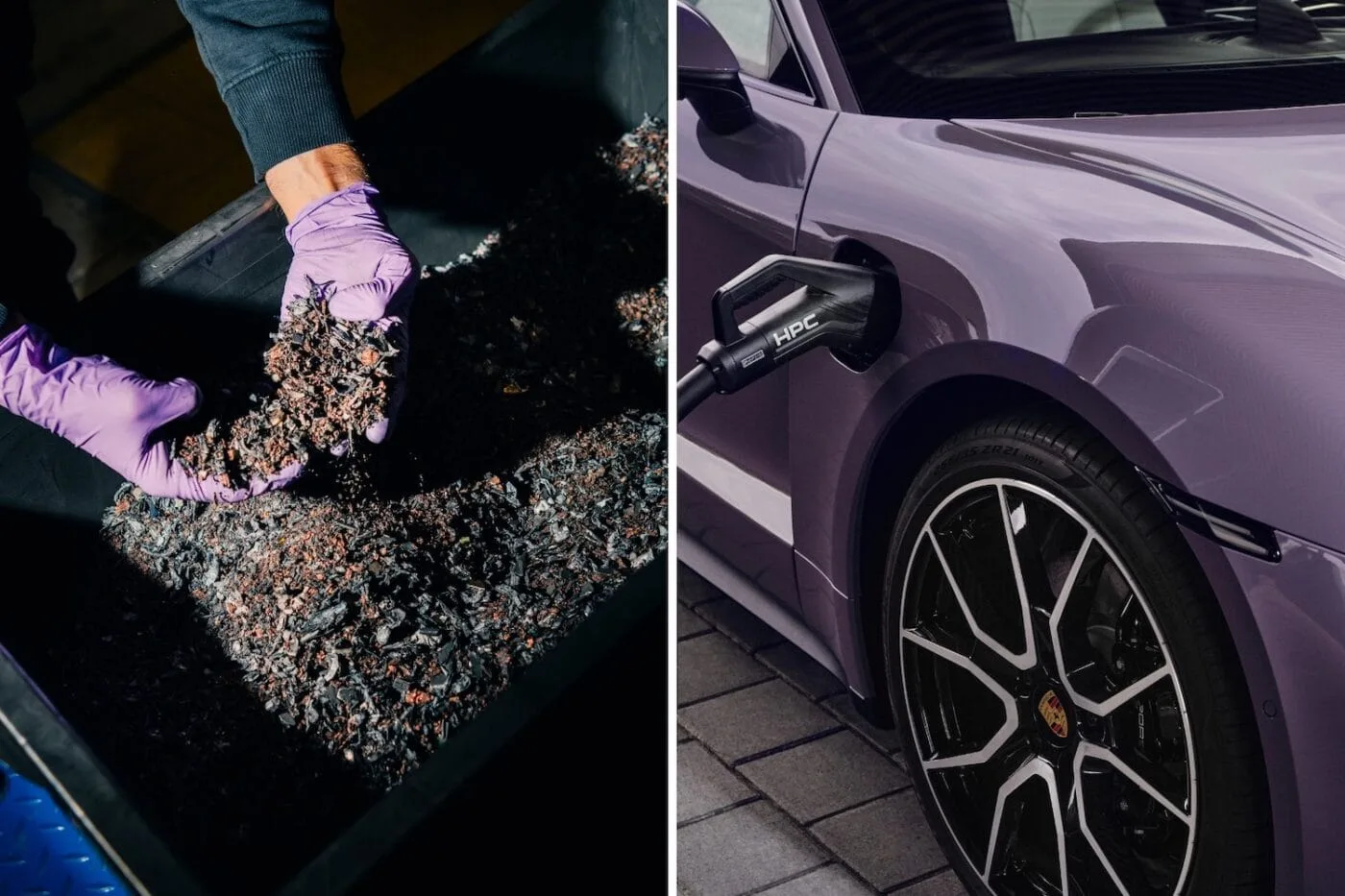
Battery recycling startup Cylib, together with Belgian materials company Syensqo, has developed a process to produce high-purity lithium hydroxide from used electric vehicle batteries. The recovered material meets the quality standards required for use as cathode active material (CAM) in new batteries, according to the companies.
“This collaboration with Syensqo demonstrates our commitment to working continuously with partners to develop new processes and expand our technological leadership in battery recycling,” said Matthias Breidenbach, Vice President Commercial at Cylib. “By combining our innovative hydrometallurgical expertise with Syensqo’s advanced solvent extraction technology, we are setting new standards for lithium recovery efficiency and purity.”
The process uses Cylib’s lithium-rich process solutions, derived from production waste and black mass, which are then treated with the extraction agent CYANEX 936P developed by Syensqo and Tenova Advanced Technologies. After extraction, purification, and crystallisation, the resulting lithium hydroxide is reported to meet or exceed established purity thresholds used in battery manufacturing.
Cylib is currently constructing its first industrial recycling facility in Chempark Dormagen, North Rhine-Westphalia, scheduled to begin operations in 2026. The plant will focus on recovering lithium, graphite, and other materials from lithium-ion batteries using a water-based process.
At present, Europe has limited lithium production capacity, with most supply imported from China and South America. While several extraction projects are underway, battery recycling is being explored as a complementary pathway to secure supply and support local value chains. The EU Battery Regulation, adopted in 2023, requires lithium recovery rates from battery waste to reach at least 50% by 2027 and 80% by 2031. Future rules are expected to introduce minimum quotas for recycled lithium content in new batteries.