
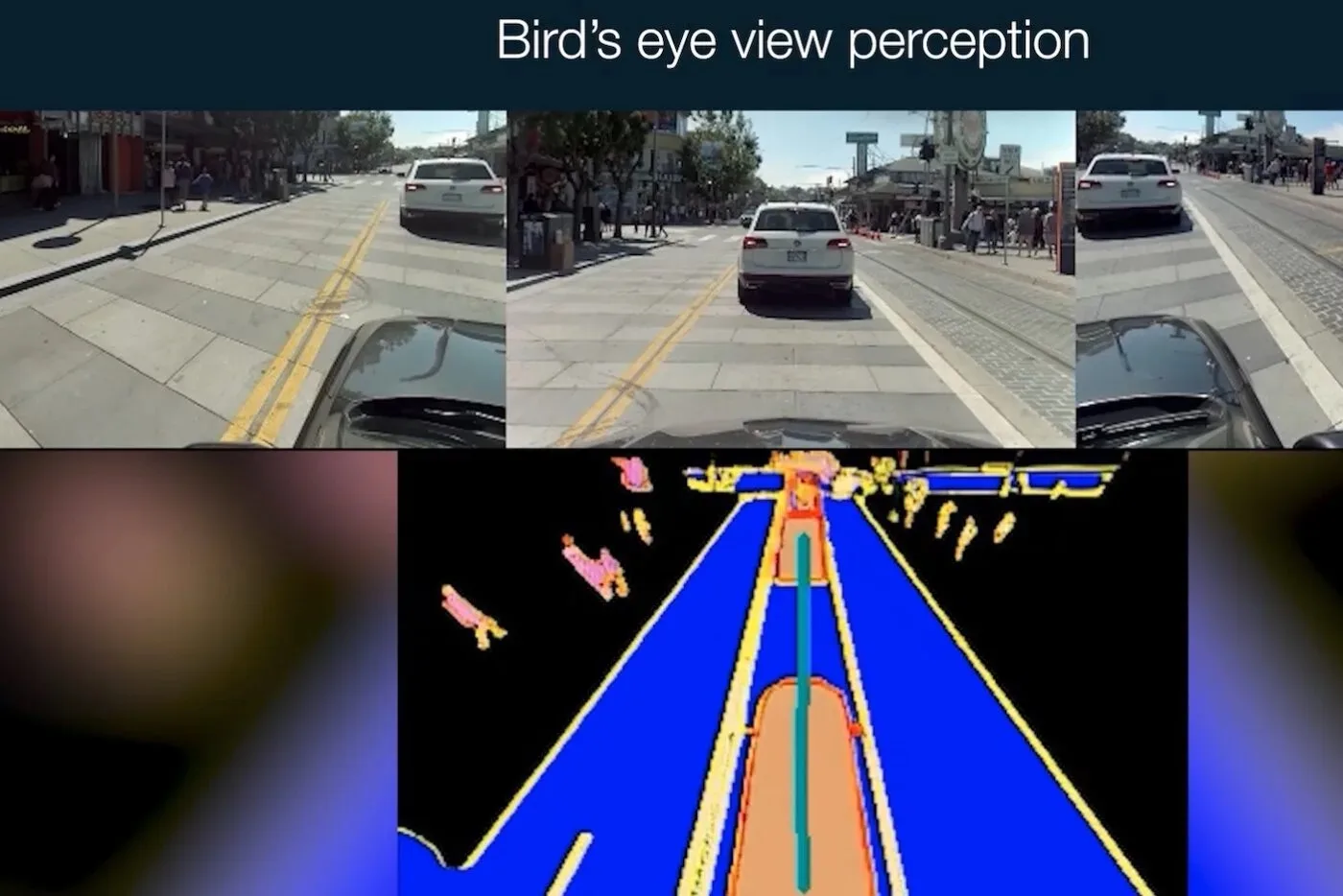
Helm.ai, a California-based artificial intelligence startup, has introduced a new perception system called Helm.ai Vision, aimed at enabling urban environment recognition for vehicles equipped with Level 2+ and Level 3 driver assistance features. The technology is expected to debut in Honda’s upcoming 0 Series of electric vehicles starting in 2026.
Helm.ai Vision is designed to function without the extensive use of HD maps or lidar sensors, relying instead on a multi-camera vision system and real-time 3D object recognition. The software supports highly automated driving features, allowing vehicles to navigate complex urban conditions such as dense traffic, changing road surfaces, and the unpredictable movement of other road users.
Unlike Level 4 autonomous systems used in robotaxis, Helm.ai Vision is not intended for full self-driving applications. Instead, it targets consumer vehicles, offering a scalable solution for mass production. The system’s capabilities include full semantic segmentation, multi-camera fusion, and generation of a real-time bird’s-eye view, enhancing the situational awareness of vehicles in urban environments.
The software builds on Helm.ai’s proprietary Deep Teaching approach—an unsupervised machine learning framework that allows the system to improve its accuracy without relying heavily on human-annotated datasets. This approach is designed to reduce development costs and speed up deployment for automotive manufacturers.
“Robust urban perception, which culminates in the BEV fusion task, is the gatekeeper of advanced autonomy,” said Vladislav Voroninski, CEO and founder of Helm.ai. “Helm.ai Vision addresses the full spectrum of perception tasks required for high-end Level 2+ and Level 3 autonomous driving on production-grade embedded systems, enabling automakers to deploy a vision-first solution with high accuracy and low latency.”
Level 2+ systems enhance traditional assisted driving by offering features that closely resemble autonomous control but still require the driver’s full attention. Level 3, meanwhile, allows for hands-free driving under specific conditions, though drivers must be prepared to take over when prompted. Mercedes-Benz currently offers a certified Level 3 system in Germany and the U.S., highlighting growing interest in advanced driver assistance technologies.
Honda, which has invested in Helm.ai since 2022, is expected to implement the system in its 0 Series EVs, previewed at CES in Las Vegas earlier this year. “We’re definitely in talks with many OEMs and we’re on track for deploying our technology in production,” Voroninski told Reuters. “Our business model is essentially licensing this kind of software and also foundation model software to the automakers.”