
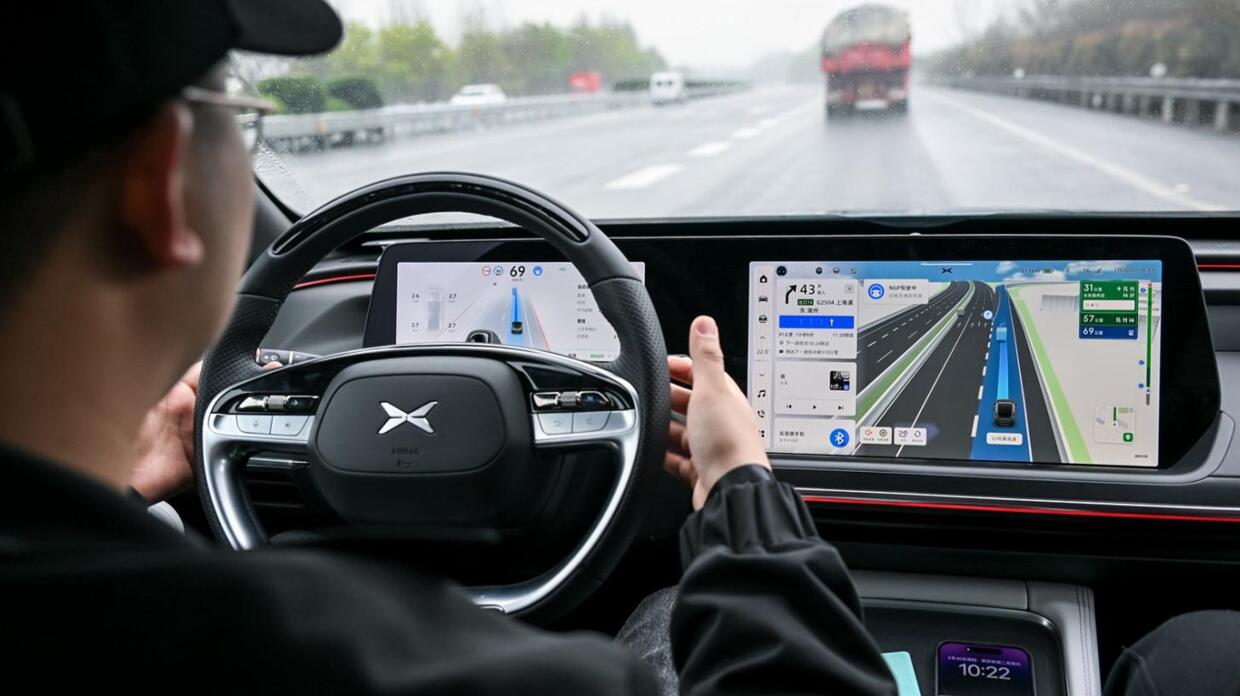
China has approved its first mandatory national safety standard for autonomous driving systems, establishing a unified regulatory framework for Level 3 (L3) and Level 4 (L4) intelligent connected vehicles as automated driving technologies move toward wider commercial deployment.
The Ministry of Industry and Information Technology (MIIT) announced that the national standard, Safety Requirements for Autonomous Driving Systems of Intelligent Connected Vehicles (GB 44721-2026), will take effect on July 1, 2027.
The standard was approved on July 30 by the State Administration for Market Regulation and the National Standardization Administration.
National Safety Framework
The regulation applies to M-category passenger vehicles and N-category commercial vehicles equipped with L3 and L4 autonomous driving systems, although automated parking systems are excluded from its scope.
According to MIIT, autonomous driving systems must demonstrate a level of safety at least equivalent to that of a competent and attentive human driver performing the dynamic driving task.
The systems must also avoid creating unreasonable safety risks for vehicle occupants and other road users.
For L3 vehicles, manufacturers are required to equip vehicles with driver monitoring systems capable of assessing whether the driver is prepared to resume control when requested.
The standard also specifies requirements covering safe activation and deactivation of autonomous driving functions, as well as clear indication of system operating states, including ready, active and exited modes.
Lifecycle Safety Requirements
Vehicle manufacturers must establish comprehensive safety management throughout the product lifecycle, covering vehicle design, development, production and post-deployment operations.
The framework is built around four key areas:
- Safety policy
- Risk management
- Safety assurance
- Continuous safety improvement
Manufacturers must conduct simulation testing, closed-course validation and public road testing during development while ensuring testing resources and operating conditions comply with regulatory requirements.
User Information and Testing
The regulation also introduces requirements aimed at preventing misuse of autonomous driving systems.
Manufacturers must clearly communicate the vehicle’s level of driving automation, operational capabilities, system limitations and driver responsibilities through owner manuals, official websites, in-vehicle displays or other communication channels.
To verify compliance, the standard establishes a three-part assessment process consisting of corporate safety capability evaluations, safety documentation reviews and confirmatory testing.
Independent third-party organisations will conduct confirmatory assessments using a combination of simulation, test-track and public road testing.
Supporting Autonomous Vehicle Deployment
MIIT commissioned the National Technical Committee of Auto Standardization to develop the standard in 2025.
The ministry noted that China’s new regulation builds upon the United Nations Global Technical Regulation on Autonomous Driving Systems (ADS GTR), which China helped draft and which was adopted in June 2026.
According to MIIT, the national standard introduces more detailed technical requirements for L3 and L4 autonomous driving systems while establishing a unified framework for testing scenarios.
China granted its first approvals for commercially available L3 passenger vehicles in December 2025, covering models produced by Changan Automobile’s Deepal brand and BAIC Group’s Arcfox marque.
The ministry also reported that passenger vehicles equipped with Level 2 driver assistance systems accounted for 70.5% of new vehicle sales during 2026 to date, while navigation-on-autopilot (NOA) functions reached a penetration rate of 34.2%.
MIIT said it will continue strengthening market access requirements for intelligent connected vehicles while developing additional standards covering autonomous driving test methods and safety incident data exchange.