
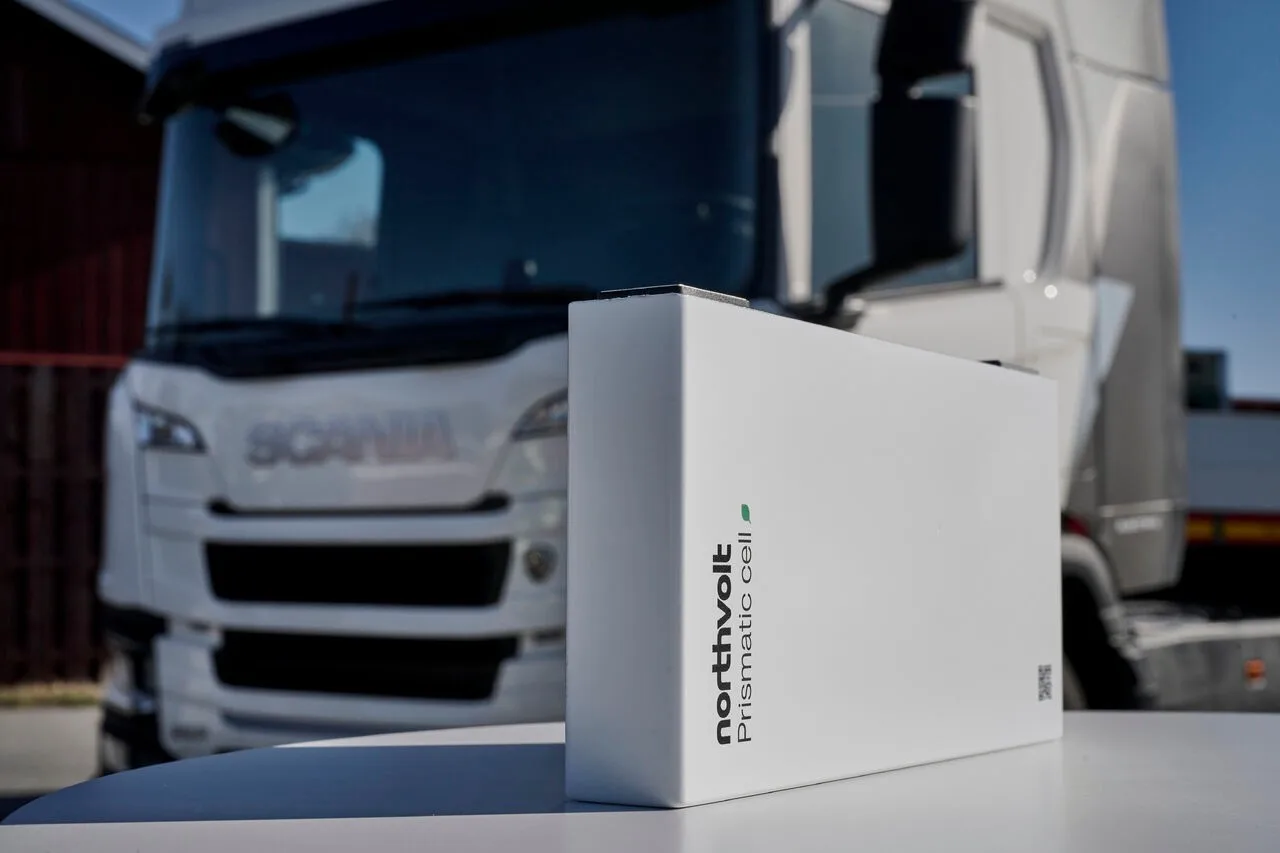
Swedish commercial vehicle manufacturer Scania is seeking partners, including government and industry players, to rescue the Northvolt Labs research and development facility in Västerås following the insolvency of battery maker Northvolt, the company said.
Scania CEO Christian Levin said the company cannot fund the recovery effort alone and is calling for a consortium of industrial players, the Swedish government and the European Commission to take over the site, which employs around 1,100 people and has been described as Northvolt’s “crown jewel.”
“We are trying to form a consortium that would partly finance this, but we can’t do it alone, it’s just too much, even for a big company like ours,” Levin told the Financial Times.
Northvolt filed for creditor protection in the United States in November 2024 and entered insolvency proceedings in Sweden in March 2025. Production at its main plant in Skellefteå is scheduled to end this month. Scania, historically Northvolt’s key customer, has already taken over its battery systems division, Northvolt Systems Industrial.
The Västerås facility is central to European battery innovation, with teams working on advanced materials and recycling processes. Scania sees preserving this knowledge base as essential for Europe to maintain competitiveness in electric mobility, particularly as Chinese and South Korean battery makers expand globally.
Scania has warned that failure to retain a European battery development ecosystem could jeopardize the region’s ability to meet EU fleet emission targets. Battery-electric trucks represented just 3.5% of EU sales in the first quarter of 2025, well below the 35% target set for 2030.
“If we don’t achieve a corresponding sales volume, we will simply become too expensive and won’t be able to compete in China or Southeast Asia,” Levin said.
Despite ongoing lobbying efforts, political support remains limited. Scania continues to purchase cells from Northvolt under difficult conditions while increasing reliance on Asian suppliers—an approach it says undermines the EU’s sustainability goals and industrial policy.