
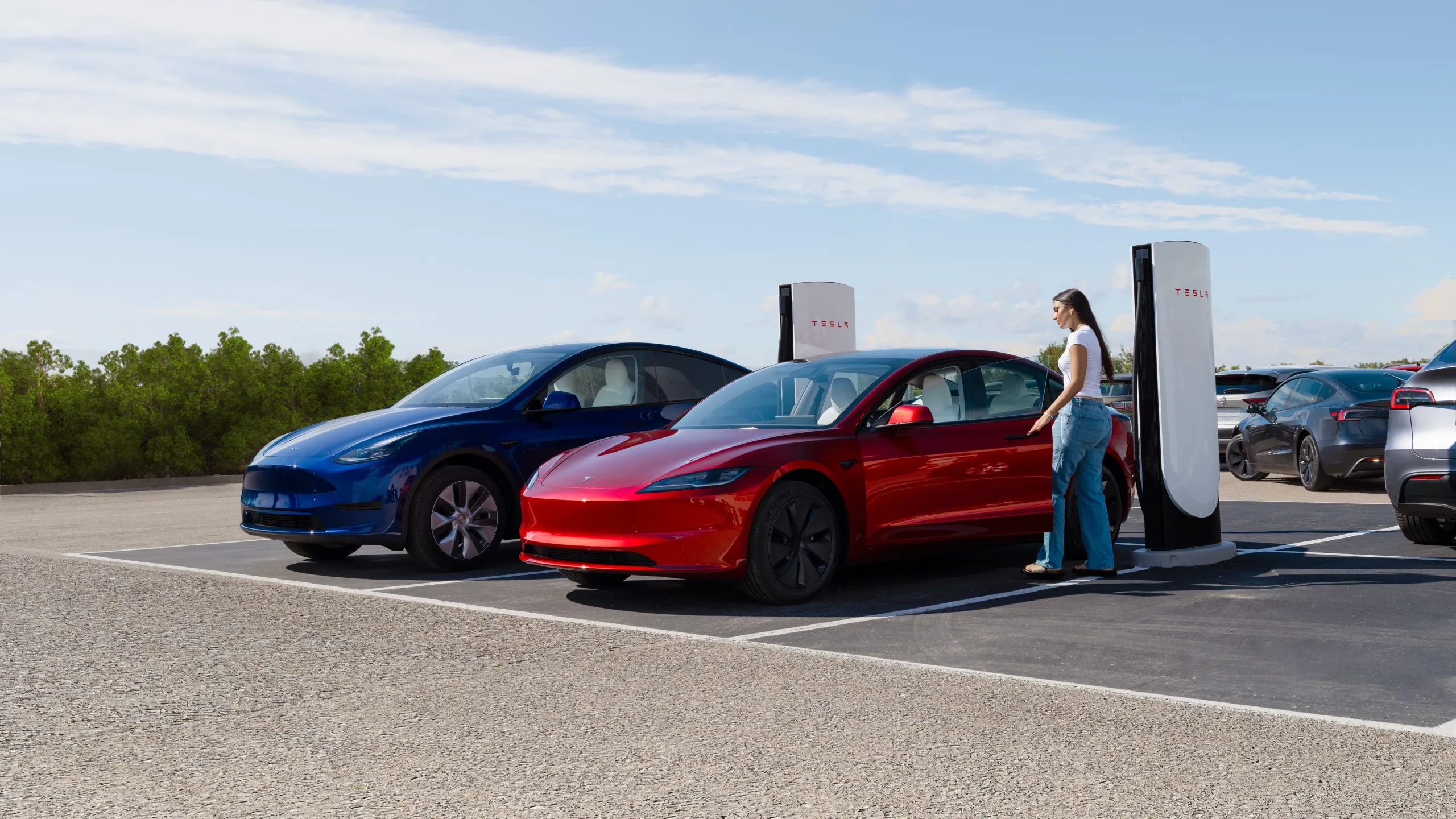
Tesla has launched a pilot program that introduces real-time pricing at select Supercharger stations, shifting away from its traditional fixed-rate structure.
The test, currently limited to 10 unspecified locations, allows charging rates to fluctuate depending on actual site demand at the time of use.
See also: Tesla Launches Cheaper Model Y Long Range RWD in U.S. at $44,990
Previously, Supercharger pricing was determined by preset peak and off-peak hours based on historical usage patterns. The new system introduces greater flexibility, enabling lower prices during less busy times—even if they fall within conventional peak periods—and slightly higher costs if unexpected congestion occurs during typically quiet hours.
Despite the dynamic structure, Tesla has indicated that the average cost of charging is expected to remain stable. Pricing information will still be clearly displayed to users before charging begins, and once a session starts, the rate will not change mid-charge.
See also: New Tesla Model Y Gets 0-60 MPH in 4.2 Seconds with Paid Upgrade
The initiative is part of Tesla’s broader strategy to improve the accessibility and efficiency of its charging network. Over the years, the company has implemented measures such as per-kWh billing, idle fees to discourage overstaying, and congestion pricing to address heavy traffic at certain stations. This latest move continues that trend, using real-time data to better manage demand and potentially reduce wait times for drivers.
The company plans to evaluate user response and system performance during the pilot before deciding whether to expand real-time pricing to additional Supercharger locations.