
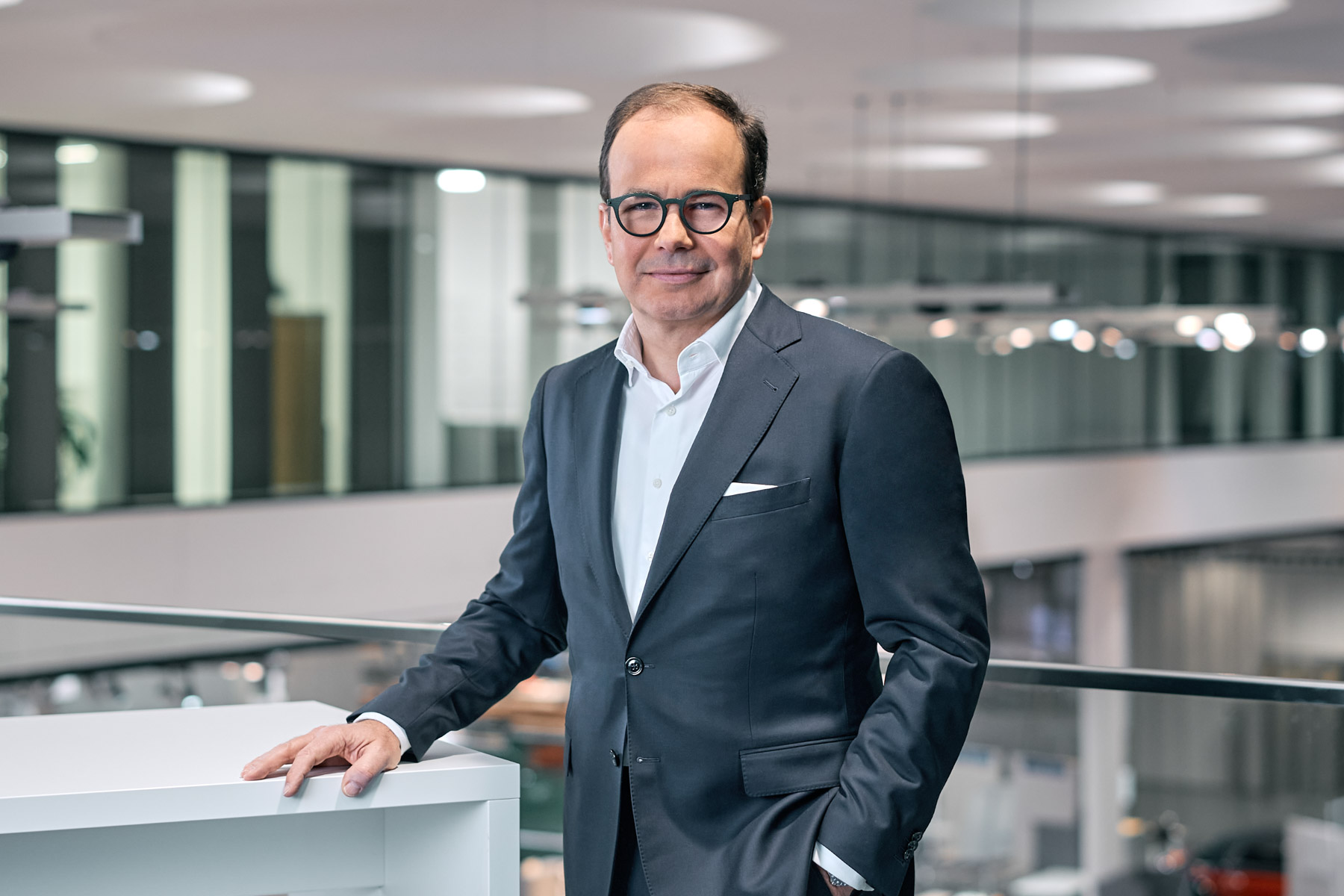
ZF Friedrichshafen has appointed Peter Holdmann as its first Chief Technology Officer (CTO), creating a new executive board position to centralize technology and development across the group, the company said.
ZF said the newly established role is intended to underscore the growing importance of innovation, software, and advanced engineering capabilities to its long-term competitiveness. Until now, research and development activities were managed within largely independent divisions, without centralized oversight at board level.
The company said the immediate objective is to align R&D “across all divisions of the company even more effectively, efficiently, and competitively with customer needs,” although it did not provide details on potential cost savings or synergies.
Holdmann, who joined ZF in 2000, has served on the executive board since May 2024 and previously led the company’s research and development division. While his earlier role focused on R&D, it did not include group-wide coordination of development activities.
“The expansion of his area of responsibility to include the CTO role reflects the increased importance of topics such as software-defined vehicles, artificial intelligence, and connected system architectures,” ZF said.
“With Dr. Peter Holdmann, the newly created CTO role is being filled by an individual who convincingly combines technical depth with strategic perspective. This combination is crucial for further sharpening technology and development across the Group,” said Rolf Breidenbach, Chairman of the Supervisory Board.
ZF Chief Executive Mathias Miedreich said the move signals a stronger focus on innovation. “Technology is our driving force and the foundation of our competitiveness. With the CTO position, we are sending a clear signal: It strengthens technological leadership within the Group, accelerates the transfer of innovations into marketable solutions, and improves the cost-, and efficiency performance of our Group-wide research and development activities,” he said.
Holdmann said improving engineering efficiency across divisions would be a priority. “Financial discipline and innovations developed in our ZF divisions with a customer-centric approach go hand in hand. The use of artificial intelligence is currently revolutionizing development processes and tools—with tangible effects on efficiency and speed,” he said.
“This transformation is critical to ZF’s competitiveness and creates a dynamic that leads to faster decisions and, ultimately, to products that win over the market. That’s good for ZF and for our customers,” Holdmann added.