
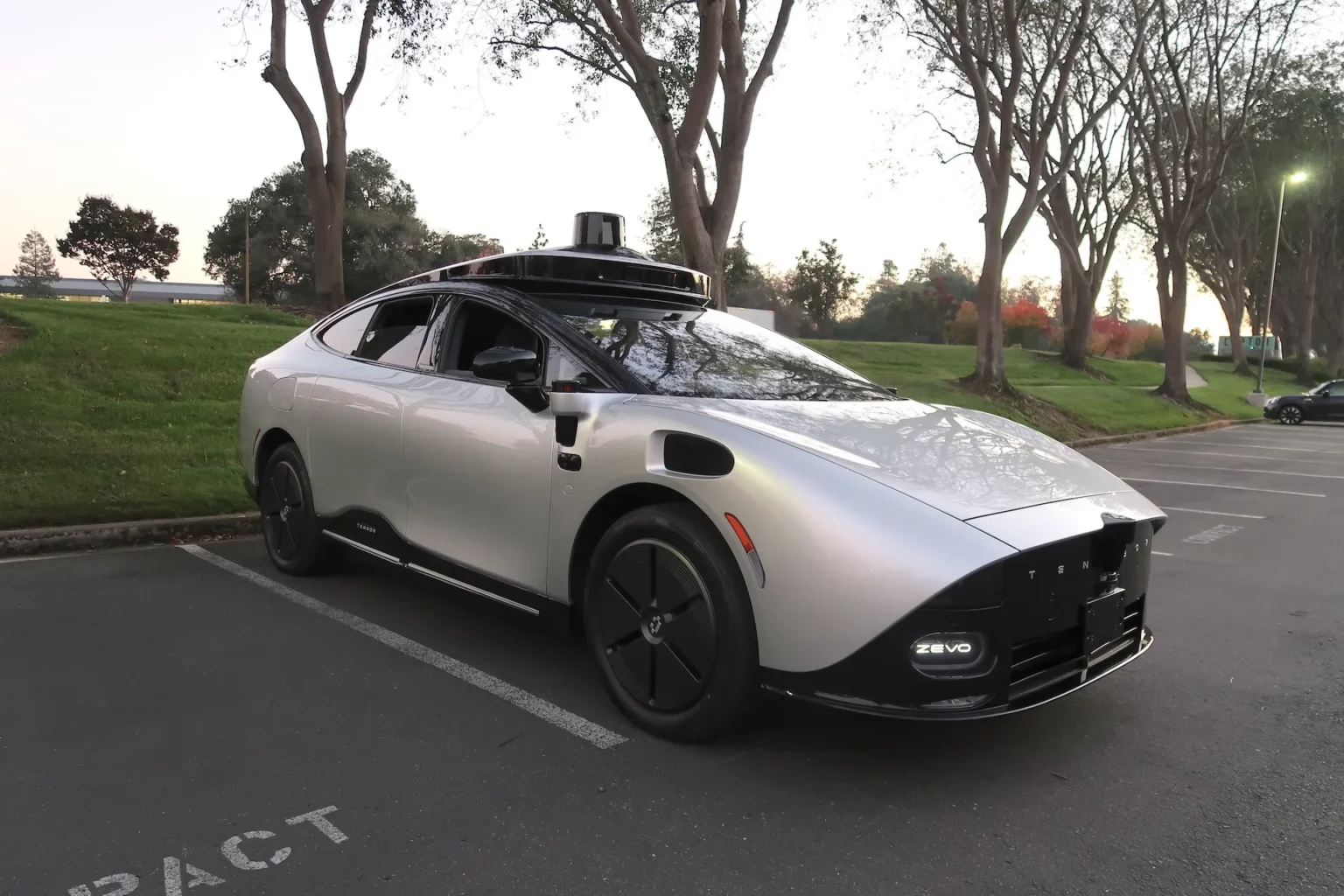
Zevo said it has partnered with artificial intelligence developer Tensor to deploy up to 100 Level-4 autonomous-capable vehicles on its peer-to-peer sharing network, as both companies seek to validate autonomous driving technology outside controlled pilot programmes.
Under the agreement, Zevo will acquire as many as 100 vehicles from Tensor for initial deployment across major U.S. markets. The vehicles will operate on Zevo’s platform, which the company said currently logs around five million electric miles each month, providing a high-utilisation environment for testing autonomous systems.
See also: Zevo Partners with Faraday Future to Deploy 1,000 FX Super One Electric Vehicles
The partnership is designed to expose Tensor’s autonomous hardware and software to a wide range of real-world driving conditions, routes and user behaviours. Zevo said this approach allows performance, durability and reliability to be assessed under everyday operating demands rather than limited trial scenarios.
“This partnership is about validating that the autonomous future can work in open, real-world conditions and remain accessible to everyday users,” said Hebron Sher, chief executive of Zevo.
Zevo said the initiative supports its broader strategy of decentralised mobility, in which vehicles are owned and operated by individuals rather than large fleet operators. Over time, the company aims to enable shared or fractional ownership models for autonomous vehicles, allowing users to earn income from advanced vehicles as automation increases.
See also: Zevo Secures $6 Million to Expand Peer-to-Peer EV Rental Platform
Tensor, founded in 2016, has positioned its platform around personal ownership of autonomous vehicles. Its vehicles are designed to support autonomy levels from L0 to L4 and feature dual-mode operation, allowing manual or autonomous driving. The company said deployment through Zevo’s network will help refine its systems through continuous, high-frequency use.
Zevo said its existing infrastructure, including contactless vehicle access and integrated insurance, allows autonomous-capable vehicles to be added to the platform without additional operational complexity. Both companies said they plan to expand deployments to additional U.S. markets following the initial rollout.