
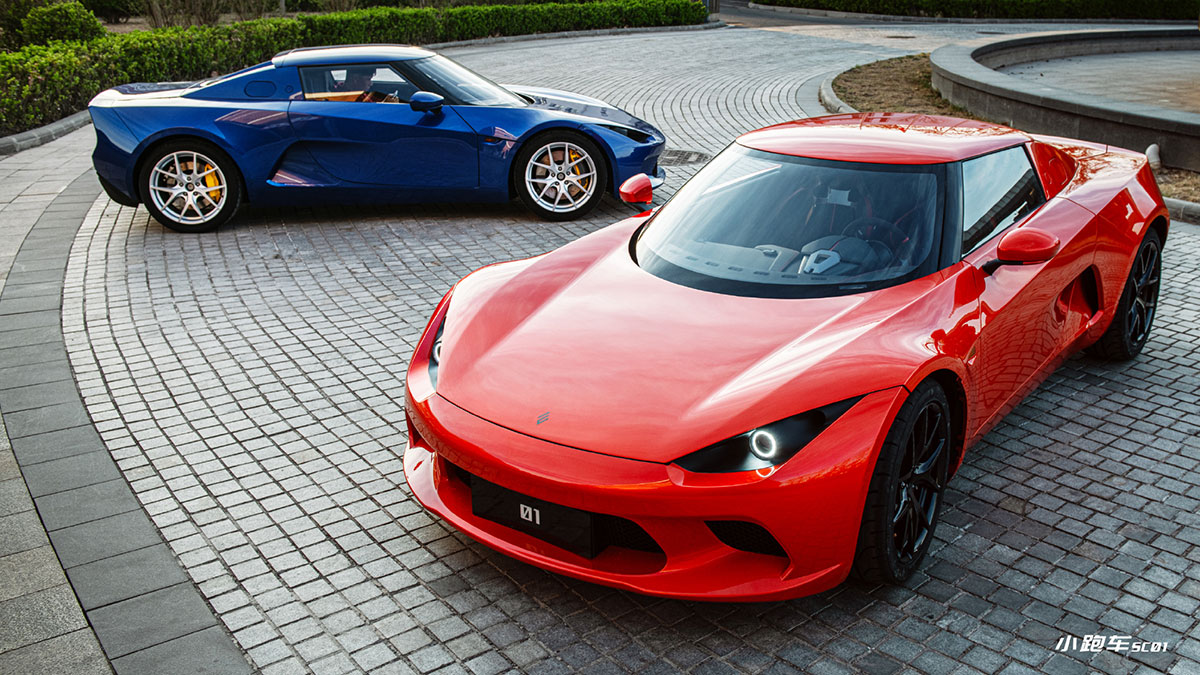
China Car Custom, a Chinese electric vehicle startup backed by smartphone maker Xiaomi (1810.HK), has officially launched its first production model, the SC01 electric sports car, with a starting price of 229,800 yuan ($31,530), the company said.
The vehicle’s launch was notably subdued, with no formal event or promotional campaign. Instead, founder Feng Xiaotong announced the release through personal posts on Chinese social media platform Weibo. “No launch event, no PPT, I may prefer to do this briefing in the way we are more accustomed to in the past few years, and I hope I can get your support,” Feng wrote. “The little sports car is officially on the market, I hope I can be of service to you.”
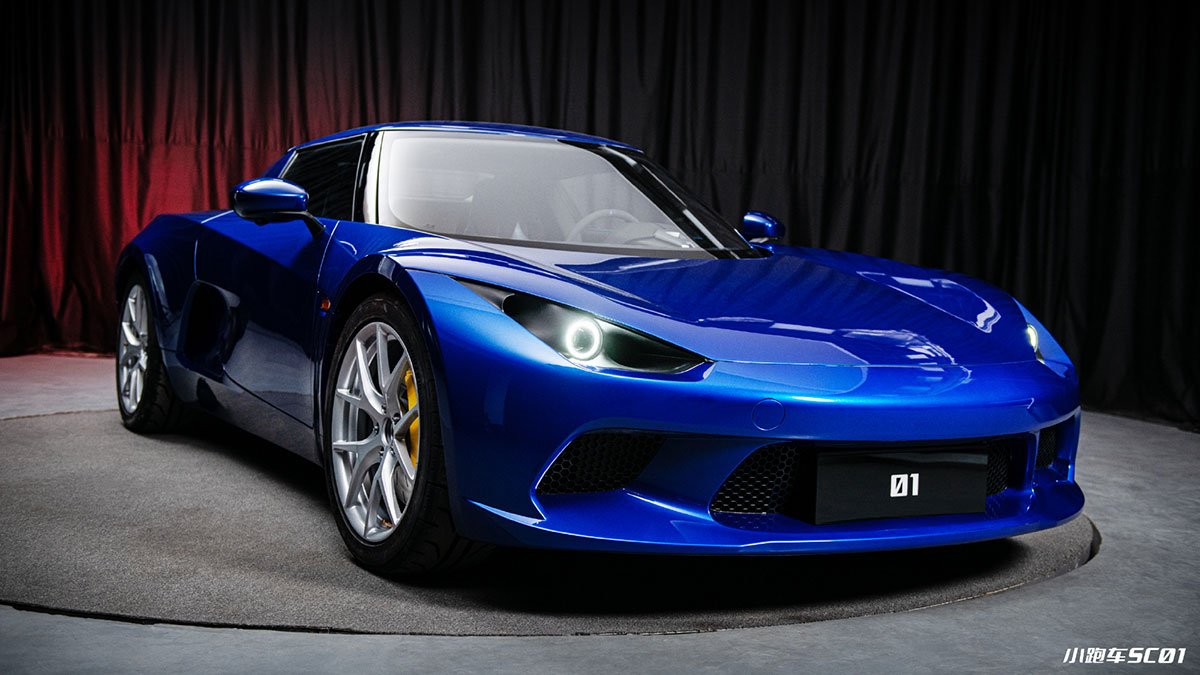
The SC01, referred to simply as the “Small Sports Car SC01,” is currently on display at Hall 2.2 of the 2025 Shanghai auto show, though no booth number was specified. The car is produced by Jiangxi Jiangling Group NEV (JMEV), according to a regulatory filing in January.
The two-seat model measures 4,106 mm in length and weighs 1,365 kg. It features a dual-motor all-wheel-drive system with a combined peak power output of 320 kW and peak torque of 560 Nm. The SC01 can accelerate from 0 to 100 km/h in 2.9 seconds and reaches a top speed of 200 km/h.
The vehicle is equipped with a 60-kWh lithium-ion battery pack supplied by Chinese battery maker CALB, offering a CLTC-rated range of 520 kilometers. Only one variant of the model is available.
China Car Custom was founded in 2014 by Feng, a sports car enthusiast known for modifying vehicles such as the Chery Little Ant and Porsche 911. The company previously collaborated with WM Motor on a high-performance prototype.
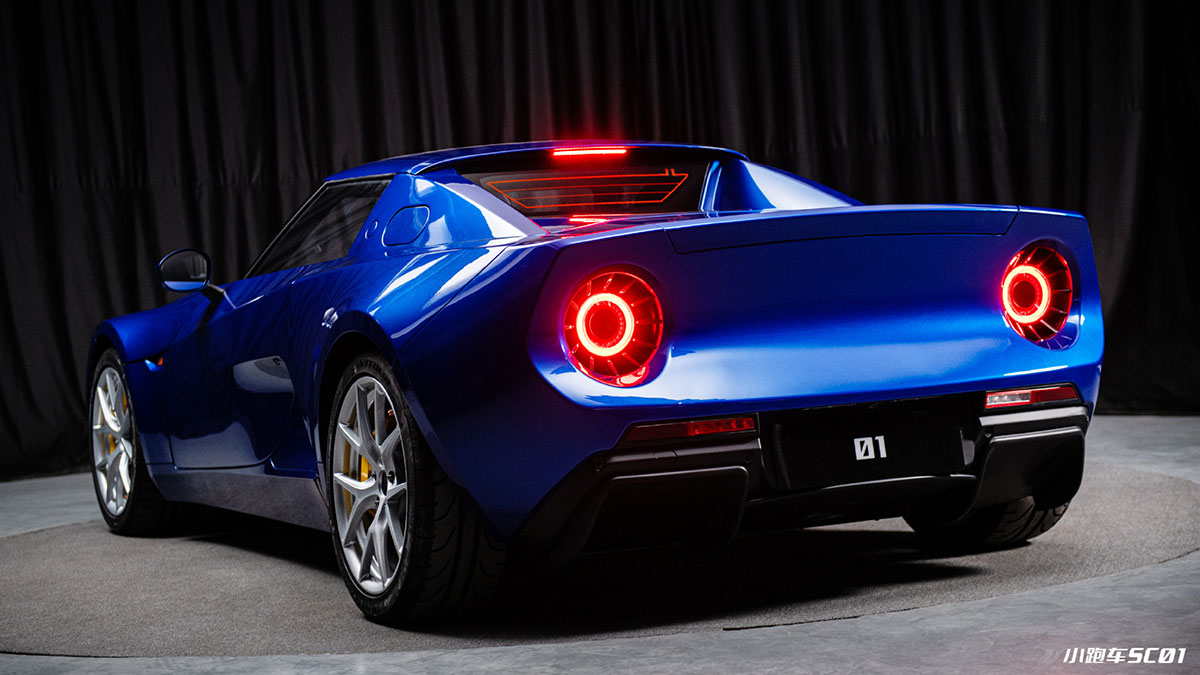
Company registration data show Xiaomi’s co-founder and senior vice president Liu De serves as a director of China Car Custom. According to a 2022 report by tech media outlet 36Kr, Xiaomi invested tens of millions of yuan in the startup.
The SC01 enters a niche segment of China’s electric vehicle market, where few domestic electric sports cars are currently offered. SAIC Motor’s MG Cyberster and the Neta GT from Hozon Auto are among the limited competitors, though both have seen modest sales since their respective launches in late 2023.