
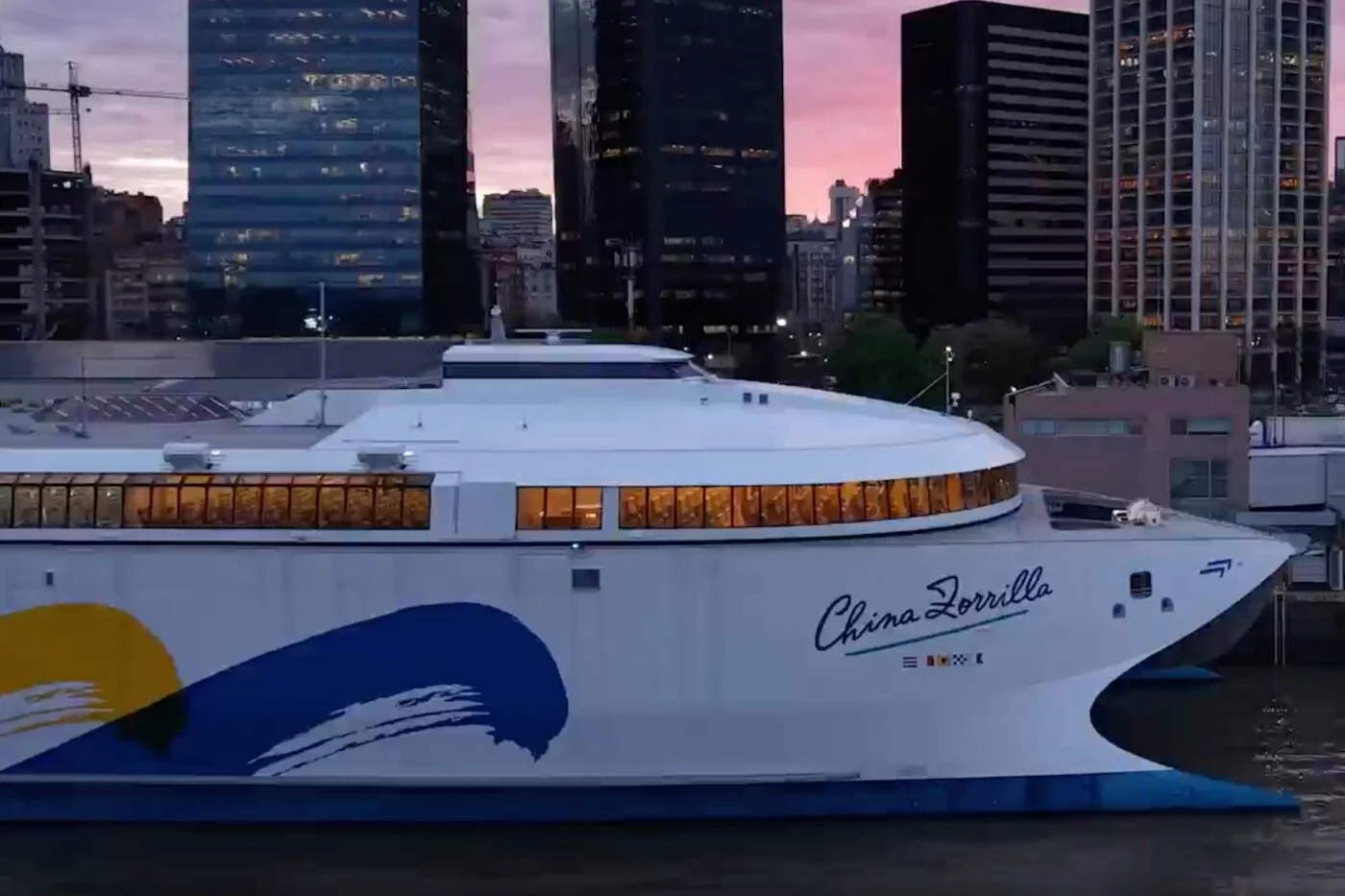
The world’s largest electric ship has entered commercial service in South America, with the 130-meter China Zorrilla completing its first voyage between Buenos Aires, Argentina, and Colonia, Uruguay. Built by Australian shipbuilder Incat Tasmania for ferry operator Buquebus, the vessel can carry up to 2,100 passengers and 225 vehicles.
Battery-Electric Propulsion System
Previously identified as Hull 096 during construction and testing, the China Zorrilla is equipped with an energy storage system exceeding 40 MWh. Its battery packs weigh more than 250 tonnes, supplying power to eight electric waterjet propulsion units.
The vessel is an aluminium catamaran named after Concepción “China” Zorrilla, a celebrated Uruguayan actress and director known in both Argentina and Uruguay.
Milestone for Electric Shipping
Incat CEO Robert Clifford described the start of commercial operations as a major milestone for the shipbuilder and the wider maritime industry.
“This is a truly historic day for Incat, for Tasmania, and for the global maritime industry,” Clifford said, highlighting the work involved in developing the vessel and overcoming technical challenges.
The ferry demonstrates the potential for battery-electric propulsion in large commercial vessels with substantial passenger and vehicle capacity. Compared with conventional diesel-powered ships, its electric system is expected to reduce onboard noise and vibration while eliminating direct exhaust emissions during operation.
From LNG to Fully Electric
Incat received the order from Buquebus in 2023. The vessel was initially designed to run on liquefied natural gas (LNG), but the project was later changed to a fully battery-electric configuration.
The ship’s entry into service also comes as Incat expands its electric ferry business. The company is building three additional electric ferries, each approximately 129 meters long, for Danish operator Molslinjen. The vessels are intended to operate on routes across the Kattegat.