




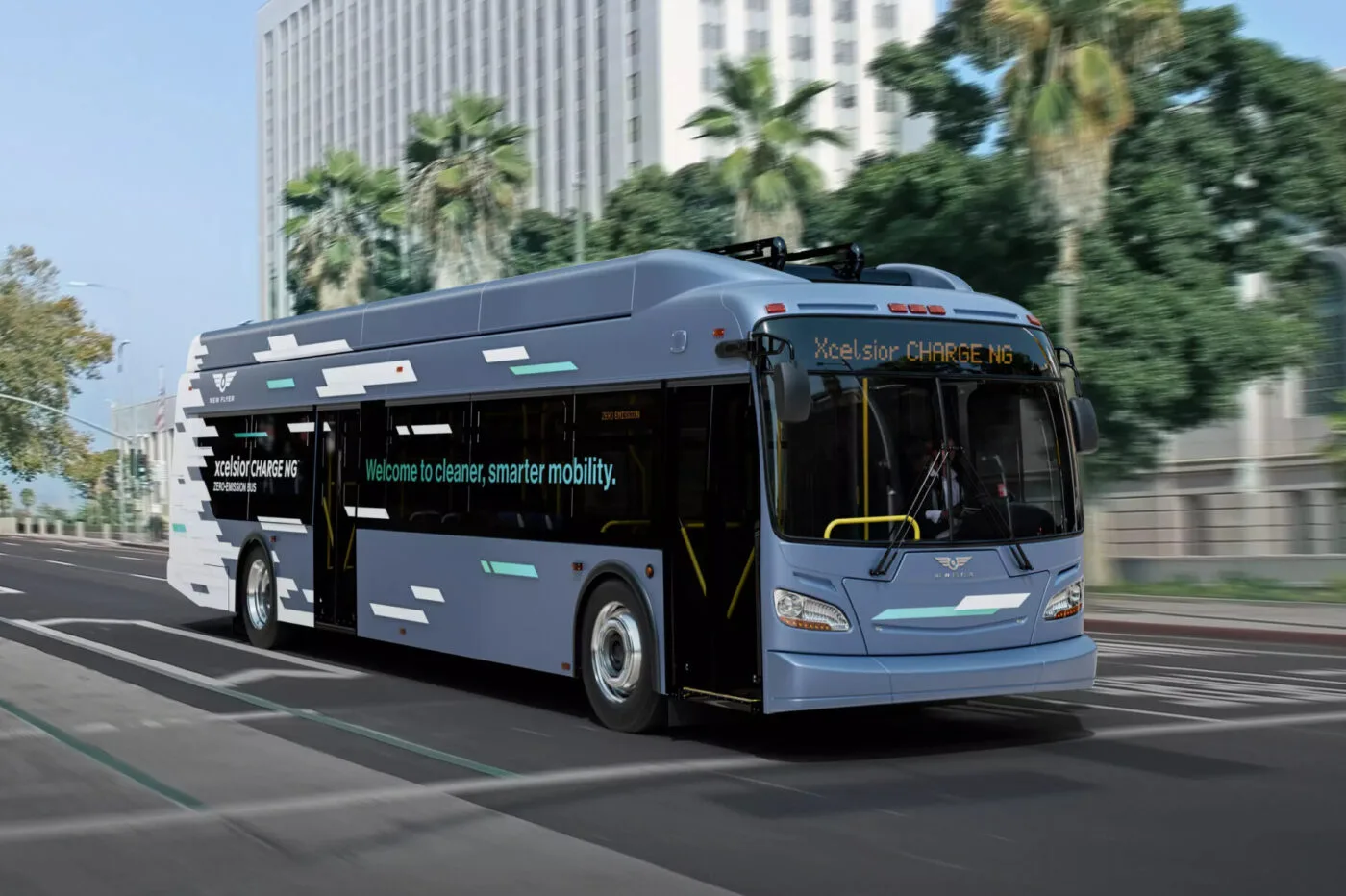
Winnipeg will put its first battery-electric bus into service next week, marking the Canadian city’s first step in a broader plan to electrify its public transit system. The new 60-foot articulated electric bus, manufactured by New Flyer, will operate on a limited weekday schedule during morning and early afternoon hours for its initial 30-day deployment phase before transitioning into full service.
“The first 60-foot electric buses in Canada will roll out right here in Winnipeg, and they’re being built by New Flyer,” said Winnipeg Mayor Scott Gillingham. “This is a big step towards a cleaner, more sustainable fleet, while continuing to balance affordability and reliability for riders.”
The bus is expected to run between 10 and 15 hours per charge. While Winnipeg Transit has not disclosed the full technical specifications, New Flyer lists its 60-foot Xcelsior CHARGE NG model as having a battery capacity ranging from 345kWh to 520kWh and seating for up to 61 passengers.
In total, 16 zero-emission buses—including both battery-electric and fuel cell models—have already arrived at Winnipeg Transit’s Fort Rouge and Brandon depots. The deliveries include four 40-foot and four 60-foot battery-electric buses, as well as four 40-foot and four 60-foot fuel cell buses. Although Winnipeg Transit has not confirmed the manufacturer of the 40-foot models, New Flyer produces both battery and fuel cell electric buses in both sizes, suggesting the fleet could be standardized.
Winnipeg Transit plans to acquire 90 zero-emission buses (ZEBs) in total, with the next batch of 24 expected in early 2026. The city is also investing in charging infrastructure to support the transition. The electrification project is partially funded through a CAD 280.3 million contribution from Canada’s Transition to Zero-Emission Bus Program.


