

Waymo has outlined its approach to autonomous driving after accumulating more than 200 million autonomous miles, emphasizing the importance of combining multiple sensors, detailed maps and autonomous operation. In a new blog post, Waymo Vice President of Onboard Software Srikanth Thirumalai presented 10 lessons from the company’s autonomous driving experience without directly naming competitors such as Tesla.
Waymo Emphasizes Multimodal Sensors
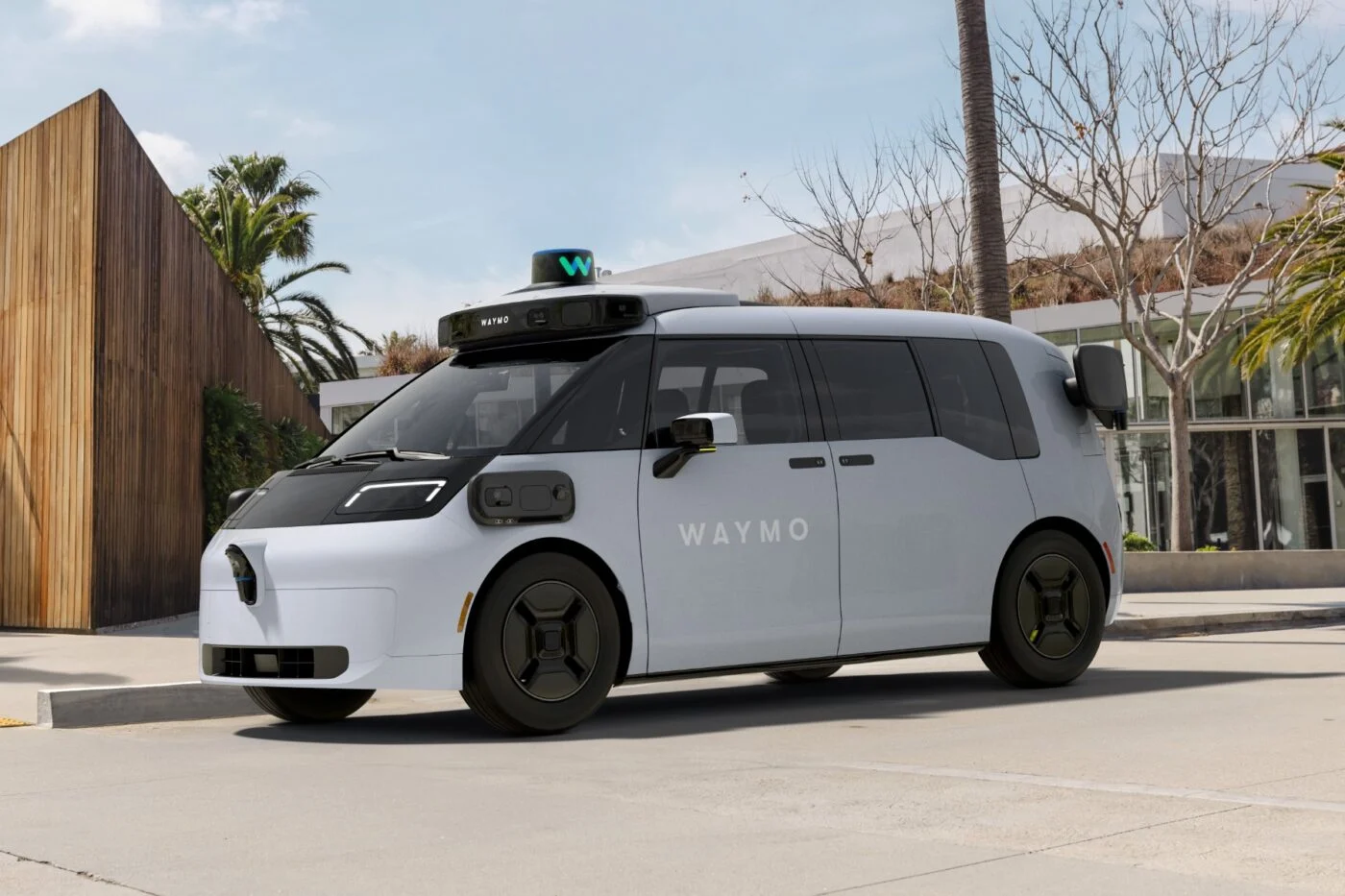
A central part of Waymo’s approach is the use of multiple sensor types. Its latest system in the Ojai van uses 13 cameras, four lidar units, six radars and microphones.
Thirumalai argues that no individual sensor can provide a complete view of the vehicle’s surroundings.
“Cameras are incredible, but they aren’t enough,” he says. “By combining inputs from cameras, lidar, and radar, the Waymo Driver creates a rich, redundant world view that no single sensor can replicate.”
According to Thirumalai, lidar provides detailed three-dimensional information, while radar can track velocity and identify objects in conditions such as heavy fog. Cameras remain useful for recognizing information including road signs and traffic lights.
The approach contrasts with Tesla’s camera-focused strategy, which does not rely on lidar for its vehicle-based autonomous driving system.
HD Maps and Autonomous Driving
Waymo also highlighted the role of high-definition maps in autonomous driving.
Waymo Plans Driverless Robotaxi Launch in Munich by End-2027
Thirumalai said detailed maps can be particularly useful in poor visibility and complicated road environments. The company’s position differs from approaches that seek to operate autonomous vehicles without relying heavily on highly detailed mapping.
Waymo also raised concerns about fully end-to-end neural architectures that directly convert raw sensor inputs into driving commands.
“Pure end-to-end (E2E) neural architectures, where a model takes in raw pixels and directly outputs steering commands, run the risk of black box failures,” he says.
Thirumalai said the difficulty with such systems is understanding how decisions are made across the complete end-to-end process.
Waymo Says Autonomous Operation Is Essential
Waymo also argued that improving a driver-assistance system under human supervision is not equivalent to developing a fully autonomous vehicle.
Waymo Begins Paid Robotaxi Rides With Zeekr-Built Electric Vans
The company said autonomous systems need to operate without a human responsible for the driving task to fully mature.
“Simply improving a driver-assist system (L2) for full autonomy is a false summit,” Thirumalai says.
He argued that autonomous operation exposes systems to situations and consequences that may not emerge during human-supervised driving or simulations.
Waymo and Tesla Pursue Different Paths
The comments underscore the different technical strategies being pursued by Waymo and Tesla.
Tesla has focused on camera-based systems and has promoted its large fleet of customer vehicles as a source of real-world driving data. Waymo, meanwhile, has built its autonomous driving technology around dedicated sensor hardware, mapping and vehicles capable of operating without a human driver.
Waymo’s autonomous ride-hailing service currently has a significant operational footprint, with more than 500,000 driverless trips per week.
IIHS Study Finds Waymo Robotaxis Recorded Fewer Crashes Than Human Drivers
Tesla has also been expanding its autonomous driving operations and is preparing a launch event for its purpose-built Cybercab. The company has indicated that its more streamlined technical approach is intended to support broader scalability.
The contrasting strategies are likely to remain a central issue in the development of commercial autonomous driving as both companies expand their operations.