


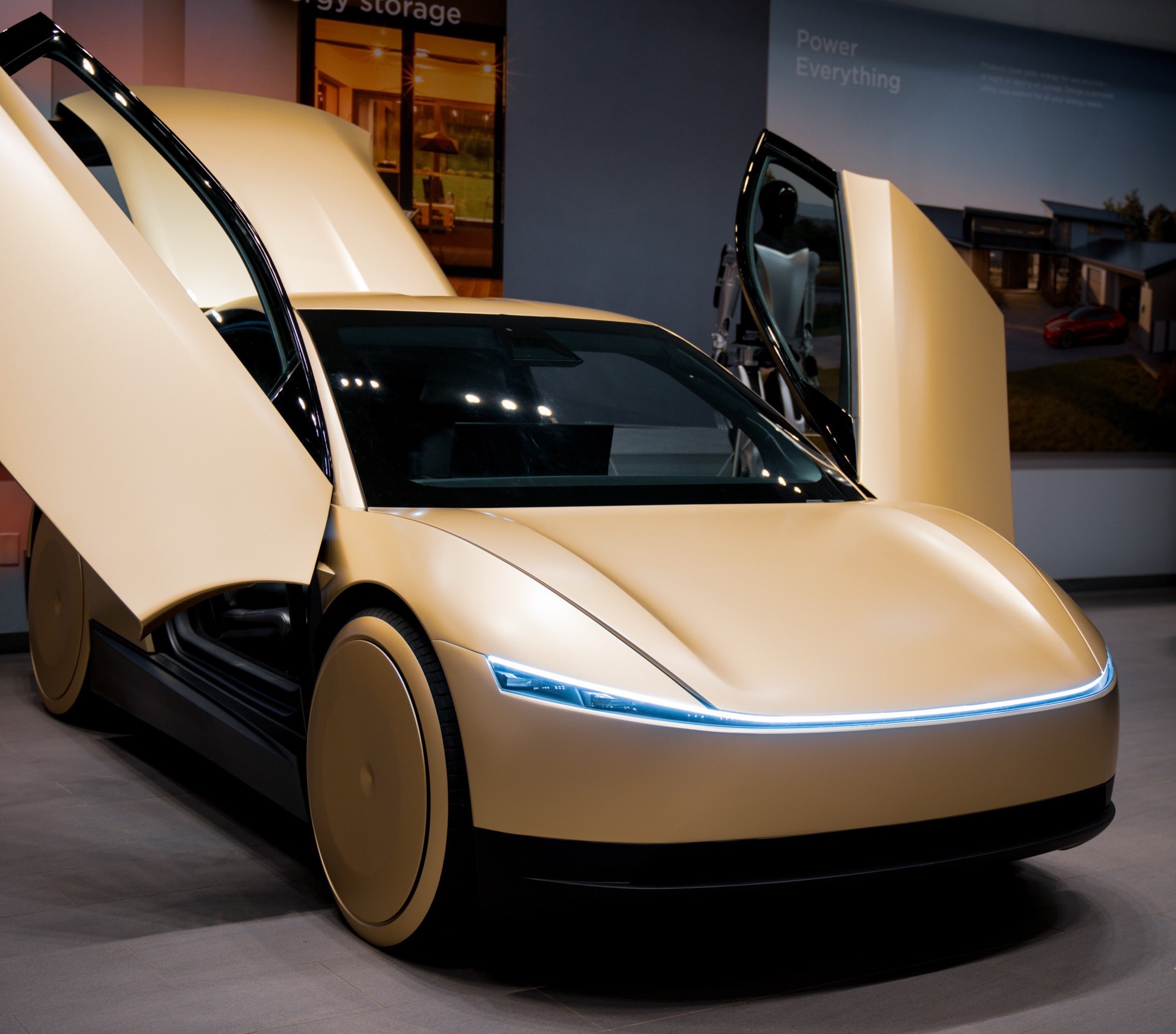
Tesla has begun testing a production version of its Cybercab robotaxi in Austin, Texas, marking a significant step toward the company’s goal of deploying a purpose-built autonomous ride-hailing vehicle.
Videos shared on X show the two-seat Cybercab operating on public roads without a steering wheel or pedals. During the current testing phase, a safety monitor occupies the front passenger seat while the vehicle drives autonomously.
Cybercab Moves Closer to Commercial Deployment
The latest trial comes nearly two years after Tesla unveiled the Cybercab concept, a fully autonomous electric vehicle designed exclusively for robotaxi services.
Unlike Tesla’s existing Robotaxi pilot, which uses modified Model Y SUVs, the Cybercab has been developed specifically for driverless operation and eliminates traditional driver controls altogether.
In recent weeks, Tesla has also been testing prototype Cybercabs equipped with temporary steering wheels and pedals in several U.S. cities while reportedly positioning large numbers of vehicles in preparation for a broader rollout.
Regulatory Changes Could Support Launch
Tesla’s plans may receive support from proposed changes to U.S. vehicle safety regulations.
Last week, the National Highway Traffic Safety Administration proposed removing the requirement for brake pedals in vehicles designed to operate exclusively using automated driving systems. The proposal is currently undergoing public consultation and could be finalized later this year.
If adopted, the revised regulations would remove one of the key regulatory barriers facing purpose-built autonomous vehicles such as the Cybercab.
Tesla Targets Waymo’s Leadership
Tesla is aiming to compete directly with Waymo, which currently operates the largest commercial robotaxi service in the United States.
Chief Executive Officer Elon Musk has argued that Tesla’s vertically integrated approach—developing both the vehicles and the autonomous driving software internally—will provide a significant cost advantage over competitors that rely on partnerships with third-party automakers.
Tesla is also pursuing a camera-only autonomous driving system, while Waymo combines cameras with lidar and radar sensors to navigate complex traffic environments.
Autonomous Driving Challenges Continue
Although Tesla has made significant progress with its robotaxi programme, the company has yet to deploy a fully autonomous vehicle at large scale.
Its Robotaxi service in Austin, based on Model Y SUVs, has experienced several minor incidents since launch, including crashes reportedly involving remote operator intervention.
Waymo has also encountered operational challenges as its fleet has expanded, including difficulties navigating construction zones, flooded roads and school bus traffic, resulting in multiple software updates and recalls.
With the distinctive gold-colored Cybercab now appearing on public roads, Tesla’s autonomous driving programme is entering a more visible phase, placing increased attention on the company’s progress toward launching a nationwide robotaxi network.


