

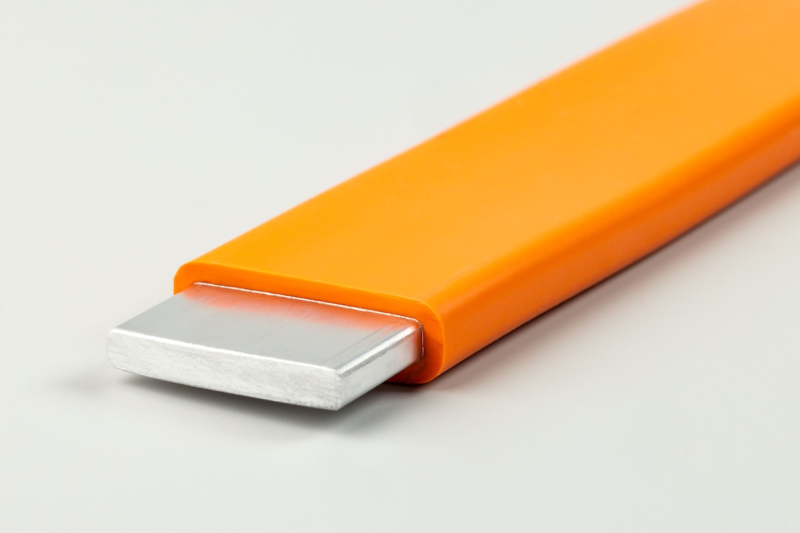
Wacker has unveiled a new silicone rubber designed to insulate busbars in high-voltage batteries used in electric vehicles, aiming to enhance both safety and cost efficiency in component manufacturing.
The product, marketed as ELASTOSIL R 531/60, can be processed through extrusion, allowing for streamlined production of sheathing for aluminum or copper busbars that distribute current between battery cells and modules.
According to the company, ELASTOSIL R 531/60 offers a unique safety feature in the event of fire. When exposed to extreme heat, the material undergoes ceramification, forming an electrically insulating protective layer that can withstand temperatures ranging from 800°C to 1,000°C.
This layer helps prevent short circuits under high-stress conditions, contributing to passenger and fire safety in electric vehicles. Given that traction battery voltages in EVs typically range from 300 to 900 volts, the need for reliable insulation is critical.
The silicone rubber, with a hardness rating of 60 Shore A, is engineered for flexibility, tear resistance, and resilience in varying environmental conditions. It can be bent and adapted to different battery surface structures without cracking, even after mechanical impact testing.
The product maintains performance at temperatures as low as -40°C and offers durability against thermal fluctuations, vibrations, and shocks within the vehicle body. This combination of characteristics is intended to ensure long-term protection for high-voltage battery systems in modern electric cars.