



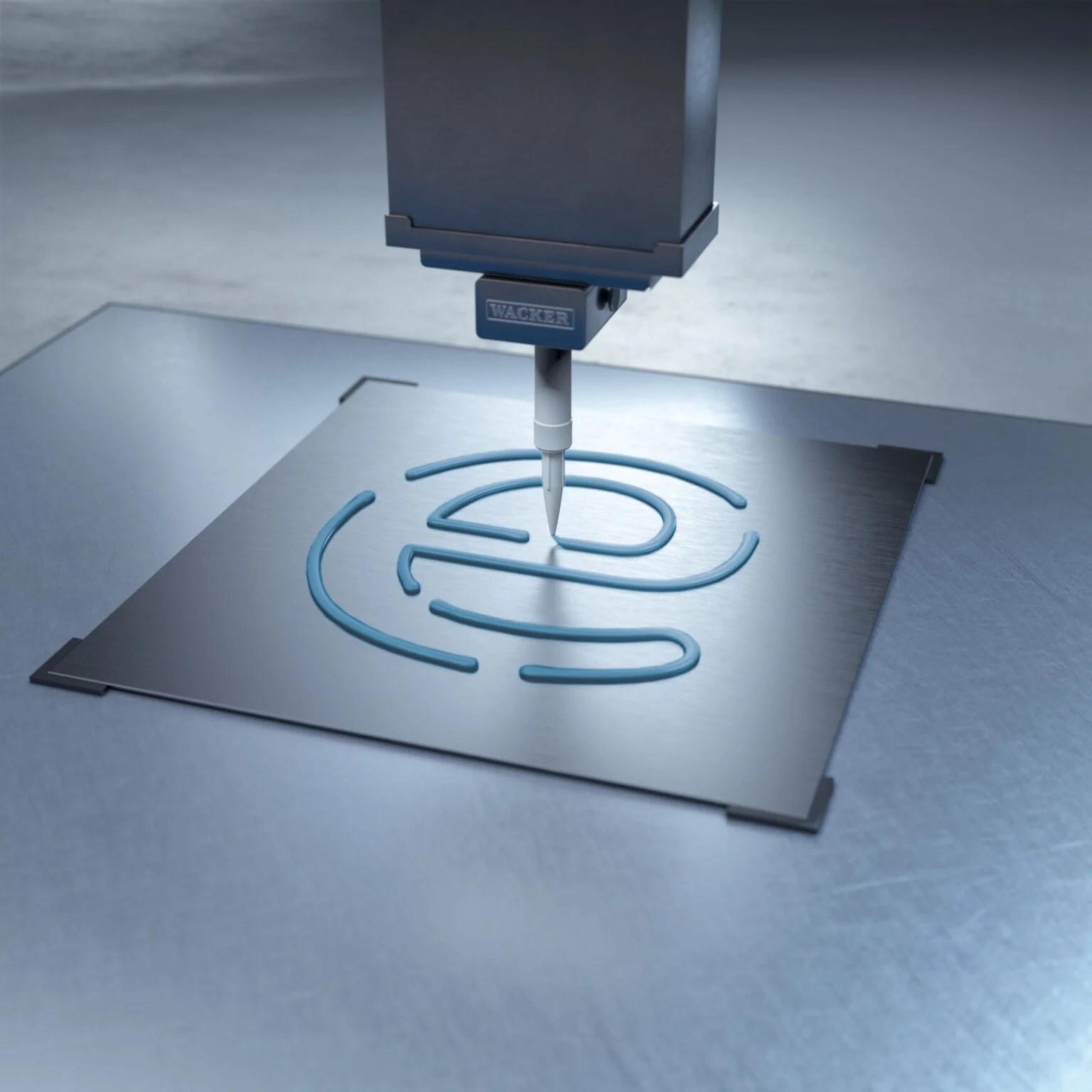
Wacker Chemical Corporation (WCC) has introduced a new line of thermally conductive (TC) adhesives engineered for modern electric vehicle (EV) battery designs, featuring its proprietary hybrid technology that enhances thermal management, structural integrity, and overall safety. The products were showcased at The Battery Show North America in Detroit, Michigan.
The company said its latest TC adhesives are tailored to meet the needs of evolving EV battery architectures, such as cell-to-pack (CTP) and cell-to-chassis (CTC) systems. These designs demand advanced materials that can effectively dissipate heat while maintaining structural performance. Wacker’s adhesives are formulated to be isocyanate-free, solvent-free, and tin-free, which the company said improves safety and handling during production.
See also: ITS Logistics Launches Battery Logistics Hubs Network to Support EV and Lithium-Ion Supply Chains
“Our silicone-based adhesives have proven to maintain nearly constant mechanical performance after enduring thermal aging and thermal shock, ensuring reliability and safety for electric vehicles,” said Peter Zorney, Senior Director of the Electronics and Automotive business segment for North and Central America.
The adhesives are built on Wacker’s silane-terminated polyether (STP-E) hybrid platform, combining the flexibility and heat resistance of silicones with the mechanical strength of organic polymers. The company said this hybrid approach enables strong adhesion, high thermal conductivity, and long-term durability under extreme temperature and humidity conditions—key requirements for next-generation battery systems.
See also: Renault’s Ampere Opens Battery Cell Laboratory to Boost EV Innovation
Wacker added that its thermally conductive adhesives support the industry’s drive toward lighter, more efficient battery packs by offering high strength and reliability without compromising safety or ease of use.


