





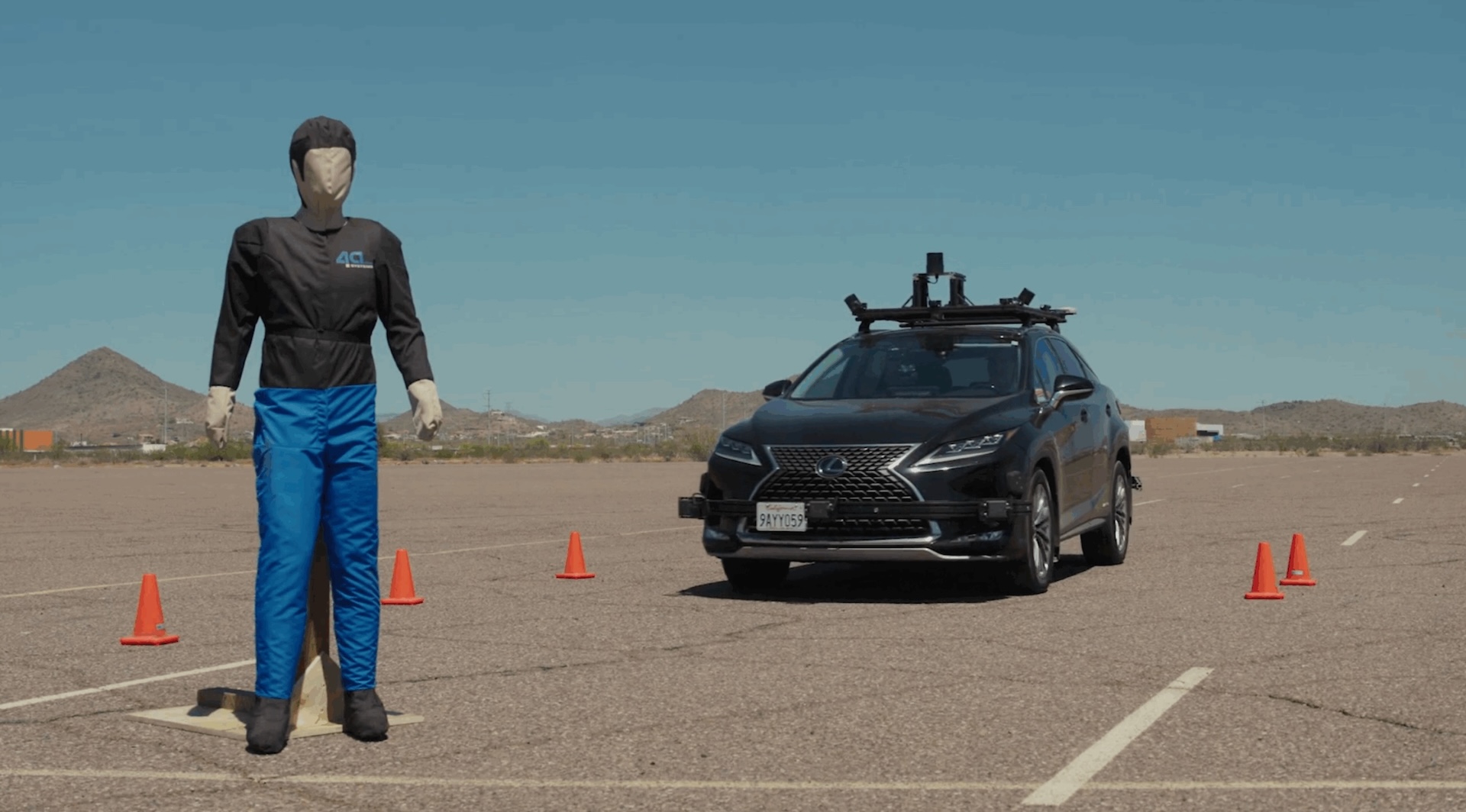
Waabi, a startup specializing in AI-driven self-driving technology, has introduced a new testing method called Mixed Reality Testing (MRT), aiming to transform how autonomous vehicles are validated for safety.
The system merges real-world closed-course tracks with real-time virtual simulations, allowing autonomous systems to interact with both physical and digitally rendered elements in a single, seamless environment.
Traditional AV testing relies heavily on closed-course setups, which are often resource-intensive, lack repeatability, and limit exposure to diverse driving scenarios. MRT addresses these issues by using a neural simulation system, Waabi World, that alters sensor data in real time.

This creates a hybrid reality where the autonomous driving software—Waabi Driver—perceives and reacts to a mix of real and simulated inputs, including complex traffic conditions, unpredictable pedestrians, and hazardous driving behavior.
This method allows Waabi to safely test edge cases that would be dangerous or impossible to replicate on a physical track, such as interactions with impaired drivers, jaywalking pedestrians, or sudden infrastructure changes. By removing physical limitations, MRT enables rapid scenario generation, continuous testing, and significantly higher test volumes than conventional methods.
Waabi has applied MRT in its development for more than two years, which it says has led to a feature-complete autonomous driving system. As the company prepares for commercial driverless operations, its mixed reality platform is positioned as a scalable and efficient tool for advancing AV safety while reducing development costs and risks.


